Special Reports
COP31: Nigeria calls for $1.3 trillion annual climate finance


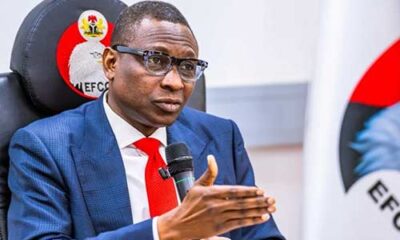
The minister argued that climate action must catalyse sustainable development and align with national priorities.
The Nigerian government has reaffirmed its commitment to advancing climate action, calling for stronger international cooperation and increased climate financing to accelerate the global response to climate change.
Mr Lawal said climate action must serve as a catalyst for sustainable development and align with national priorities, including expanding access to affordable energy, strengthening food security, promoting industrialisation, creating employment and improving livelihoods.
He said Nigeria remained committed to a just and inclusive energy transition that reflects its national circumstances while expanding renewable energy deployment, safeguarding energy security and improving access to reliable and affordable electricity.
“Natural gas will continue to serve as an important transition fuel within our energy mix,” he said.
The minister identified adaptation and resilience as critical components of Nigeria’s climate priorities, highlighting the country’s National Adaptation Plan, submitted in September 2026.
He said the plan provides targeted interventions in climate-resilient agriculture, early-warning systems and disaster preparedness for vulnerable communities.
According to him, the framework combines climate risk analysis, economic appraisal, sector-specific strategies and financing approaches to strengthen the country’s capacity to respond to climate impacts.
Mr Lawal said Nigeria was also pursuing innovative approaches to climate financing and investment to support its transition to a low-carbon and climate-resilient economy.
He cited the commercial launch of a $300 million Distributed Renewable Energy Fund in September 2026 as part of efforts to mobilise capital for expanding access to clean and reliable energy.
He added that the government was strengthening the country’s carbon market framework and advancing opportunities under Article 6 of the Paris Agreement to mobilise additional resources for domestic climate action.
However, the minister stressed that national initiatives alone could not deliver the scale of transformation required to address the climate crisis.
He called on developed countries and international partners to ensure that the global ambition of mobilising at least $1.3 trillion annually in climate finance by 2035 translates into accessible and affordable funding, particularly for developing countries.
“We call for increased concessional financing and reduced costs of capital confronting developing economies,” he said.
He also called for effective implementation of the Fund for responding to Loss and Damage, stressing the need for timely and meaningful assistance to countries affected by climate-related disasters.
Mr Lawal urged countries participating in COP31 better to align climate ambition, financing, and implementation, ensuring investments deliver tangible benefits to communities.
He said the conference must mark a decisive turning point in the global climate response by fostering partnerships that deliver lasting outcomes.
“Nigeria remains committed to an effective multilateral climate system founded on partnerships,” he said.
He expressed hope that the Antalya conference would be remembered as the moment countries moved decisively from commitments to implementation and from investment to resilience, prosperity and shared development.
COP31 hopes to offer an important opportunity for countries to advance negotiations on practical measures to address gaps in climate action implementation.
Alongside the formal negotiations, the Global Climate Action Agenda will provide opportunities to boost electrification, improve access to climate finance and cut waste and emissions of super-pollutants such as methane.
PREMIUM TIMES reported that the African Group of Negotiators (AGN), of which Nigeria is a member, says it will push for increased climate finance, including an ambitious replenishment of the Green Climate Fund (GCF), among other priorities.
The group said securing adequate and predictable climate finance, particularly grant-based and concessional funding, would be central to Africa’s negotiating priorities at the conference.
Nigeria is also ranked third among countries with the most registered participants at the ongoing climate talks. The talks, now in their final stretch, began on 9 November and are expected to conclude on 20 November.


NCC Threatens To Revoke Unused Spectrum, Sets Deadline

“Entrusted To Him For Washing” — Court Sentences Car Washer To Seven Years In Prison For Stealing Customer’s SUV

Nigerian Breweries Marks 80 Years with N80m Consumer Reward, Unveils Legendary Christmas 2026

COP31: Nigeria calls for $1.3 trillion annual climate finance

SunTrust Bank, OPay partner to deepen digital payments, expand financial inclusion

Nigeria Seeks $500m Flood-Control Loan Amid Ecology Fund Accountability Concerns

2027: INEC proposes code to regulate independent result tabulation

Manifesto: How Makinde’s economic agenda targets refinery overhaul, food production and fiscal reforms
2027: AbdulRazaq predicts APC victory in Kwara, cites Wike’s support for Tinubu
Afrinvest repays undocumented $1 million from Elumelu with interest
Emirates explores a range of new innovations for customers with accessible travel requirements at AccessAbilities Expo, Dubai 2026
51 African nations participate in Dangote Refinery IPO as offer emerges as Africa’s first truly pan-African public offering
Stakeholders say poor healthcare coordination leaves patients to navigate care alone
LASU professor Tunde Akanni inducted as peace studies fellow
Ex-Governor Uduaghan is dead
2027: Wike, Rivers Assembly members, council chairpersons meet Fubara

 News4 days ago
“Autonomy Brings Responsibility” — ICPC Recovers ₦5.3bn From LG Accounts In Seven States, FCT, Moves To Publish 774 Councils’ Finances Online
- Business5 days ago
“₦1.2m Return Ticket To London” — Enugu Air Slashes Fares By Up To 50%, Targets December Launch Through Omni Blu Partnership
- News4 days ago
“EFCC Recruitment Is Absolutely Free” — Commission Warns Nigerians Against Fake Employment Emails Demanding ₦3,354
- Special Reports5 days ago
Federal Science College, Sokoto Sinks Into Regulatory Breach After ₦3.82 Million Is Diverted Into Staff Bank Accounts Against Financial Regulations
- Top Stories4 days ago
“States, Not FIRS, Collect Itinerant Workers’ Income Tax” — Supreme Court Rules For Bayelsa In Offshore PAYE Dispute
- Special Reports5 days ago
EFCC Docks Music Star, Felix Duke For Alleged N21.2m Fraud
- Business4 days ago
“Fixes Are Not Taking As Expected” — Microsoft Struggles To Restore Outlook, Teams, Copilot As Global Outage Hits 74 Countries
- Politics4 days ago
Details Emerge as Police, Reps Probe Attack on Obi’s Supporters in Lagos