Taking judicial notice of Nigeria’s economic situation, the judge said allocating N110 billion for lawmakers’ benefit at a time of widespread hardship reflected a failure to prioritise national interest.
The Federal High Court in Lagos has declared unlawful the National Assembly’s controversial N110 billion vehicle procurement and allowance schemes, holding that the spending violated procurement laws, constitutional provisions and the public trust.
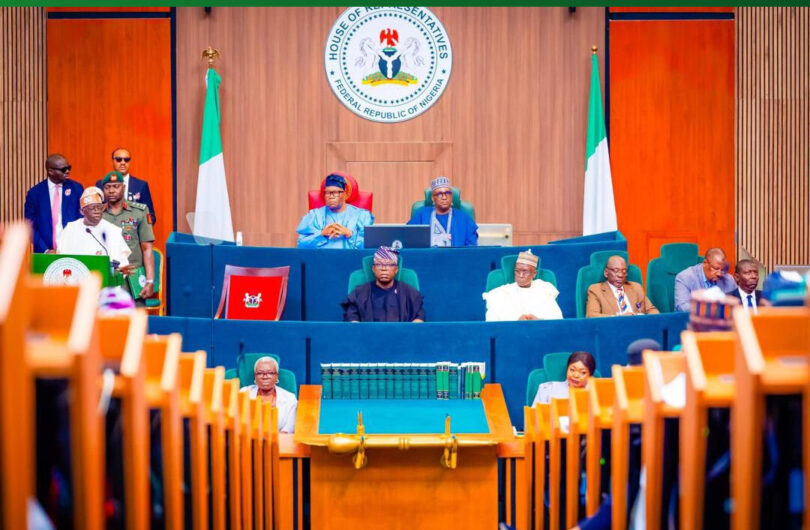
The suit, marked FHC/L/CS/1606/2023, was instituted by SERAP against Senate President Godswill Akpabio and Speaker of the House of Representatives Tajudeen Abbas for themselves and on behalf of members of both chambers.
In his judgement on 6 May, Mr Bogoro also ordered the National Assembly leadership to ensure that future procurement processes and public expenditure strictly comply with due process and are guided by transparency, accountability and value for money.
“The doctrine of separation of powers does not operate as a shield for illegality,” the judge held, stressing that the court was concerned with the legality and constitutionality of legislative spending.
The court found that the lawmakers, as beneficiaries of the expenditure they approved, had placed themselves in a position of conflict of interest.
“The beneficiaries of the expenditure are the very officials approving it, and the expenditure confers direct pecuniary and material benefits. This to my mind constitutes a case of self-dealing and conflict of interest,” Mr Bogoro ruled.
Taking judicial notice of Nigeria’s economic situation, the judge said allocating N110 billion for lawmakers’ benefit at a time of widespread hardship reflected a failure to prioritise national interest.
“I have taken judicial notice of the economic realities in Nigeria and the widespread financial hardship affecting Nigerian citizens. In this context, the allocation of N110 Billion for the benefit of lawmakers demonstrates a failure to prioritize national interest,” the judgement stated.
Mr Bogoro further held that the expenditure undermined the fiduciary duty public officers owe Nigerians and was inconsistent with the oath of office sworn by members of the National Assembly.
“Public office must not be used for personal enrichment. Public Officers must act within constitutional boundaries and in good faith. I hold that the conduct complained of is inconsistent with the oath of office,” the court held.
The court dismissed objections raised by the defendants challenging its jurisdiction and SERAP’s standing to institute the suit.
Mr Bogoro held that Nigerian law has evolved to recognise public interest litigation and that non-governmental organisations such as SERAP can approach the courts to protect public interest.
“From the facts deposed and given the nature of the suit, SERAP being a public interest organization committed to transparency and accountability has demonstrated sufficient interest. I therefore hold that SERAP has locus standi to sue, as the matters are of undeniable public concern,” the judge ruled.
The court also rejected the argument that the failure to serve a formal pre-action notice rendered the suit incompetent, holding that exceptions exist where matters involve urgency or overriding public interest.
Mr Bogoro noted that SERAP had written letters to the National Assembly before filing the suit, and that the defendants failed to respond.
Similarly, the judge rejected the argument that the case had become academic because the funds had allegedly been spent.
The court held that declaratory reliefs remain available even after the completion of the act complained of and that the case raised substantial constitutional questions concerning accountability and public finance.
On the substantive issues, Mr Bogoro held that the defendants failed to produce credible evidence showing compliance with procurement procedures, competitive bidding requirements and value-for-money assessments prescribed under the Public Procurement Act.
“The Defendants have failed to provide any credible evidence of compliance with procurement procedure, competitive bidding and value for money assessment. The Defendants have not rebutted the allegations specifically made as such they are deemed admitted,” the judgment stated.
The court consequently held that the proposed expenditure breached Section 57(4) of the Public Procurement Act 2007, the Code of Conduct for Public Officers and the constitutional oath of office taken by lawmakers.
Mr Bogoro emphasised that whenever legislative actions violate constitutional or statutory provisions, the courts have both jurisdiction and a constitutional duty to intervene.
Having found that SERAP established its case through credible evidence, the court granted declaratory and injunctive reliefs sought by the organisation.
Among the prayers granted, the court declared that the then-proposed N40 billion procurement of 465 bulletproof vehicles breached procurement laws and constitutional provisions governing public officers.
It also declared that the allocation of N70 billion as support allowances to newly elected lawmakers under the 2022 Supplementary Appropriation Act violated the constitutional obligations of members of the National Assembly.
The court further ordered that all future procurement and expenditure by the National Assembly must comply strictly with due process and the principles of transparency, accountability and value for money.
The legal challenge arose from widespread public criticism over the National Assembly’s plan to procure hundreds of luxury vehicles shortly after the inauguration of the 10th Assembly and at a time of deepening economic hardship triggered by the removal of petrol subsidy.
SERAP filed the suit in August 2023 after the legislature approved plans to spend N40 billion on 465 Sports Utility Vehicles (SUVs), including bulletproof vehicles for lawmakers and principal officers, and another N70 billion in support allowances for newly elected members.
The organisation argued that while lawmakers proposed N70 billion as support allowances for new members and N40 billion for official vehicles, only N500 billion had been budgeted as palliatives for millions of poor Nigerians struggling with the rising cost of living.
In its originating summons, SERAP sought orders compelling Messrs Akpabio and Abbas to review and reduce the vehicle budget and repeal the supplementary appropriation provision allocating the N110 billion expenditure.