The court said the university’s decision suspending the students was fundamentally flawed and could not stand in law.
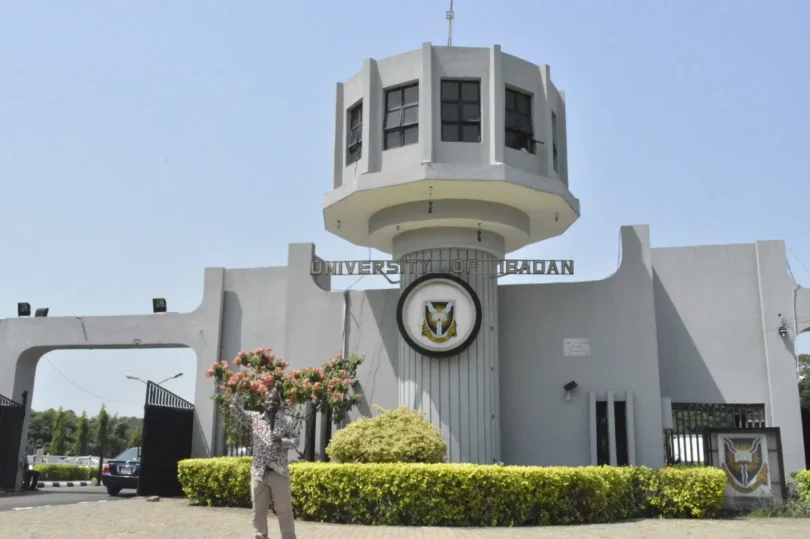
The Federal High Court in Ibadan, Oyo State, on Wednesday, lifted the four-semester suspension slammed on three students by the University of Ibadan for their involvement in a protest against a hike in school fees in May 2024.
Delivering judgement on Wednesday, the judge Nkeonye Maha, held that the decision of the university’s Central Student Disciplinary Committee were fundamentally flawed and could not stand in law.
The affected student are Aduwo Ayodele, Gbadegesin Olamide Iyanuoluwa and Linus Nice Adaoma.
They had approached the court to challenge their suspension, which they described as punishment for participating in a peaceful protest against what they called “prohibitive” tuition increases.
In her ruling, Mrs Maha set aside the disciplinary decisions, declaring the proceedings null and void.
She ordered their immediate reinstatement and the restoration of all their rights and privileges as students, including attending lectures, sitting for examinations, and participating in student union activities.
The court also restrained the University of Ibadan, Nigeria’s premier University, and its agents from taking any further disciplinary steps against the students in relation to the protest.
Mrs Maha held that the disciplinary panel failed to establish that the students disrupted any event, adding that the process violated the principles of natural justice.
She noted that the university did not dispute that the students were arrested during the incident, but stressed that only law enforcement agencies have statutory powers of arrest and not university security personnel.
The judge further criticised the composition of the disciplinary committee, noting that an individual who had earlier petitioned against the students sat on the panel that recommended their sanctions, without appearing to defend the allegations he made.
According to her, while universities have the power to discipline students, such powers must be exercised strictly in line with due process and without bias.
She added that the failure to afford the students fair hearing rendered the entire disciplinary process invalid.
The court also referenced the position of the Students’ Union, which had condemned the sanctions and described them as victimisation of students for exercising their right to protest.
However, the court declined the students’ request for N20 million in general damages and N5 million in exemplary damages against the Vice-Chancellor, Kayode Adebowale, holding that the claims were not sufficiently justified in the circumstances.
The applicants had asked the court to nullify their suspension and order their reinstatement, arguing that they were punished for exercising their right to peaceful protest during a university event held on 13 May 2024, at Trenchard Hall.
They said they only displayed placards calling for a reversal of the fee hike and did not disrupt proceedings, but were allegedly removed by security personnel, assaulted, and later handed over to security operatives who profiled them as suspected cultists.
According to court filings, they were taken to a military facility in Agodi, Ibadan, where they were later released after officers expressed surprise at the situation.
Despite their release, the university proceeded with disciplinary action, issuing queries and eventually convening both the Student Disciplinary Committee and the Central Student Disciplinary Committee, which recommended rustication for two of the students.
The students argued that the proceedings were biased, alleging they were denied the opportunity to present video evidence, call witnesses, or cross-examine those who testified against them.
They also claimed the panel was hostile, lacked studa ent representation, and failed to meet basic standards of fairness.
The sanctions, approved by the university, resulted in their rustication for four semesters, during which they were barred from attending lectures and sitting examinations.
The applicants told the court the punishment was excessive and disproportionate, especially as their actions amounted to peaceful expression of concern over rising tuition fees.
They also alleged ongoing intimidation and surveillance following the incident.
In their prayers, the students asked the court to declare the disciplinary process unconstitutional, set aside the sanctions, and restrain the university from taking further action against them.
They also sought N20 million in damages for alleged violations of their fundamental rights.
The university, however, maintained that due process was followed, insisting that the students were given fair hearing and the opportunity to appeal the decision.
The case stemmed from disciplinary actions taken by the University of Ibadan against the three students for participating in a protest on 14 May 2024 against a tuition hike.
The protest was said to have taken place during an event on campus.
At the event, the three students quietly displayed placards with the inscription “Fees Must Fall,” in protest against a sharp increase in school fees announced by the university.