Rather than learning from Chad’s history of coups and deadly conflicts, current leaders seem determined to repeat the cycle.
Just two weeks after eight opposition leaders were arrested for planning a march against Chad’s governance problems, they were sentenced to eight years in prison without parole.
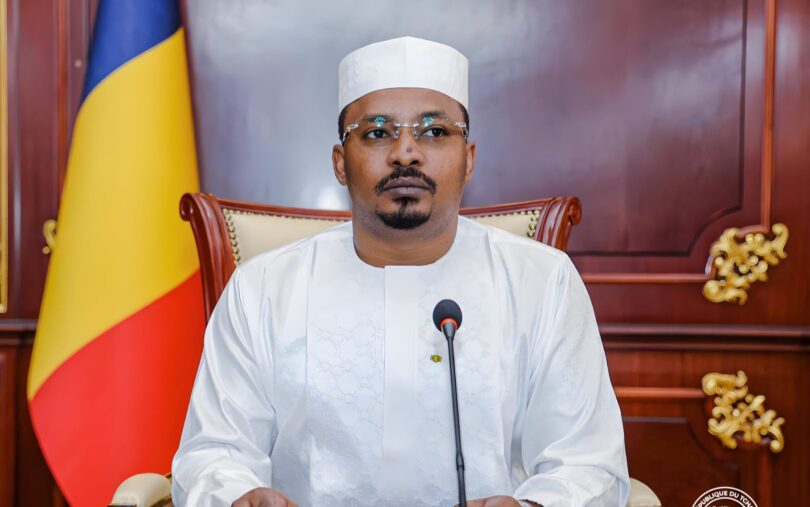
The silencing of the GCAP leaders leaves President Mahamat Idriss Déby’s ruling Patriotic Salvation Movement virtually unchallenged. Without a credible opposition, Chad’s democratic project is failing.
There has been a systematic ban on public demonstrations for over six years. Some marcheshave been brutally repressed, as happened in October 2022, when around 200 protesters were killed, and many others were wounded or arrested.
The arrest of the GCAP leaders and the Supreme Court’s dissolution of their coalition raise concerns about the increasing use of the judicial system as a tool of repression. According to their legal team, the leaders were remanded in custody without being charged. At the conclusion of their hasty trial, they were convicted for armed assembly, insurrection, rebellion and possession of military weapons – all of which their lawyers disputed.
As with Mr Masra, the GCAP leaders’ trial has been met with outrage by civil society and opposition as a clear attempt by the ruling party to restrict the public sphere and further disrupt political stability. The United Nations (UN) has expressed its concern, reiterating the importance of respecting freedom of expression, association and peaceful assembly, which are integral to human rights and to Chad’s international obligations.
In addition to the systematic banning of demonstrations and use of the judicial system to silence dissenting voices, there is a trend towards normalising the use of lethal force, even in banal situations.
On 29 April, members of The Transformers party were celebrating its eighth anniversary when they were attacked by gunmen, resulting in one death, two seriously injured, and the party’s treasurer abducted and tortured. Although the government announced it would prosecute those responsible, such incidents have become commonplace in recent years.
Shrinking the public sphere and silencing the opposition have intensified since Chad’s political transition started in 2021 after President Idriss Déby Itno’s death. If no dissenting voices are permitted or are systematically suppressed, the country could end up under a one-party regime.
Chad has previously experienced this under the presidencies of François Tombalbaye (1960- 1975) and Hissène Habré (1982-1990), when only the ruling parties aligned with the regimes were allowed. These parties acted as propaganda machines for the regimes and had a stranglehold on the public sphere.
Under Idriss Déby Itno (1990-2021), although elections were repeatedly organised, they were always marred by contestation, and the constitution was regularly revised to remove presidential term limits.
Tombalbaye and Habré were both unseated in coups, and Mr Deby was killed when fighting rebels trying to take over his regime. These overthrows, along with multiple attempted coups and insurgencies, reflect the country’s long-standing tradition of using force to achieve liberation.
Since 1964, just four years after independence, Chad has endured repeated cycles of deadly conflicts and chronic instability, which have left a deep scar on society. In less than three years since the return to constitutional order, the constitution – drawn up through an inclusive and sovereign national dialogue – has already been amended by Parliament. In October 2025, amendments introduced a seven-year unlimited presidential term. This is another clear sign of the ruling party’s intention to dominate the political scene.
Current leaders should reflect on and learn from these dark periods in Chad’s history. Dialogue needs to be restarted among the regime, opposition parties and civil society and fundamental freedoms of association and expression must be protected. Adherence to the separation of powers is vital to safeguard judicial independence and the rule of law. Law enforcement agencies must better manage public marches and gatherings using appropriate and proportionate measures. This will require a change in public order policing doctrine, better training for officers and oversight of their work by the authorities and human rights associations.
The recurrent and disproportionate use of force, particularly lethal force, is highly damaging. It could induce violence and the radicalisation of citizens, particularly young people, with a high risk of escalation during any encounter. Given the government harsh tone and approach, it seems unlikely that these measures will
be adopted. In the absence of credible dissenting voices in Chad, regional and international institutions must once again call for dialogue. These institutions include the African Union, Economic Community of Central African States and UN, which supported the transition and backed a return to constitutional order.
The UN’s expression of concern is a step in the right direction – but lobbying their Chadian partners would be even more productive. Remadji Hoinathy is a Senior Researcher on Central Africa and Lake Chad Basin at the
Institute for Security Studies (ISS).
(This article was first published by ISS Today, a Premium Times syndication partner. We have
their permission to republish).