Mr Mamman, a governorship aspirant, has aligned with aggrieved party members and media volunteers who are demanding direct primaries to select candidates.
Internal divisions within the All Progressives Congress (APC) in Taraba State have widened following open resistance by a former Minister of Power, Saleh Mamman, to the party’s plans to choose candidates by consensus for the 2027 general elections.
Mr Mamman, a governorship aspirant, has aligned with aggrieved party members and media volunteers who are demanding direct primaries to select candidates.
He said the consensus plan contradicts the internal democracy repeatedly emphasised by President Bola Tinubu and the APC’s national leadership.
According to him, allowing party members to choose their candidates freely would strengthen unity and legitimacy, whereas imposing candidates by consensus could deepen mistrust and resentment within the party.
The crisis escalated after the APC constituted consensus committees across Taraba’s three senatorial zones to facilitate the emergence of “unity candidates.”
The move was immediately criticised by aspirants, grassroots members and party stakeholders, who described the committees as unrepresentative and exclusionary.
A coalition of APC media volunteers, claiming to represent about 80 per cent of the party’s media structure in the state, issued an open letter warning that the approach could destabilise the party.
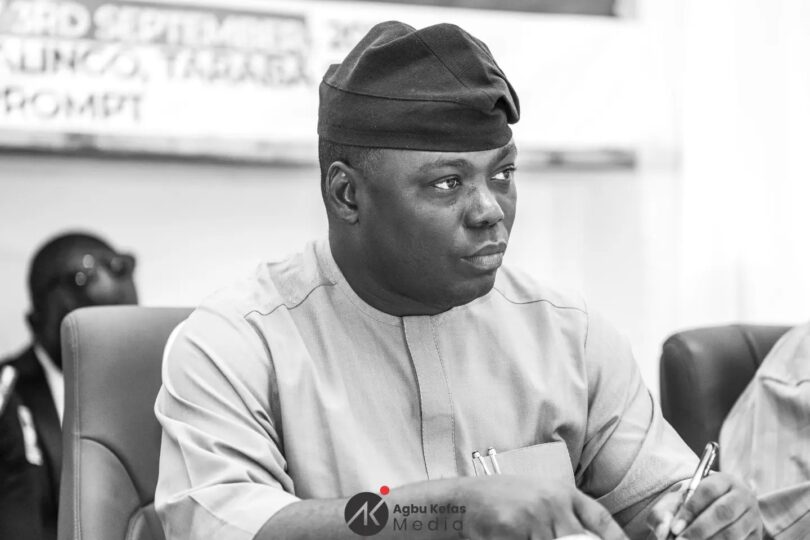
The group warned Governor Agbu Kefas that interference or imposition of candidates would weaken grassroots mobilisation ahead of 2027.
The governor defected from the PDP, along with party and government officials, to the APC early this year, and faces the challenging task of integrating his followers with the old members of his new party.
Mr Mamman, who was absent from the stakeholders’ meeting that produced the consensus committees, expressed scepticism about the initiative’s likelihood of success.
Tracing his political roots to the defunct Congress for Progressive Change (CPC), which later merged into the APC, he said he was among those who helped build the party’s structure in Taraba.
While noting that his experience and standing could favour him under a consensus arrangement, he maintained that direct primaries remain the safest path to preserving unity and avoiding post-primary disputes.
As political tensions rise, the crisis has also taken a legal turn.
The Federal High Court in Jalingo recently granted an order for substituted service on the Taraba APC chairman, Abubakar Bawa, in a suit challenging the outcome of the party’s state chairmanship primary.
The suit was filed by Abdulhadi Lau, an aspirant in the exercise, who accused the party leadership of irregularities and alleged that the process denied contestants a level playing field.
Counsel to the plaintiff, Pius Pius, told journalists that repeated efforts to serve the APC chairman personally failed, prompting the application for substituted service, which the court granted. The matter was adjourned to 8 June for further proceedings.
Political observers say the parallel political and legal battles reflect deepening fault lines within the Taraba APC.
They warn that unresolved grievances over candidate selection and party leadership could weaken the party’s internal structure, dampen grassroots mobilisation, and potentially trigger defections.
With preparations for the 2027 elections afoot, analysts say that how the APC manages resistance to the consensus plan and the ongoing court dispute may significantly shape its electoral fortunes in Taraba State.