Mr Dogara said civil society organisations should be regarded as strategic partners rather than critics of government, noting that they often possess technical expertise, community-level information and field evidence that can strengthen legislative oversight.
Former Speaker of the House of Representatives, Yakubu Dogara, has urged the National Assembly to deepen collaboration with civil society organisations (CSOs), saying stronger partnerships are essential to improving legislative oversight and ensuring that government spending delivers tangible benefits to Nigerians.
Speaking on Nigeria’s 25 years of uninterrupted democracy, the former speaker said many citizens were yet to enjoy the expected dividends of democratic governance despite successive budget approvals by the National Assembly.
He expressed concern over what he described as the persistent gap between funds appropriated by the legislature and the actual delivery of projects and services to the public.
According to him, legislative oversight must go beyond routine committee inspections and reports and should serve as an effective mechanism for detecting corruption, preventing waste, and ensuring the prudent use of public resources.
“The essence of oversight is to ensure that every kobo appropriated by the National Assembly is spent for the purpose for which it was approved and that Nigerians receive value for public funds,” he said.
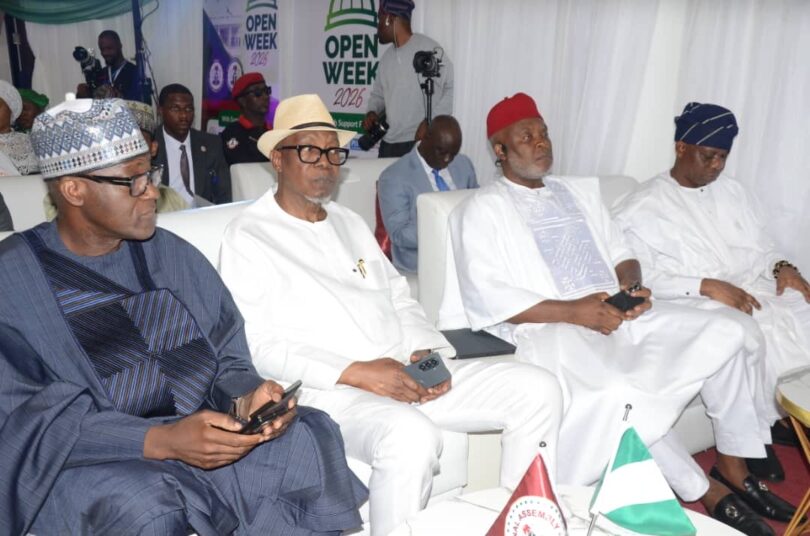
Mr Dogara commended the leadership of the House of Representatives, led by Speaker Abbas Tajudeen and Deputy Speaker Benjamin Kalu, for sustaining the National Assembly Open Week, describing it as an important platform for strengthening public engagement with parliament.
He said initiatives that encourage lawmakers to interact directly with citizens, civil society organisations and the media help to reinforce democratic accountability and improve confidence in public institutions.
According to him, democratic institutions become stronger when they embrace transparency and subject themselves to public scrutiny rather than operating in secrecy.
The former speaker warned against reducing legislative oversight to a mere ceremonial exercise, arguing that its primary objective is to ensure the faithful implementation of government programmes and to protect the interests of Nigerians.
He said civil society organisations should be regarded as strategic partners rather than critics of government, noting that they often possess technical expertise, community-level information and field evidence that can strengthen legislative oversight.
Mr Dogara described CSOs as the “eyes and ears” of the legislature, saying they play a critical role in monitoring constituency projects, tracking public expenditure and identifying gaps in project implementation and service delivery.
Recalling his tenure as speaker, he said he encouraged the participation of civil society organisations during budget defence sessions despite resistance from some lawmakers.
According to him, institutions that resist public scrutiny undermine trust in democratic governance.
Mr Dogara identified poor monitoring of budget implementation as one of Nigeria’s biggest accountability challenges, arguing that the country’s problem is not always a shortage of resources but inadequate enforcement of approved budgets.
He urged the National Assembly to give as much attention to monitoring budget implementation as it gives to passing appropriation bills, stressing that legislative responsibility does not end with budget approval.
The former speaker also called on the executive to cooperate fully with oversight institutions by providing timely access to information needed for effective legislative scrutiny.
He further urged civil society organisations to support the legislature with credible data, verified evidence, and well-documented findings to guide policy decisions and prompt corrective action where necessary.
Mr Dogara advocated institutionalising collaboration between the National Assembly and civil society organisations beyond the annual Open Week, saying sustained engagement would strengthen oversight, improve accountability and restore public confidence in democratic institutions.
He added that democracy thrives when institutions embrace openness, accountability and constructive criticism, calling on lawmakers, parliamentary officials, civil society groups and citizens to work together to ensure that government policies, budgets and development projects produce meaningful improvements in the lives of Nigerians.