Governor Sanwo-Olu reminded residents that anyone who unlawfully fells a tree is required under Lagos State law to replace it with five others.
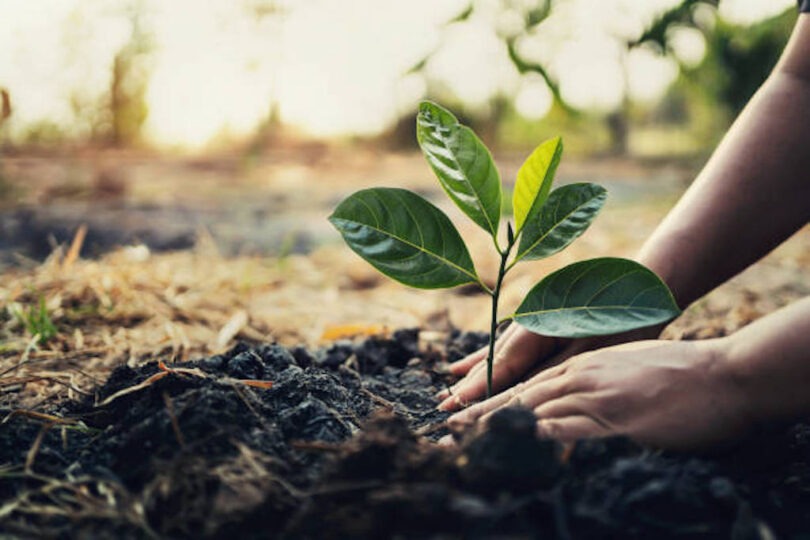
Lagos State Governor Babajide Sanwo-Olu has urged residents to plant and nurture trees as part of efforts to combat climate change and improve the environment, saying the state aims to plant at least 20,000 trees in 2026.
Mr Sanwo-Olu spoke on Tuesday at the 2026 Tree Planting Day celebration held at Eko Amore Gardens, Freedom Way, Lekki, according to a statement shared by the Lagos State Ministry of Environment and Water Resources.
Represented by the Secretary to the State Government, Abimbola Salu-Hundeyin, the governor described tree planting as one of the state’s key nature-based strategies for tackling climate change and environmental degradation.
“We are not just planting trees; we are planting hope and a lasting legacy. Together, we can build a Lagos that is cooler, cleaner, safer, flood-resilient and more beautiful for future generations,” he stressed.
Mr Sanwo-Olu explained that planting trees alone was not enough, urging residents to ensure the trees survive and mature. He said trees help lower temperatures, improve air quality, reduce flood risks and promote healthier communities.
He also announced the commencement of a fresh tree planting campaign across the state’s 57 Local Government Areas and Local Council Development Areas (LCDAs), directing council chairpersons to serve as “Tree Custodians” responsible for protecting and monitoring trees within their jurisdictions.
The governor reminded residents that anyone who unlawfully fells a tree is required under Lagos State law to replace it with five others.
He also unveiled 20 Lagos Tree Champions, comprising individuals and organisations recognised for supporting the state’s greening initiative, and encouraged residents to obtain free tree seedlings from Lagos State Parks and Gardens Agency (LASPARK) nurseries in Ikorodu and Agege.
Earlier, the Commissioner for the Environment and Water Resources, Tokunbo Wahab, described the annual tree planting exercise as a strategic response to the growing impact of climate change.
He said this year’s theme, “Trees for Lagos: Our City, Our Responsibility,” highlights the need for collective action to protect the environment.
“The celebration goes beyond a ceremonial event. It serves as a reminder that protecting the environment is a shared responsibility,” Mr Wahab stated.
He noted that increasing incidents of extreme weather, flooding, land degradation, biodiversity loss and rising temperatures underscore the need for urgent climate action, adding that tree planting remains one of the most effective nature-based solutions.
According to the commissioner, all 57 LGAs and LCDAs have been designated as Tree Custodians and are expected to nurture and monitor newly planted trees for at least 12 months to improve their survival rate.
Lagos has in recent years stepped up efforts to expand its green cover as part of measures to tackle climate change and the effects of rapid urbanisation.
Earlier this year, the state launched the “Me and My Tree” initiative to encourage residents to plant and nurture trees by providing free seedlings and incentives aimed at improving tree survival, reinforcing its broader strategy of using nature-based solutions to address rising temperatures and flood risks.
Mr Wahab urged residents to regard every tree planted as an investment in the future and embrace environmentally responsible practices that would preserve the state’s natural heritage.
Also speaking, the wife of the deputy governor, Oluremi Hamzat, noted that Lagos continues to face environmental pressures driven by rapid urbanisation, rising temperatures, flooding and land degradation.
She described tree planting as one of the simplest and most effective ways to improve air quality, reduce urban heat, preserve biodiversity and build resilient communities.
Mrs Hamzat called on families, schools, faith-based organisations, market associations and private sector operators to make tree planting a regular practice, describing it as an investment in the health, safety and prosperity of future generations.