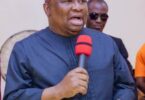
This part of the PREMIUM TIMES series of exclusive stories on unreported facts about the 2025 failed coup captures the account of the suspected leader of the plot chronicling how former Bayelsa Governor Sylva, allegedly a major financial backer, came into the coup picture.
New revelations about how Timipre Sylva, a former governor, ex-minister and member of the ruling All Progressive Congress (APC), figured in the alleged plot to topple President Bola Tinubu’s administration last year have come to light, as PREMIUM TIMES digs into secret details investigators have come to know but may not share publicly.
But the circumstances of how Mr Sylva came in contact with the coup architects and why he allegedly bought into the highly risky, make-or-break clandestine scheme have remained unknown until now.
PREMIUM TIMES has now found revealing clues from scouring heaps of documents running into over 7,400 pages, which investigators collected for the prosecution of suspects accused of playing various roles in the failed conspiracy.
The confidential documents include the statements of several suspects, of the alleged conspirators’ secret conversations, and other exhibits assembled by investigators.
Many suspects, including serving and retired military officers as well other civilians linked to the alleged plot are facing trial at either the General Court Martial convened by the military, and the Federal High Court in Abuja.
Mr Sylva’s name features in some of the charges. But the former governor, believed to be holed up abroad, has yet to be arrested or formally charged as an individual. Meanwhile, five of his former aides and domestic workers are facing charges in Abuja for allegedly concealing information about his whereabouts.
Mr Sylva has been named to be part of the financial network that allegedly bankrolled the failed plot.
PREMIUM TIMES reported in February that the former governor of the oil-rich Bayelsa State allegedly contributed the largest share of N785 million to the coup.
Investigators said he transferred the funds through Purple Waves Limited, an Abuja-based construction company. The money then went through the account of a bureau de change operator before ending up with the intended recipients. Purple Waves Limited’s secretary, John Ebokpo, has since been interrogated by security operatives, this newspaper reported.
New discoveries by this newspaper provide missing details preceding Mr Sylva’s alleged transfers, which dramatically shaped the future of the alleged coup up till when it was busted in September last year.
The suspected coup leader, Mohammed Ma’aji, a Nigerian Army colonel, detailed in his handwritten, bare-it-all statements and interviews by interrogators, how Mr Sylva’s buy-in became a turning point in the sputtering conspiracy that was struggling to get off the ground.

Mr Ma’aji traced his relationship with Mr Sylva to his days as a captain in the Nigerian Army.
He gave no date in his description of the early days of his encounter with Mr Sylva.
But he has since moved up three ranks since the time of their first meetings. In fact, Mr Ma’aji would have become a brigadier general in 2023, if he had not flunked the promotion examination that year. He failed the promotion examination again in 2024. He listed career stagnation as part of his motivation for the coup.
Their paths likely crossed for the first time many years ago during Mr Ma’aji’s deployment to the oil-rich Niger Delta. PREMIUM TIMES has revealed in previous reports that Mr Ma’aji built much of his operational experience in the region, which is central to his professional and political networks that he built over the years.
In 2017, he participated in Operation Crocodile Smile II, a major Nigerian Army exercise designed to address militancy, oil theft and insecurity in the Niger Delta and parts of the South-west. Military assignments like this always figures in the intersection of oil economy, politics and security, creating fora for engagements between communities, political actors and security personnel.
For Mr Sylva, who was in and out out of public offices from 1992 to 2023, running for elections and reaching the top layer of the power structure in the region by becoming an oil minister and governor in between, his social and political networks would have widened over time to include trusted security figures like Mr Ma’aji who have served in Bayelsa State or the Niger Delta.
At 28 in 1992, Mr Sylva took his first political office after winning a seat in the old Rivers State House of Assembly to represent Brass Constituency. He served as the special assistant to the minister of state for petroleum resources between 2004 and 2007. He became the governor of Bayelsa State in 2008 and was in office till 2012. Then, he took his last political office as the Minister of State for Petroleum Resources during the immediate-past Muhammadu Buhari administration in 2019 up till 2023.
In these years, both Mr Sylva and Mr Ma’aji must have become part of each others’ spheres of influence.

Although Mr Ma’aji has nursed the coup ambition since at least 2023, it never featured in his conversations with Mr Sylva.
While struggling to raise funds, he said he was under pressure from those he interchangeably called “all these boys” and “members,” apparently referring to some of his key allies.
At last, the military officer said he decided “just recently” to broach the subject to Mr Sylva, a member of the ruling APC, to seek his support.
This was likely to be some weeks before Mr Sylva allegedly started releasing funds in 2025.
He sought Mr Sylva’s financial support after narrating how the group had struggled in futility to raise funds for the execution of their plan.
“In terms of logistics support, also recently after much pressure from some members, I had to approach Chief Timipire Sylva for financial support,” Mr Ma’aji wrote.
But he said Mr Sylva was dismissive of the idea when it was mooted to him.
According to him, the former governor’s response was, “Col., please I don’t want to hear about this.”