Cumulatively, six people have been infected with malaria in connection with the airport.
German health authorities have urged calm after two workers at Frankfurt Airport died from malaria in a rare outbreak linked to the country’s biggest airport.
Cumulatively, six people have been infected with malaria in connection with the airport.
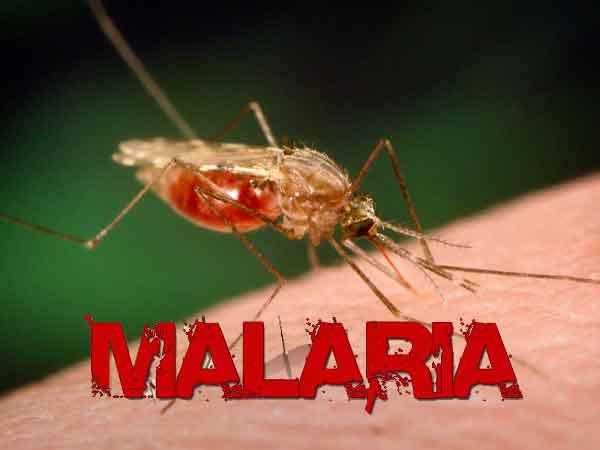
The health department described the cases as “airport malaria”, a very rare occurrence in which malaria-carrying mosquitoes are transported from endemic areas in aircraft cabins or baggage holds.
It said human-to-human transmission does not play a role in airport malaria.
“Please understand that we must protect the privacy of the individuals affected and therefore cannot provide any further information about them,” it noted.
The latest cases are not the first recorded at Frankfurt Airport. According to the health department, the last case of airport malaria was recorded in 2023, while a cluster of three cases was recorded in 2022.
One of the two workers who died became ill in early July, while the second became sick in mid-August, The Guardian reports.
The four other infected workers have been treated in hospital and are now out of danger.
Mosquito traps have been installed at and around the airport as part of efforts to monitor the situation.
According to The Guardian, mosquitoes caught in the traps are being examined at a tropical medicine laboratory in Antwerp, Belgium.
The Robert Koch Institute, Germany’s federal public health and disease control agency, believes the infections may have been transmitted by an Anopheles stephensi mosquito brought into Germany by plane.
Peter Tinnemann, the head of Frankfurt’s Health Department, said: “The mosquito is probably already dead.”
Mr Tinnemann said higher temperatures in Germany could increase the likelihood of mosquitoes surviving for longer periods, but maintained that the risk to the population of Frankfurt remains low.
“Not everyone should assume that just because they have a headache, fever and nonspecific symptoms, they are now infected with malaria because of the case at the airport,” he said.
However, he said the increase in malaria cases made it necessary to check whether existing measures, including the disinfection of aircraft and removal of mosquito breeding grounds, were being properly followed.
The development is relevant to Nigeria because Frankfurt Airport offers direct flights to Nigeria, while Nigeria remains one of the countries with a high malaria burden.
According to the World Health Organisation (WHO), 90 per cent of malaria cases occur in sub-Saharan Africa. Nigeria, Ethiopia, Kenya and Tanzania are among countries in the region with direct flight connections to Frankfurt and high to widespread malaria risk.
Malaria remains a major public health concern in Nigeria, although recent data show signs of progress.
In July, Malaria Consortium reported that malaria prevalence in Nigeria had fallen from 42 per cent in 2010 to 15.2 per cent in 2025.
Despite the decline, the organisation said Nigeria continues to carry one of the world’s heaviest malaria burdens, with children under five and pregnant women disproportionately affected.
Malaria is caused by parasites transmitted through the bites of infected mosquitoes. It is preventable and curable, but can become severe or fatal when diagnosis and treatment are delayed.