Every politician travels a road. Some spend their entire careers looking for one. Others inherit one already cleared before them. A few are forced to create their own path through difficult terrain, resistance, uncertainty and opposition. Distinguished Senator Uba Sani belongs to the last category.
Long before he became the incumbent cum visionary governor of Kaduna state, he had become accustomed to travelling roads many politicians preferred to avoid. Before the title of governor was attached to his name, Senator Uba Sani had already travelled through some of the most demanding corridors of Nigeria’s public life.
He was part of a generation that confronted military rule, defended democratic ideals, and insisted that citizenship meant more than silent obedience. Those years offered neither comfort nor guarantees. Yet they shaped a political character that would later define his approach to governance.
On one hand, it is trite asserting that the road from activism to public office is often longer than people imagine. Many activists never successfully navigate it. Some lose their convictions along the way, while others struggle to translate ideals into practical governance.
Senator Uba Sani’s political evolution, however, was different. His years in advocacy became the foundation upon which his public service philosophy was built. His tenure in the Senate between 2019 and 2023 further expanded that journey.
It exposed him to the complexities of policymaking, constituency representation, and the delicate art of balancing competing interests. More importantly, it deepened his understanding of the challenges facing ordinary Nigerians, particularly those living far from the attention of government.
Those experiences would later prove invaluable when he assumed leadership of Kaduna State. When he became governor in May 2023, he encountered a state standing at a difficult crossroads. Kaduna possessed enormous human and economic potential, yet many communities remained disconnected from opportunities.
Some parts of the state struggled with insecurity. Others battled inadequate infrastructure. In several places, old divisions had hardened into mutual suspicion. The challenge before him was not merely administrative. It was fundamentally about connection.
How could a state as diverse and complex as Kaduna move forward together? How could communities separated by geography, religion, ethnicity, insecurity, and economic hardship find themselves on the same journey? Governor Uba Sani’s answer was remarkably simple: build roads.
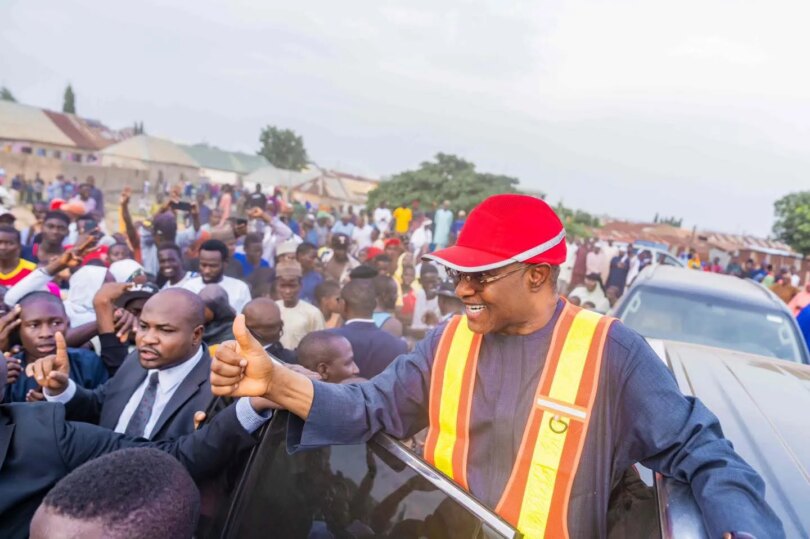
Not just roads of asphalt and concrete, but roads of trust. Roads of dialogue. Roads of inclusion. Roads that would bring communities closer to government and government closer to communities. One of the most significant features of his administration has been a deliberate effort to reduce the distance between people.
Traditional rulers, religious leaders, women groups, youth organisations, community stakeholders, and civil society actors have increasingly found channels through which they can engage government. The message has been consistent: development works best when people feel included.
This approach has been particularly important in a state whose history has often been shaped by differences. Kaduna has long reflected Nigeria in miniature, carrying the country’s strengths as well as its tensions. Governing such a state requires more than political authority. It requires bridge-building.
Over the last three years, Distinguished Senator Uba Sani has invested considerable energy in building those bridges. He has encouraged dialogue where silence once prevailed. He has promoted cooperation where suspicion once dominated.
He has consistently projected the idea that development should not recognise religious, ethnic, or regional boundaries. In many respects, these invisible roads have become just as important as the physical ones. They have helped create an atmosphere where conversations increasingly revolve around development rather than division.
They have fostered a sense of shared ownership in the future of Kaduna State. Yet no matter how noble a philosophy may be, it ultimately demands visible expression. Citizens judge governments not only by intentions but by outcomes. It is here that the physical road revolution under Governor Uba Sani becomes particularly significant.
When he assumed office, several strategic road projects had stalled. Contractors grappled with outstanding obligations. Communities waited endlessly for completion dates that never seemed to arrive. Across the state, incomplete projects stood as reminders of interrupted promises.
However, the governor chose not to abandon those projects. Instead, he adopted a more difficult approach: completing them. That decision has transformed the infrastructure landscape of Kaduna. Roads that once appeared trapped in uncertainty gradually returned to life.
Construction resumed. Contractors returned to sites. Progress replaced stagnation. Today, from Kakuri to Barnawa, from Pan Drive to Rigasa, from Kabala to Aliyu Makama, evidence of that decision is visible. What were once symbols of delay have become symbols of continuity and responsible governance.
Beyond Kaduna metropolis, the administration’s footprint stretches deep into rural communities where infrastructure deficits had persisted for decades. This is perhaps where the significance of the road programme becomes most apparent.
The Gadan Gayan–Gwaraji–Maraban Kujama road remains one of the clearest examples. Stretching approximately 35 kilometres and supported by a major bridge across River Kaduna, the project has changed the reality of dozens of farming communities.