Special Reports
Israel’s parliamentary election too close to call as Netanyahu seeks another term

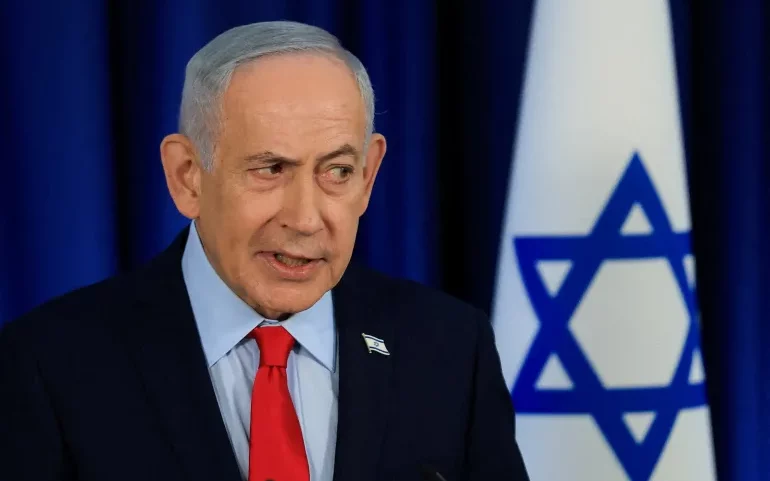
This election will determine whether Netanyahu remains in power or Israel sees a change in leadership.
Prime Minister Benjamin Netanyahu’s right-wing bloc takes an early but marginal lead in the Israeli parliamentary election, with a third of the votes counted.
The two revised exit polls released so far showed Mr Netanyahu’s right-wing camp and his opponent Mr Eisenkot’s bloc tied at 51 seats. Israeli news outlets rely heavily on polls to predict elections.
The winning bloc needs at least 61 seats to form a majority government.
This election will determine whether Mr Netanyahu remains in power or Israel sees a change in leadership.
The election is a referendum on the country’s leadership after the 7 October 2023 Hamas attack, its subsequent wars, and the political and security decisions that have shaped Israel since then. The result could influence the direction of the war, relations with the Palestinians, Israel’s international standing and its domestic political future.
After polls showed a neck-and-neck race, Mr Netanyahu called for a strong right-wing government among the Zionist public and called for the formation of a “national right-wing government.”
He warned against forming one dependent on Arab parties. Arabs make up one-fifth of Israel’s population. Many of them also identify as Palestinians.
He recounted what he called his government’s military achievements and argued its work remained unfinished.
“Iran is weaker than ever; Israel is stronger than ever,” he said.
He also said Israel has a “unique opportunity” alongside President Donald Trump to “remove the Iranian threat once and for all.”
Meanwhile, the opposition has disputed the initial projection of 50 seats for Mr Netanyahu’s bloc, arguing that the prediction underestimated its support.
Mr Eisenko described the election as Israeli society’s response to the 7 October attacks and three years of war.
“People had not remained indifferent. They had come out to vote,” he said.
Mr Eisenkot said Israelis voted for “change” which he intends to introduce by forming “a government that represents the entire society.”
Meanwhile, Arab-led parties are also celebrating, with exit polls projecting they will win 19 seats. It will be the most they’ve ever held in parliament.


Nigerian govt begins $100m South-east gas pipeline project

You’re Afraid – Anyanwu Replies Uzodimma Over Rainbow Coalition Comment

Nestoil pays further $40 million to lenders after EFCC intervention

Governor Dapo Abiodun’s SSG Olatokunbo Talabi Remains President Of Security Printing House That Prints INEC Ballot Papers, And Secretly Went To A British Virgin Islands Court To Resurrect The Offshore Company

Man, 36, Remanded In Kirikiri For Allegedly Sexually Assaulting Lady In Ikorodu

Police arrest two over fake video to escalate communal clash

Youth Olympics: Nigeria names 19 athletes for Dakar 2026

Niger governor’s convoy crash kills four FUT Minna students, driver

INVESTIGATION: How Anthony Kila falsified all his academic qualifications – from Bachelor’s to Doctorate

Customer Service Week: Inside How Jumia Is Using Technology To Go The Extra Mile For Shoppers

Google opens AI-content detector to enable verification

Kayefi headlines Tales & Tunes as ID Cabasa leads music direction in Sheffield

How Houthi military aggression in Red Sea threatens Africa

Ogaga Ifowodo wins $100,000 Nigeria Prize for Literature

How Lagos Families Are Allegedly Buying Contaminated Meat In Dirty Conditions At Mushin, Oshodi, Mile 12, Surulere Markets

UK migrant workers wear chains, sing Asa’s ‘Jailer’ to protest proposed visa reforms

 Top Stories6 days ago
“The Task Force Is On Top Of It, NCDC Is On Top Of It” — FG Assures Nigerians Of Capacity To Contain Ebola
- Special Reports7 days ago
Dangote To Nigerian Creatives: Africa Must Build Its Own Prosperity
 Special Reports6 days ago
AGN President Abubakar Yakubu Bags Bebuzee Ambassadorial Deal
- Special Reports7 days ago
Glovo, Verve Partner To Deliver Greater Value To Nigerian Customers
 News7 days ago
Uduaghan: Delta community declares Friday grieving day
- News7 days ago
Otti Flags Off Reconstruction Of Two Aba Roads
- Top Stories6 days ago
“The Legal Process Must Not Become A Source Of Intimidation” — NUJ Demands Probe Of Kaduna Journalist’s Conviction Over Facebook Post
- Special Reports7 days ago
Enugu People Cry Blood As Gov. Peter Mbah Voted Twice For The Same Five-Star Hotel In One Budget After Spending N9.73 Billion On It