News
Customs Vows Tougher Fight Against Money Laundering, Terrorism Financing

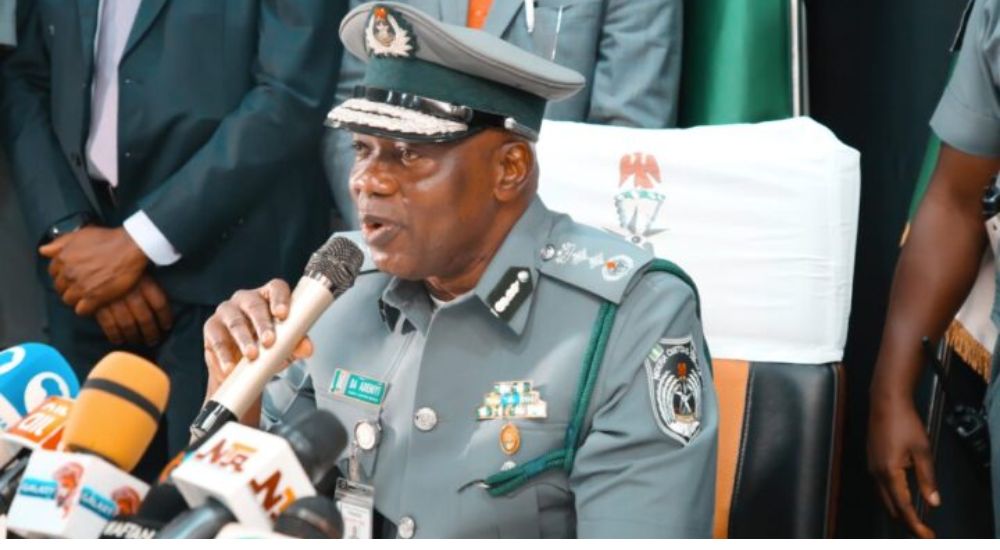
The Nigeria Customs Service (NCS) has pledged to intensify efforts to combat money laundering, terrorism financing and other illicit cross-border financial activities as Nigeria prepares for its next international assessment of its anti-money laundering framework.
The Service said it would work with other relevant agencies to sustain the country’s gains following its removal from the Financial Action Task Force (FATF) grey list, warning against any reversal of the progress made in strengthening Nigeria’s financial integrity systems.
The Comptroller-General of Customs, Adewale Adeniyi, represented by the Deputy Comptroller-General in charge of Finance, Administration and Technical Services, Kikelomo Adeola, gave the assurance on Monday during a stocktaking meeting at the NCS headquarters in Abuja.
The meeting was organised to assess Nigeria’s preparedness for its next Anti-Money Laundering and Countering the Financing of Terrorism (AML/CFT) mutual evaluation.
Adeola described the exercise as a critical opportunity to assess existing measures, identify gaps and develop strategies to ensure Nigeria maintains its progress in combating financial crimes.
“It is an opportunity to take an honest look at the progress Nigeria has made so far, identify the gaps that presently exist and ensure that Nigeria’s achievements are sustained, because if they are not, it is like one step forward, two steps backwards, and that should not be our portion,” she said.
She commended the Nigerian Financial Intelligence Unit (NFIU) for its initiatives aimed at strengthening the country’s anti-money laundering framework and coordinating preparations for the upcoming evaluation.
“I believe Nigeria will never go back to that grey list,” Adeola declared.
She also stressed that the Customs Service could not tackle the challenge in isolation, noting that effective collaboration among government agencies was essential to sustaining the country’s progress.
“A tree does not make a forest,” she said.
Speaking at the meeting, the Chief Executive Officer of the NFIU, Hafsat Abubakar, represented by the Chief Operations Officer for Law Enforcement Support and Coordination, Emmanuel Sotande, said the exercise was designed to measure progress, identify outstanding weaknesses and strengthen institutional readiness for the next assessment.
Sotande said Nigeria’s removal from the FATF grey list was a collective achievement that required continued cooperation among agencies responsible for preventing and detecting financial crimes.
“Nigeria’s exit from the FATF grey list in October 2025 was a significant achievement that we all achieved by working together,” he said.
He added that the priority was now to demonstrate that the country’s reforms had translated into sustained and effective enforcement.
According to him, the Customs Service occupies a strategic position in Nigeria’s anti-money laundering, counter-terrorism financing and counter-proliferation framework beyond its traditional responsibilities of revenue collection, trade facilitation and border enforcement.
He explained that Customs officers have access to import and export documents, cargo records, trade information and border intelligence that could help authorities identify suspicious transactions and uncover criminal networks operating across borders.
“Customs plays a vital role in detecting suspicious transactions and activities across borders,” Sotande said.
He noted that timely information sharing between the NCS and the NFIU would improve the identification of suspicious networks, the tracing of illicit proceeds and the coordination of enforcement actions.





Senator questions Tinubu’s fresh loan request, use of previous borrowings

Yahaya Bello’s N110.4bn Trial: EFCC Traces Kogi LG Funds

CBD COP17: Nigeria urges developed countries to fulfil $30bn annual biodiversity funding pledge

Police Arraign 18-Year-Old Woman Over Alleged N30m Jewelry Theft In Lagos

Olympic Eagles begin U-23 AFCON Qualifier preparations in Ikenne

Benue police rescue 29 kidnap victims, arrest 34 foreigners
2027: Tinubu lacks capacity to govern Nigeria, he should go home and rest — Obi

Kano lawmakers back establishment of state police

INVESTIGATION: How Anthony Kila falsified all his academic qualifications – from Bachelor’s to Doctorate

Customer Service Week: Inside How Jumia Is Using Technology To Go The Extra Mile For Shoppers

Google opens AI-content detector to enable verification

Kayefi headlines Tales & Tunes as ID Cabasa leads music direction in Sheffield

How Houthi military aggression in Red Sea threatens Africa

How Lagos Families Are Allegedly Buying Contaminated Meat In Dirty Conditions At Mushin, Oshodi, Mile 12, Surulere Markets

Ogaga Ifowodo wins $100,000 Nigeria Prize for Literature

UK migrant workers wear chains, sing Asa’s ‘Jailer’ to protest proposed visa reforms

 Top Stories6 days ago
“The Task Force Is On Top Of It, NCDC Is On Top Of It” — FG Assures Nigerians Of Capacity To Contain Ebola
- Special Reports7 days ago
Dangote To Nigerian Creatives: Africa Must Build Its Own Prosperity

 Politics7 days ago
Tinubu Will Impose Fuel Tax On Nigerians If Re-elected In 2027 – ADC
 Special Reports6 days ago
AGN President Abubakar Yakubu Bags Bebuzee Ambassadorial Deal
- Special Reports7 days ago
Glovo, Verve Partner To Deliver Greater Value To Nigerian Customers
 News7 days ago
Uduaghan: Delta community declares Friday grieving day
- News6 days ago
Otti Flags Off Reconstruction Of Two Aba Roads
- Top Stories6 days ago
“The Legal Process Must Not Become A Source Of Intimidation” — NUJ Demands Probe Of Kaduna Journalist’s Conviction Over Facebook Post