News
Hardship: FG To Pay Workers N70,000 Transport Allowance For Six Months

…Begins New Minimum Wage Negotiations With Labour Unions
The Federal Government and the Nigeria Labour Congress (NLC) have reached an eight-point resolution to avert a fresh industrial action, including the payment of N70,000 transport intervention to workers across all levels for six months commencing from November 2026.
The agreement was reached at a conciliation meeting held at the Federal Ministry of Labour and Employment between the Federal Government and the leadership of the NLC on Tuesday, following an earlier meeting on October 22, 2026.
The meeting was convened after the Joint meeting of the Central Working Committee and National Executive Council of the NLC issued a communique listing grievances over the commencement date for the national minimum wage discussion and implementation, reduction in petroleum pump price, palliatives to cushion workers challenges, Joint National Public Service Negotiation Council issues on public service welfare, Joint Health Sector Unions issues on CONHESS adjustment, tax relief for workers and hazard allowance for agricultural workers.
The leadership of the NLC expressed concern over what it described as the Federal Government’s attitude towards the issues, while the Federal Government stated that it fully respects the right of the Congress to advocate for improved working conditions and is making structured interventions to address every aspect.
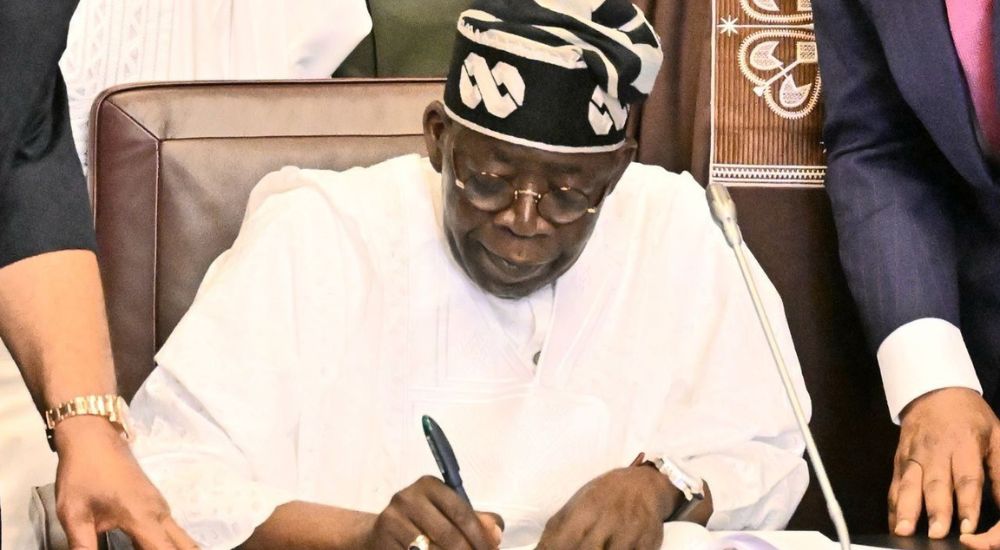
The resolutions were signed for the Federal Government by Tanimu Yakubu, Director-General Budget, and Dr. Garba Abdul S.U, Permanent Secretary, Service Welfare Office of the Office of the Head of Civil Service of the Federation.
For Labour, it was signed by Comrade Joe Ajaero, NLC President and Comrade Olowoyo Gbenga, National Secretary of the Joint National Public Service Negotiation Council.
The overall document was signed by the Minister of Labour and Employment, Dr. Muhammad Maigari Dingyadi.
After extensive deliberations, both parties resolved that the minimum wage negotiations committee be constituted with commencement meeting immediately.
“It should however be noted that there is a disagreement on the effective date of implementation,” the resolution stated.
On reduction in petroleum pump price and demand for palliative to cushion the effect of challenges faced by workers, the meeting agreed that the transport intervention of N70,000 commencing from November 2026 would be paid across all levels for the period of six months.
On peculiar allowance, the resolution disclosed that the allowance has been approved by the Federal Government with effect from May 1, 2026.
“The payment of arrears would commence in November 2026 in three equal monthly installments,” it said.
For health workers, it was agreed that 19 months arrears of allowances would be redeemed within three months with effect from December 2026, a move aimed at addressing longstanding agitations in the health sector over outstanding entitlements.
On tax relief for workers, the meeting noted that since it is a statutory matter, the issue will be taken to the National Executive Council for consideration. Labour leaders had argued that tax relief would increase disposable income at a time of high inflation.
On hazard allowance for agricultural officers, the meeting noted that the Federal Ministry of Agriculture and Food Security had submitted the list of beneficiaries and cost implication to the National Salaries, Incomes and Wages Commission, which is being verified.
“The verification is expected to complete within two weeks after which the template for the implementation would be issued by the NSIWC,” the resolution said.
Similarly, on CONHESS adjustment for health workers, the NSIWC promised to complete the update of the cost implication within three weeks to enable the Presidential Committee on Salaries to take a decision on the adjustment.
The meeting further urged state and local governments to key into the intervention process, while unions were asked to push for its implementation at sub-national levels.
Also, both parties agreed to reconvene after a period of one month to appraise the level of implementation of the resolutions.






INEC speaks on suspicious photos in voter register

State Police: Obasa Insists On Total Autonomy, As Lagos Assembly Backs Reform

Reps seek transparent framework for EV, CNG vehicle imports
Lagos Sets Deadline For Residents To Get Health Insurance
Dangote Refinery’s historic IPO nets investors from 120 countries worldwide, 54 in Africa

Atiku Reveals Tinubu’s Alleged Plot to Use Fresh Loans to Fund 2027 Campaign

Five countries seek Nigeria’s support for climate finance reforms
Hardship: FG To Pay Workers N70,000 Transport Allowance For Six Months

INVESTIGATION: How Anthony Kila falsified all his academic qualifications – from Bachelor’s to Doctorate

Customer Service Week: Inside How Jumia Is Using Technology To Go The Extra Mile For Shoppers

Google opens AI-content detector to enable verification

Kayefi headlines Tales & Tunes as ID Cabasa leads music direction in Sheffield

How Houthi military aggression in Red Sea threatens Africa

How Lagos Families Are Allegedly Buying Contaminated Meat In Dirty Conditions At Mushin, Oshodi, Mile 12, Surulere Markets

Ogaga Ifowodo wins $100,000 Nigeria Prize for Literature

UK migrant workers wear chains, sing Asa’s ‘Jailer’ to protest proposed visa reforms

 Top Stories6 days ago
“The Task Force Is On Top Of It, NCDC Is On Top Of It” — FG Assures Nigerians Of Capacity To Contain Ebola
- Special Reports7 days ago
Kenya confirms ninth Ebola case, says all patients improving
- Special Reports6 days ago
Dangote To Nigerian Creatives: Africa Must Build Its Own Prosperity
- Special Reports7 days ago
18-Year Old Arraigned In Court For Allegedly Stealing N30m Jewelries In Popular Lagos Estate
- Special Reports7 days ago
Champions League: Lookman, Ayaosi shine as PSG end Barcelona’s winning run
- News7 days ago
Abia Tertiary Sports Fiesta Begins November As Otti Receives Unity Torch

 Politics7 days ago
Tinubu Will Impose Fuel Tax On Nigerians If Re-elected In 2027 – ADC
- Special Reports7 days ago
Lagos Drowns In Waste As LAWMA Crisis Deepens: Heaps Take Over Streets, Residents Fear Disease