Top Stories
“Some Threatened To Leave Quarantine” — NCDC Explains Financial Support, Rejects 2027 Election Claims, Says Nigeria Not Yet Out Of Woods

*Says Ebola Contacts Rise To 54 After Uber Driver Is Identified
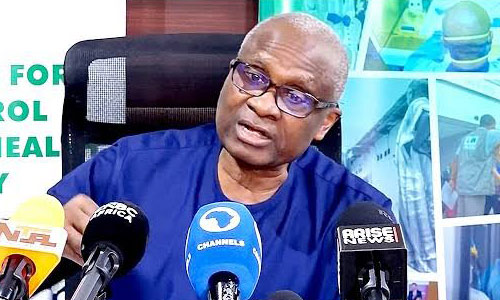
The Director-General of the Nigeria Centre for Disease Control and Prevention, Dr Jide Idris, has rejected claims that the Federal Government is using the Ebola outbreak as a political strategy ahead of the 2027 general election, declaring that no government would use the disease as a political weapon.
Idris, who spoke on Channels Television’s Politics Today on Monday evening, also disclosed that the number of identified contacts linked to Nigeria’s imported Ebola case had risen to 54 following the identification of an Uber driver who transported the index patient to her first hospital.
He said Nigeria currently had no active positive Ebola case following the medical evacuation of the index patient to Switzerland, but warned that the country was “not yet out of the woods” because contact tracing and monitoring were still ongoing.
On claims that the outbreak was being politically manipulated ahead of the 2027 election, Idris said, “That is totally false. We in the health sector will not use disease issues as a political weapon.”
Asked whether the election could be postponed because of Ebola, he said such a decision was not within his authority and expressed hope that the situation would not deteriorate to that point.
He said a widespread outbreak could raise concerns, but stressed that there was currently no justification for such a step.
According to him, Ebola had been spreading in the Democratic Republic of the Congo for months and the NCDC had been monitoring developments because cross-border movement, international flights and other forms of travel made importation possible.
“So when it came, it came,” Idris said, adding that Nigeria could not yet say with certainty that it was out of danger.
“No government will use Ebola as a political weapon,” he added.
Nigeria confirmed its first Ebola case in more than a decade on October 20, 2026, after laboratory tests detected the virus in a 42-year-old woman living in Abuja who had travelled from Uganda.
The patient was subsequently medically evacuated from Abuja to Switzerland after her condition improved.
Explaining the circumstances surrounding the evacuation, Idris rejected suggestions that the patient had been secretly taken out of the country.
“I won’t use the word ‘snuck out’,” he said.
According to him, the request for evacuation came from the Swiss Embassy and government after the patient’s husband, a Swiss national, pushed for her transfer.
Idris said consultations were subsequently held with the Coordinating Minister of Health and Social Welfare, Professor Muhammad Ali Pate, during which Nigeria’s obligations under the International Health Regulations, the patient’s human rights and public health considerations were evaluated.
He said approval was granted subject to strict safeguards, including clear arrangements on who would receive the patient in Switzerland and how she would be transported.
The NCDC boss said the evacuation followed standard infection prevention and control procedures from the hospital to the aircraft, with Switzerland providing a specialised aircraft for the operation.
Idris disclosed that the patient was still testing positive when she left Nigeria after undergoing two tests.
He said the information was communicated to Swiss authorities, who made appropriate arrangements for her arrival and continued treatment.
Her husband, however, tested negative for the virus.
Idris explained that a patient continuing to test positive did not necessarily mean treatment had failed because treatment for Ebola is largely supportive and symptomatic.
According to him, there is currently no approved vaccine or drug specifically for the Ebola strain involved in Nigeria’s case, meaning doctors focus on managing symptoms while the patient’s immune system fights the infection.
He said the virus could remain in the blood for some time, resulting in continued positive test results.
Idris disclosed that the patient had experienced multiple organ failure but later improved to the point where she was able to walk around the hospital before being evacuated.
He described the improvement as evidence of the quality of care provided by Nigerian doctors.
Explaining the disease, Idris said Ebola could initially present with symptoms similar to malaria, including fever, body aches and headaches.
He said it could later progress to diarrhoea, bleeding from the mouth, nose and other openings, as well as damage to the kidneys, liver and blood.
The disease could also cause severe fluid loss, shock and neurological complications, while death could occur from multiple organ failure when the virus overwhelms the body.
He said the Nigerian index patient did not experience bleeding.
On the strain responsible for the current infection, Idris said it differed from the Zaire strain involved in Nigeria’s 2014 outbreak.
According to him, vaccines developed against the Zaire strain do not work against the current strain.
He said vaccine and drug trials targeting the strain were already underway, including in the Democratic Republic of the Congo, but had not reached the stage of regulatory approval.
Idris added that an antiviral drug being studied in those trials had been considered for compassionate use in Nigeria, subject to regulatory approval, but the plan was overtaken by the patient’s evacuation.
On transmission, Idris stressed that Ebola is spread through contact and is not airborne.
He said transmission could occur through infected body fluids, including blood, sweat, saliva and urine, while unprotected sexual contact could also transmit the virus.
According to him, breaking the chain of physical contact remains critical to bringing an outbreak under control.
He advised Nigerians to wash their hands regularly, avoid handshakes and consider elbow greetings instead.
Idris also recommended regular cleaning of surfaces, the use of sanitisers and appropriate personal protective equipment where necessary.
He urged members of the public to cover their mouths when coughing or sneezing, avoid direct contact with another person’s sweat and maintain physical distance where possible.
He also advised transport operators to clean public vehicles regularly, noting that crowded buses could increase the risk of physical contact.
Idris said properly ventilated or air-conditioned spaces could reduce sweating and make people more comfortable, while emphasising again that Ebola is not transmitted through the air.
He said restrictions on movement could be introduced if the outbreak reached a certain level but explained that established public health guidelines would determine when such measures became necessary.
On the use of herbal remedies, including ginger, turmeric and other homemade mixtures, Idris said there was no scientific evidence that such substances could treat Ebola.
He said some herbal teas might have limited general health benefits but no studies had demonstrated that they could cure Ebola or COVID-19, adding that herbal preparations could also produce side effects.
Turning to contact tracing, Idris said the patient arrived in Nigeria on October 3 without symptoms but developed symptoms about four days later.
She was moved between healthcare facilities before reaching the hospital where she was eventually treated, raising the possibility that she had come into contact with several people.
The NCDC was notified about the case on October 19, requested a blood sample and subsequently received a positive laboratory result.
Idris said every identified contact had been line-listed, beginning with primary contacts at the hospitals involved.
Each contact, he said, must be followed for 21 days, representing Ebola’s maximum incubation period.
The number of primary contacts had stood at 54 before one person was removed from the list, bringing it down to 53.
However, investigators subsequently identified the Uber driver who transported the patient to the first hospital, bringing the number back to 54.
According to Idris, more than 40 of the contacts were being quarantined in Abuja, while six considered to be at lower risk were self-quarantining at home.
Their temperatures were being checked twice daily, in the morning and evening.
He disclosed that three contacts who developed symptoms were tested on Monday and all returned negative results.
The NCDC, he said, would now systematically identify secondary contacts.
Idris explained that no contact would be cleared until the person had completed the required 21-day follow-up and returned a negative test.
He said the agency did not yet know how many secondary contacts might eventually be identified.
“There is no active positive case in Nigeria at the moment,” he said, but stressed that surveillance would continue until all contacts had completed monitoring.
Asked whether the evacuation of the patient to Switzerland amounted to a lack of confidence in Nigeria’s healthcare system, Idris rejected the suggestion.
He said Nigeria had competent infectious disease specialists and that the NCDC maintained a register of professionals who participated in the successful response to the 2014 Ebola outbreak.
According to him, one specialist who worked alongside him during the 2014 Lagos response arrived in Abuja on Sunday, visited the hospital that treated the patient and would assist in training other healthcare facilities.
Idris stressed that the medical aircraft used for the evacuation was arranged by Switzerland, not Nigeria.
He said patients also had a right to seek treatment abroad where another government requested their repatriation.
On reports that quarantined contacts were being paid ₦100,000 weekly, Idris said such support had not been budgeted for and did not confirm the ₦100,000 figure.
He explained that people placed in quarantine had been removed from their normal environment for public health reasons, making the NCDC responsible for their feeding and accommodation.
According to him, some quarantined individuals complained that they had left their families and businesses behind and threatened to leave the facilities.
Allowing them to leave, he said, could create a public health risk.
The NCDC therefore decided, on compassionate grounds, to provide temporary support to affected individuals.
Idris noted that quarantine facilities were ordinarily the responsibility of state governments and, in Abuja, the Federal Capital Territory Administration.
He said the NCDC was working with FCT officials and training personnel in contact tracing and infection prevention and control.
He added that Pate had spoken with the FCT Minister, who agreed to release funds to support the response.
Idris also confirmed that the Federal Government had approved a ₦10 billion intervention fund before the index Ebola patient arrived in Nigeria.
He said the money “came in at the nick of time” and that spending had only recently commenced.
According to him, the intervention fund would be used for personal protective equipment, payments for surveillance and contact-tracing teams, laboratory reagents and consumables, as well as other activities under the eight pillars of outbreak control.
He said the pillars included coordination and leadership, surveillance and laboratory capacity, among other areas.
Idris explained that the ₦10 billion was not requested solely for Ebola but for controlling other endemic diseases, particularly as Nigeria approached the Lassa fever season.
He said Lassa fever and Ebola belonged to the same class of viral haemorrhagic fevers and therefore shared several control measures, including surveillance, diagnostics, screening and monitoring at points of entry.
According to him, the President approved the funding request before the Ebola case arrived in Nigeria.
Part of the intervention fund, he added, would also be used to repair damaged treatment and isolation centres across the country, including the facility in Abuja.
Idris urged anyone experiencing symptoms associated with Ebola, or anyone who had been in contact with a suspected case, to immediately contact the NCDC through its toll-free hotline, 6232, which operates 24 hours daily.
He also advised such persons to visit the nearest healthcare facility or public health office for assessment.
The NCDC boss maintained that while Nigeria presently had no active confirmed Ebola patient within the country following the evacuation to Switzerland, contact tracing, surveillance and other containment measures must continue until health authorities are satisfied that the risk of further transmission has ended.
.. “Some Threatened To Leave Quarantine” — NCDC Explains Financial Support, Rejects 2027 Election Claims, Says Nigeria Not Yet Out Of Woods … NewsNGR.


Katsina govt says it invested over ₦4bn in youth craft village as 1,662 trainees graduate

ADC demands disclosure on SUVs donated to APC youth leaders

Management Of Sinners To Angels Celebrates Dr. Betta Edu On Her Birthday

Taraba Killings: Governor extends security measures by six months
Atiku’s campaign challenges Shettima over Tinubu’s school records

You Know Nothing About Economics – Presidency Hits Back At Atiku

“Some Threatened To Leave Quarantine” — NCDC Explains Financial Support, Rejects 2027 Election Claims, Says Nigeria Not Yet Out Of Woods

Bandits Kill ISLAMIC Cleric In Katsina

INVESTIGATION: How Anthony Kila falsified all his academic qualifications – from Bachelor’s to Doctorate

Google opens AI-content detector to enable verification

Customer Service Week: Inside How Jumia Is Using Technology To Go The Extra Mile For Shoppers

Kayefi headlines Tales & Tunes as ID Cabasa leads music direction in Sheffield

How Houthi military aggression in Red Sea threatens Africa

Ogaga Ifowodo wins $100,000 Nigeria Prize for Literature

How Lagos Families Are Allegedly Buying Contaminated Meat In Dirty Conditions At Mushin, Oshodi, Mile 12, Surulere Markets

UK migrant workers wear chains, sing Asa’s ‘Jailer’ to protest proposed visa reforms

 Investigations7 days ago
Emirates explores a range of new innovations for customers with accessible travel requirements at AccessAbilities Expo, Dubai 2026
- News7 days ago
Lagos Alone Cannot Afford Fourth Mainland Bridge — Hamzat
- Top Stories5 days ago
“The Task Force Is On Top Of It, NCDC Is On Top Of It” — FG Assures Nigerians Of Capacity To Contain Ebola
- Investigations7 days ago
MILO and Ahmed Musa Support 2500+ Young Footballers Through Kano Sports Clinic

 Politics7 days ago
Tinubu Campaign Speaks on Reported Plot To Assassinate Atiku
- Special Reports7 days ago
TRENDING: Aliko Dangote accepts Isbae U’s podcast invitation
- News7 days ago
Kano Police Arrest Suspect In Falgore Forest Kidnapping

 News7 days ago
FG Approves Five-Station Monorail Link To Lagos Airport