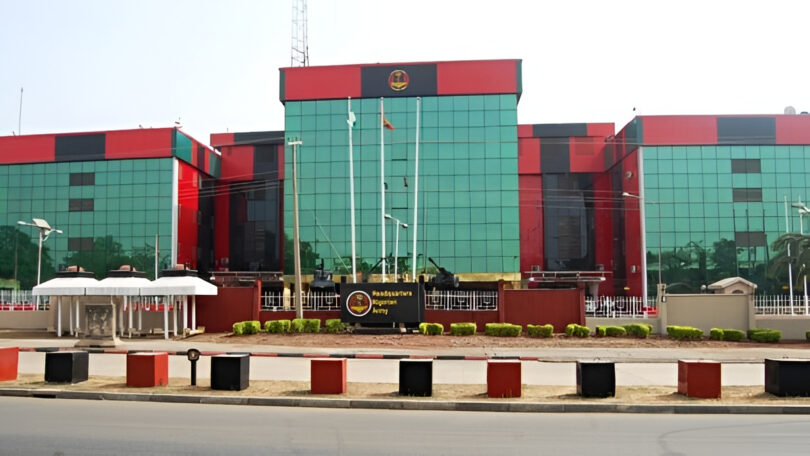
In an advisory released on Friday, the DHQ described the Oyo incident as a “call to take better actions to enhance school security.”
The Defence Headquarters (DHQ) has called on schools across Nigeria to strengthen security measures following the recent abduction of pupils in Oyo and Borno states, saying that “no child should have to learn in fear.”
The advisory emphasised the need for schools to enhance both physical and digital surveillance systems by constructing adequate perimeter fences, installing closed-circuit television (CCTV) cameras and other monitoring technologies capable of detecting and deterring potential threats.
It also encouraged schools to engage trusted youths from host communities to support efforts to safeguard students and educational facilities.
It also urged schools to develop comprehensive emergency response plans, conduct regular security drills and establish clear procedures for handling emergencies and security incidents.
According to the advisory, school administrators, teachers and other personnel should be trained to recognise, report and respond appropriately to suspicious activities and emerging security concerns.
The DHQ further stressed the importance of building strong partnerships among schools, parents, local communities, security agencies and law enforcement authorities to facilitate early threat detection and ensure rapid responses when incidents occur.
It also called for the promotion of a culture of vigilance in schools, urging students, staff, parents and community members to promptly report suspicious movements, unfamiliar persons and potential threats.
“When you see something, say something,” the advisory stated, noting that timely reporting can help security agencies intervene early and prevent attacks before they occur.
The DHQ’s advisory aligns with key elements of Nigeria’s Safe Schools Initiative, a government-led programme launched in 2014 following the abduction of 276 schoolgirls from Chibok, Borno State.
The initiative was designed to protect schools from attacks and other security threats through a combination of risk assessment, improved security infrastructure, early warning systems, emergency preparedness measures, community engagement, and collaboration with security agencies.
Under the framework, schools are encouraged to conduct vulnerability assessments, develop safety plans, establish clear emergency response procedures and strengthen partnerships with parents, local communities and law enforcement agencies. The programme also seeks to ensure continuity of learning in conflict-probe areas.
In recent years, the federal government has expanded the initiative through a national financing plan and the establishment of coordination mechanisms to improve school safety nationwide.
However, despite the initiative, mass abductions of students from their dormitories and classrooms continue unabated. A recent PREMIUM TIMES data story shows that 2,310 students were kidnapped in 30 school attacks since 2014.
An analysis of the data used for the reporting reveals that the crisis is getting worse under President Bola Tinubu, whose three-year-old administration has already recorded 13 mass school abductions involving 674 students.