“They had been in a series of meetings with the office of Attorney-General, with the chief of staff, the president, the inspector general of police and other stakeholders in the last one week, and that is why I can sit here to tell you that we’re pursuing that this week.”
The Senate Committee on Constitution Review (CRC) will present its final report on the proposed creation of state police to the Senate for consideration and approval before the end of this week, as part of the National Assembly’s efforts to address the country’s insecurity challenges.
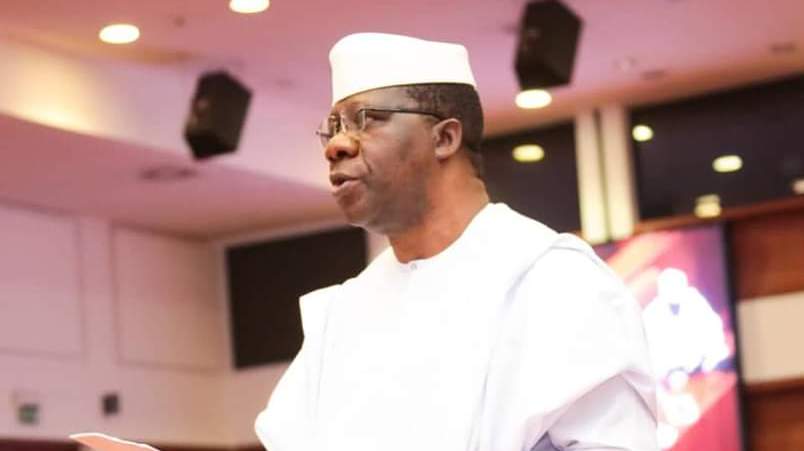
Mr Bamidele, who is the vice chairman of the Senate Committee on Constitution Review, said that once the National Assembly approves the proposal, it will be transmitted to the 36 State Houses of Assembly for ratification by at least two-thirds of them, as required by the Constitution, before it is forwarded to President Bola Tinubu for assent.
“We came to a conclusion that we’re going to pass the constitutional amendment in respect to make a provision for the state police and if I can tell you as of today, that will come to creation this very week because there’s no need to allow any further delay,” he said.
The senate leader said federal lawmakers had held several meetings in recent weeks with President Tinubu, the Attorney-General of the Federation and Minister of Justice, Lateef Fagbemi, the Inspector-General of Police, Olatunji Disu, and other stakeholders on the proposed state policing framework.
“There have been a series of meetings between the National Assembly. And when I said the National Assembly, I mean the team of the National Assembly led by the Chairman of the Senate Committee on Constitution Review, Barau Jibrin and the chairman of the House Committee is Ben Kalu, representing the National Assembly.
“They had been in a series of meetings with the office of Attorney-General, with the chief of staff, the president, the inspector general of police and other stakeholders in the last one week, and that is why I can sit here to tell you that we’re pursuing that this week,” he said.
The Senate leader did not specify the exact day the proposal would be considered and approved. However, the Senate statutorily holds plenary sessions on Tuesdays, Wednesdays, and Thursdays.
Over the years, there have been calls from some state governments and civil society organisations for localised policing as incidents of armed robbery, communal clashes and other security challenges increased.
A National Conference was convened during the administration of former President Goodluck Jonathan, where the participants recommended the creation of state police as a strategy to reduce insecurity.
The resurgence of banditry, kidnapping, and other terrorist activities has increased pressure from governors and political leaders to back the creation of state police.
In the absence of a formal state policing structure, some regions have established informal security outfits such as Amotekun in the South-west, Ebube Agu in the South-east, and Hisbah in the North-west.
Despite the security challenges, the call for a state police is still a contentious issue among political figures. Some argued that without proper arrangements, state police could be exploited by governors to harass political opponents, suppress dissent, and stifle press freedom. Others insisted that the best way to reduce insecurity is through state policing.
Recently, the Senate President, Godswill Akpabio, said the proposed state police framework would establish a National State Police Commission to regulate the operations of state police formations, including the recruitment, training, promotion, discipline, and conduct of officers.
Mr Bamidele said deliberations on state police would take centre stage in the National Assembly this week, given the urgency of the proposal and the need to transmit it to state legislatures promptly.
He also noted that President Tinubu supports the proposed framework for state police.
“It’s going to be the most topic we’ll be dealing with this week and what we have resolved to do is to isolate it with the rest of the bills that we have proposed in the constitutional amendment so that we can vote on this as soon as possible and that the bill can be on its way to the 36 states house of Assemblies because you know we’ll need two-third of the state assemblies to approve it before the president can assent it.
“The president is also with us and I’m sure he can’t wait for the bill to come to him for assent and I’m sure the majority of our governors, as we know, are in support of this bill and their state houses of assembly are also waiting for this bill to come. We’ll trigger that within the week.”