Special Reports
NFVCB conference spotlights Nollywood royalties, creators’ earnings

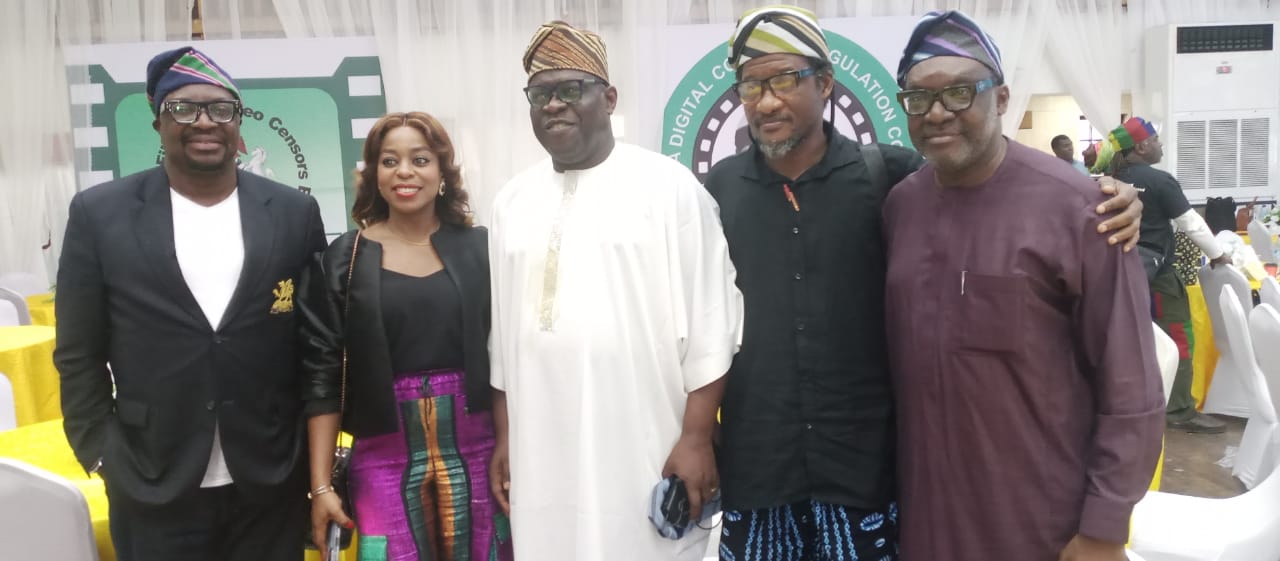
Keynote speaker RMD urged the industry to ensure Nigerian films’ global popularity delivers sustainable returns for actors, writers, directors, and producers.
Persistent concerns about royalties, licensing, intellectual property ownership and creators’ compensation took centre stage at the sixth Peace Anyiam-Osigwe Nigeria Digital Content Regulatory Conference organised by the National Film and Video Censors Board (NFVCB).
It had the theme, “Film and Content Production in the Digital Era: Balancing Regulation and Innovation,” and brought together filmmakers, regulators, distributors, streaming-platform representatives, technology specialists and investors.
Delivering the keynote address, veteran actor Richard Mofe-Damijo challenged Nollywood to confront persistent problems surrounding royalties, licensing, intellectual property and the compensation of creative professionals.
Mr Mofe-Damijo, popularly known as RMD, said the international popularity of Nigerian films would mean little if the economic value generated did not return to the actors, writers, directors and producers responsible for them.
RMD said Nollywood must look beyond production figures, box-office headlines, online engagement and international visibility when measuring the industry’s success.
“Visibility is not the same as value,” he said.
According to him, Nigerian films being watched worldwide did not necessarily mean that the people who made them received their fair share of the resulting revenue.
He raised questions about who owns the intellectual property behind productions, controls distribution rights, tracks royalties and determines the terms under which content is licensed across territories and digital platforms.
“We cannot continue to celebrate the global popularity of Nigerian content while leaving the creators without sustainable economic returns,” he said.
RMD maintained that these questions were central to Nollywood’s sustainability, not peripheral concerns.
He said digital distribution had expanded the market for Nigerian content but also introduced complications involving revenue transparency, ownership, licensing and the enforcement of intellectual-property rights.
The actor also identified piracy as a continuing threat to the commercial value of Nigerian productions and practitioners’ livelihoods.
He called for closer cooperation among regulators, law-enforcement agencies, digital platforms, rights holders and industry associations.
RMD urged filmmakers and other practitioners to understand the business behind content creation better.
He said talent without adequate knowledge of contracts, licensing, intellectual property and commercial rights could leave creators vulnerable to exploitation.
“The next generation of Nigerian filmmakers must understand that they are not simply making films. They are creating intellectual property, and intellectual property is an asset,” he said.
The actor urged young filmmakers not to mistake online attention for lasting accomplishment or sacrifice the economic value and integrity of their work for temporary visibility.
He advised them to study their craft, understand the business of filmmaking, respect intellectual property and build professional relationships.
RMD also addressed the opportunities and risks associated with artificial intelligence in filmmaking.
He said AI could assist with script development, visual effects, animation, editing, translation and audience analysis while reducing some production costs.
However, he warned that the technology raised serious questions about authorship, consent, ownership, data protection and performers’ rights.
“What happens when an actor’s image or voice is replicated digitally without permission?” he asked.
He also questioned who should own AI-generated creative works and what protection existed for writers and artists whose works might be used to train artificial-intelligence systems.
RMD urged Nigeria to develop appropriate safeguards before such problems became widespread.
He said technological innovation should expand the possibilities of human creativity rather than diminish the value of performers and other creative professionals.
In his welcome address, NFVCB Executive Director and Chief Executive Officer Shaibu Husseini said streaming platforms, social media and AI had transformed the production, distribution and consumption of audiovisual content.
Mr Husseini said the developments created new opportunities but also raised questions about authorship, ownership, consumer protection and the sustainability of creative businesses.
He called for a regulatory environment in which innovation and regulation reinforced each other rather than operated as opposing forces.
The NFVCB chief said the agency was modernising its regulatory processes, strengthening inter-agency collaboration and promoting media literacy.


Church Premises Not Sealed, Service Resumes Sunday—Fountain Of Life

NFVCB conference spotlights Nollywood royalties, creators’ earnings

NFVCB, Industry Stakeholders Chart New Course For Nollywood’s Digital Future At 6th PAO Conference

BREAKING: Opposition Parties Agree to Halt Campaigns Amid Push for 2027 Coalition

Peter Obi can’t win presidency without other regions, says Shettima

NCC Boss Tasks Africa On $2trn Digital Economy

Nigerian University picks absent professor to occupy $1.5m professorial chair

Governor Sanwo-Olu Hosts Tomi Salami, Queen Jihan At Lagos House, Marina
“The Task Force Is On Top Of It, NCDC Is On Top Of It” — FG Assures Nigerians Of Capacity To Contain Ebola
Dangote To Nigerian Creatives: Africa Must Build Its Own Prosperity
AGN President Abubakar Yakubu Bags Bebuzee Ambassadorial Deal
Otti Flags Off Reconstruction Of Two Aba Roads
Glovo, Verve Partner To Deliver Greater Value To Nigerian Customers
Enugu People Cry Blood As Gov. Peter Mbah Voted Twice For The Same Five-Star Hotel In One Budget After Spending N9.73 Billion On It
Uduaghan: Delta community declares Friday grieving day
“The Legal Process Must Not Become A Source Of Intimidation” — NUJ Demands Probe Of Kaduna Journalist’s Conviction Over Facebook Post

 Investigations3 days ago
OPay in Trouble as CBN and Others Slam Fintech With ₦946m in Fines Over Money Laundering and Other Breaches
- News5 days ago
OPay faces CBN sanction, fined ₦994m for Money laundering, Terrorism Financing amid US IPO Setback
- News6 days ago
OPay Fined N994m for Money Laundering and Other Breaches
- News7 days ago
SunTrust Bank in Crisis as Director Resigns and Six Top Managers Quit Amid Ethical Concerns
- Investigations3 days ago
Exclusive: Stanbic IBTC Group CEO Nwokocha secures ₦1.36bn home loans from group’s bank seven weeks after appointment, holds zero shares
- News7 days ago
“Unfair, Deceptive Real Estate Practices” — Kairos-HOF Consultants Limited Dragged To FCCPC Over Alleged Failure To Deliver ₦45m Abuja Duplex
- Special Reports7 days ago
“Supreme Court Judgment Is Admissible” — Court Overrules Emefiele’s Objection, Admits Judgment In $4.5bn, ₦2.8bn Fraud Trial
- Special Reports5 days ago
JUST IN: Gov Sanwo-Olu rewards Flamingos with ₦300 million, iPhones