According to a statement issued Tuesday, the policy followed consultations with stakeholders in Nigeria’s nutrition sector across public and private institutions.
The National Council on Nutrition has adopted the National Policy on Food and Nutrition (2026–2035) and directed the Federal Ministry of Budget and Economic Planning to present it to the Federal Executive Council for ratification.
According to a statement issued on Tuesday by Stanley Nkwocha, Senior Special Assistant to the President on Media and Communications, the policy followed extensive consultations with stakeholders across Nigeria’s nutrition sector in both public and private institutions.
Speaking at the meeting, Mr Shettima said the impact of the policy would depend largely on its implementation.
He said it is the most consequential nutrition policy this country has produced, noting that it is multi-sectoral by design, evidence-based by discipline, and grassroots by orientation.
“We will be judged not by our deliberations but by our deliveries. Not by what we decided in April 2026, but by what mothers and children in the 774 local government areas experience by 2035,” he said.
The council directed the Federal Ministry of Budget and Economic Planning to transmit the policy to the Federal Executive Council for approval.
It also mandated all nutrition-related ministries, departments and agencies to align their policies, plans and budgets with the framework within 12 months.
In addition, the 36 states and the Federal Capital Territory were directed to operationalise State Multisectoral Plans of Action for Food and Nutrition within six to nine months.
The council directed the Chairman of the Nigeria Governors’ Forum, in collaboration with its secretariat and the Office of the Vice President, to establish and inaugurate State Councils on Nutrition in the remaining 27 states and the Federal Capital Territory within three months.
According to the statement, only nine states currently have functional nutrition councils.
The council also approved a six-week extension for the submission of a draft National Nutrition Bill.
Mr Shettima said the bill must be transmitted to the National Assembly within eight weeks, adding that it is expected to protect nutrition financing from the uncertainties of political cycles and clearly define responsibilities across all tiers of government.
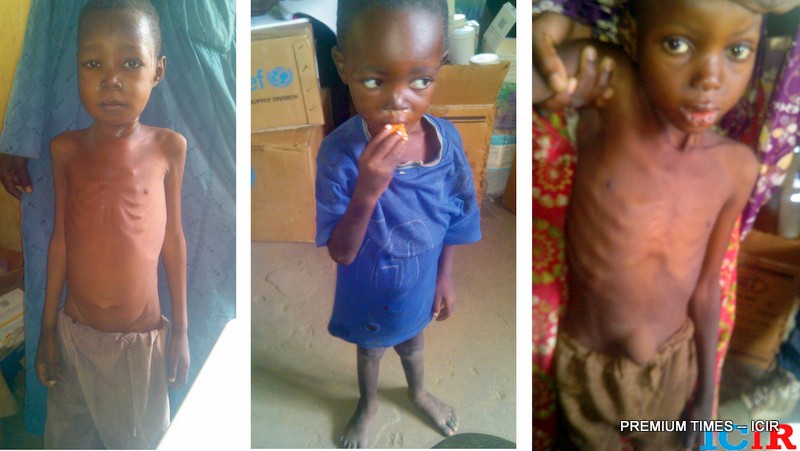
Nigeria bears one of the highest burdens of child malnutrition globally, according to the United Nations Children’s Fund (UNICEF).
Data from 2015 estimates that about 32 per cent of children under five are stunted (low height-for-age), reflecting chronic undernutrition.
In addition, between 6 and 7 per cent of children under five are wasted (low weight-for-height), a form of acute malnutrition associated with a higher risk of death.
The agency estimates that about two million children in Nigeria suffer from severe acute malnutrition, requiring urgent treatment.
These cases are often linked to poverty, limited access to healthcare and education, food insecurity, conflict in parts of the North-east, and poor infant and young child feeding
On nutrition financing, the council approved the inclusion of the Federal Ministry of Humanitarian Affairs and Poverty Reduction, the Commissioners of Finance Forum, and the Association of Local Governments of Nigeria in the financing sub-committee.
Mr Shettima said five funding streams had been identified including domestic, bilateral, multilateral, private sector, and innovative sources.
He added that the sub-committee, in its operational phase, would work with the Nutrition 774 Strategic Board.
“The sub-committee, in its operational mode, will work in close coordination with the Nutrition 774 Strategic Board to eliminate any duplication of mandate but rather reinforce one another,” he said.
On private sector engagement, Mr Shettima directed the establishment of a co-branded “challenge window” for nutrition within 60 days, in collaboration with the Dangote Foundation and relevant ministries, including the Federal Ministry of Industry, Trade and Investment and the Federal Ministry of Innovation, Science and Technology.
He added that the Nutrition 774 Initiative would drive implementation across all local government areas.
“It reminds us that the success of our nutrition reform will not be judged by federal announcements, but by co-coverage of interventions and household outcomes across all 774 local government areas,” he added.
He stressed that every Nigerian child must be prioritised, regardless of location.
The Minister of Budget and Economic Planning, Atiku Bagudu, commended the vice president’s leadership and efforts to prioritise food security and nutrition.
The ministry’s Permanent Secretary, Deborah Odoh, described the policy as a strategic framework for food security and human capital development, aligned with the government’s Renewed Hope Agenda.
According to the statement, stakeholders from both the public and private sectors also expressed support for the policy, describing it as a critical investment in children’s wellbeing.