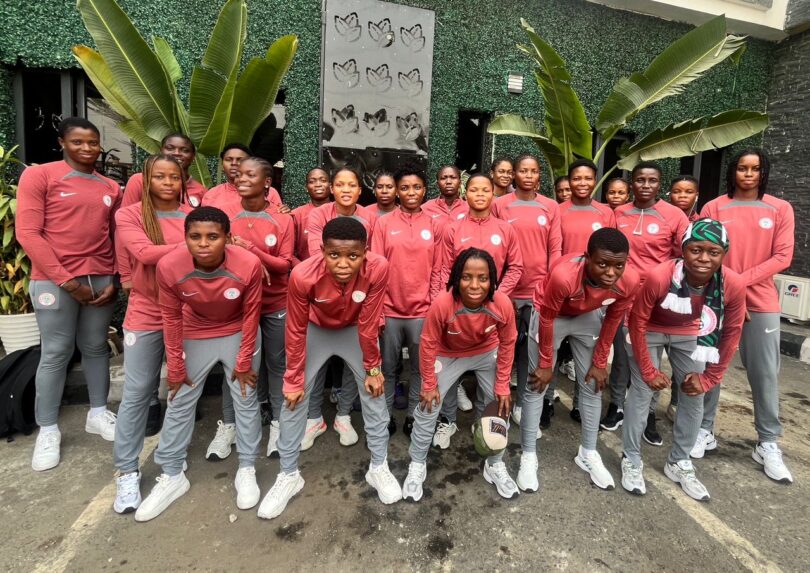
CAF has designed a five-round qualification structure, one that places a premium on consistency and resilience. Unlike group-stage formats, this pathway offers little room for recovery, every round is a knockout hurdle
Nigeria’s women’s national team, the Super Falcons, will today (Wednesday) take the first step toward the 2028 Summer Olympics as the Confederation of African Football conducts the official draw for the women’s qualifying tournament in Cairo, Egypt.
It will be streamed live via CAF’s YouTube platform, offering teams and fans alike their first look at the qualification pathway in what promises to be a fiercely contested campaign.
A total of 35 national teams have entered the race, underlining the growing competitiveness of women’s football across the continent. The lineup spans every region of Africa, including traditional heavyweights and emerging sides such as Algeria, Cameroon, Ghana, South Africa, Zambia, Morocco, and Nigeria, alongside a host of other nations eager to break new ground.
CAF has designed a five-round qualification structure, one that places a premium on consistency and resilience. Unlike group-stage formats, this pathway offers little room for recovery, every round is a knockout hurdle, and every slip carries consequences.
At the end of that process, only two teams will secure qualification spots for Africa.
The stakes are sharpened by recent history.
At the last qualifying cycle for the Paris 2024 Olympics, Nigeria and Zambia emerged as Africa’s representatives, navigating the same demanding structure to reach the global stage. Yet, despite consistent participation, African teams have often struggled to translate qualification into deep runs at the Olympics, an area the continent will be keen to improve in 2028.
The women’s football event in Los Angeles will feature 16 teams, with 15 nations joining hosts the United States through continental qualification tournaments across six confederations. The US as defending champions, will once again set the benchmark on home soil when the competition runs from 11 to 29 July, 2028.
For the Super Falcons, Wednesday’s draw is more than procedural, it defines the early terrain of their campaign.
Nigeria remain Africa’s most successful women’s national team, with a legacy built on continental dominance and consistent global appearances. But qualification for the Olympics has increasingly become a test of depth, preparation, and execution across multiple high-pressure fixtures.
The draw will determine their initial opponents and route through the early rounds, stages where momentum is built or lost.
With only two tickets available and a field packed with ambition, the margin for error is minimal.
For Nigeria, the mission is clear: navigate the path, assert their pedigree, and secure another run on the Olympic stage.