“So, you see, it’s a sequence. You have to be a medical doctor before you become a public health physician. We don’t have enough doctors.”
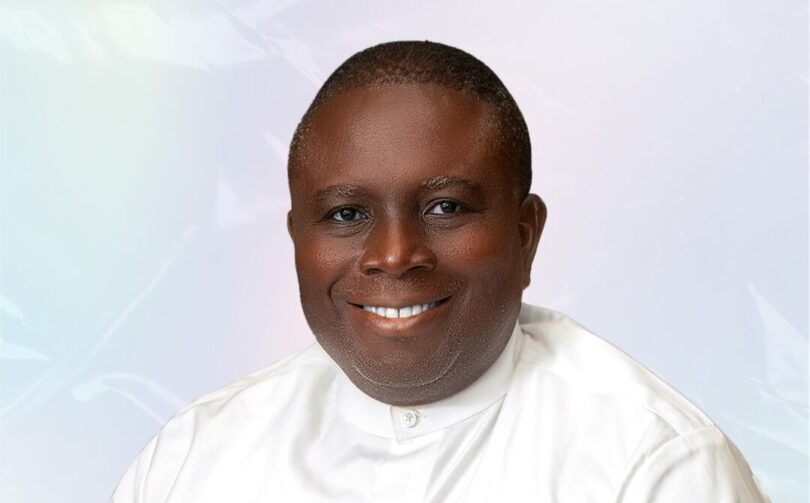
The President of the Association of Public Health Physicians of Nigeria (APHPN), Terfa Kene, says Nigeria lacks sufficient public health physicians due to an underlying shortage of medical doctors nationwide.
According to him, there are not even enough doctors, noting that the deficit in medical professionals continues to limit the country’s ability to produce specialists required for effective public health practice nationwide.
He explained that public health physicians operated at the community level, working across sectors to deliver essential health services and interventions, strengthening preventive care and improving health outcomes within Nigeria’s healthcare system.
“So, you see, it’s a sequence. You have to be a medical doctor before you become a public health physician. We don’t have enough doctors.
“Now, remember that public health physicians are not just operators or hunters. We are community physicians who work at the level of the community,” he said.
Mr Kene said members of the association cut across academia, local governments, states, federal institutions and non-governmental organisations, reflecting the wide scope of public health practice and its importance nationwide.
“In fact, to express the membership of our own association, we have people who are in the universities, in the academia.
“We have people who work at the local government level as medical officers of health. They also work at the state level,” he said.
He said that inadequate numbers at the local level had led to reliance on task shifting, with community health workers filling gaps left by insufficient medical officers nationwide.
Mr Kene said Nigeria was not producing enough public health physicians, while migration continued to weaken the available workforce, as professionals sought better opportunities and improved working conditions outside the country.
“So, we don’t have enough of them. That is why you now see us doing task shifting, where you have community health officers, community health extension.
“We are not producing enough. If we are not producing enough, then we cannot mix all the time. There is a pipeline. So, as you are producing, there is a leakage somewhere.
“That leakage is consistent because the world has become a global village.
“People are attracted to where they perceive that they will get better options for the services they want,” he said.
He said the exact number of public health physicians remained unclear due to registration gaps and varying qualifications within the profession, limiting accurate national workforce data for planning and policy purposes.
Kene, however, said the association had more than 3,000 members, though the figure did not represent the total number of practitioners currently working across Nigeria’s diverse healthcare system.
“This still brings me to how many public health physicians do we have in Nigeria? I don’t have that record, but we have more than 3,000 members registered with the association,” he said.
On contributions to the health system, he said public health physicians played critical roles in policy development, implementation and epidemic response across all levels of governance in Nigeria.
Mr Kene added that the association was pursuing innovation-driven initiatives aimed at improving service delivery and strengthening collaboration among professionals, while enhancing efficiency and effectiveness across Nigeria’s public health sector.
“In fact, there’s no way in this country that you will set up an epidemic response, that you will not have public health physicians involved.
“So whatever we’re doing, we’re guided by that principle of innovation for common good because it has benefits for the association, individuals, communities, states, and of course, at the federal level,” he said.
He disclosed that the association had commenced plans to build a national secretariat and estate to improve members’ welfare and enhance professional coordination among public health physicians nationwide.
Mr Kene said the project would also support telemedicine services to improve access to care, particularly in underserved and hard-to-reach areas where healthcare services remained limited or unavailable across Nigeria.
“We can put telemedicine device in that location and our doctors can be available for consultation at no cost or minimum operational cost,” he said.
He appealed to Nigerians and organisations to support the initiative through funding or material contributions, ensuring its timely completion and long-term impact on healthcare delivery and access nationwide.
(NAN)