The Tsamiya-Kamba corridor will revive regional commerce, but jihadist expansion could quickly unravel the gains.
The 9 February official reopening of the Tsamiya-Kamba corridor between Nigeria, Niger and Benin could offer a much-needed boost to trade, supply chains and cross-border livelihoods after seven years of border closures and diplomatic tensions.
The corridor, located in Nigeria’s Kebbi State, restored the movement of goods and people between Nigeria and Niger. The decision came shortly after trade resumed between Benin and Niger, effectively reactivating a strategic route linking Ségbana in Benin to Sabon Birni in Niger through Tsamiya and Kamba in northwestern Nigeria.
The corridor was shut in 2019 under former President Muhammadu Buhari in efforts to combat smuggling and cross-border crime. Following a directive from President Bola Tinubu, the Nigeria Customs Service Area Command in Kebbi State reopened it to revive regional trade and restore the flow of goods into Niger from the Port of Cotonou in Benin and, to a lesser extent, Lagos in Nigeria.
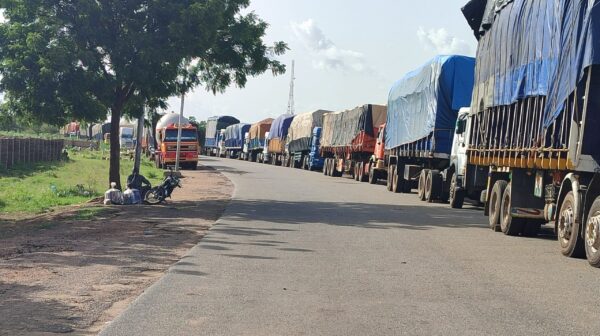
The immediate impact was significant. Over 1,600 Niger-bound trucks, stranded for months in Kamba, were finally able to move from the Port of Cotonou. Their arrival helped replenish markets with essential goods and ease inflationary pressures in Niger following the 2023 coup, which triggered the closure of its borders with Benin and Nigeria, as well as restrictions already in place.
The corridor’s reopening stands to benefit all three countries. It restores formal trade and revives regional commercial flows. For Benin, it could boost activity at the Port of Cotonou, where Nigerien imports account for around 80 per cent of transit volume; for Niger, it would facilitate agricultural exports, particularly onions and garlic, to West African markets.
For Nigeria’s Kebbi State, it could stimulate trade, local revenues and employment. Tsamiya, connected to Ségbana in Benin, has long served as a key transit point for agricultural produce from northern Nigeria to Beninese markets and beyond.
Yet the reopening of this route comes amid persistent diplomatic tensions between Niamey and Cotonou, aggravated by the December 2025 coup attempt in Benin. Niger, repeatedly accusing Benin of hosting foreign military bases and supporting efforts to destabilise the country, has kept its official border crossing at Gaya-Malanville closed.
The Tsamiya-Kamba route, reopened through Nigeria, gives Niger a workaround, allowing it to bypass the closure while continuing to use Cotonou’s port, which remains its closest and most cost-effective maritime outlet.
By facilitating the corridor’s reopening, Nigeria is positioning itself as both a potential mediator and a key actor in strengthening economic connectivity between coastal states and landlocked Sahelian countries.
The economic benefits, however, are likely to remain limited without trilateral security coordination across the corridor. The border triangle linking northern Benin (Alibori and Borgou), northwestern Nigeria (Kebbi and Sokoto states), and southwestern Niger (Dosso region) has become a major hotspot of insecurity.
According to Armed Conflict Location & Event Data, attacks in this area rose by 86 per cent from 2024 to 2025. Resumed traffic creates new opportunities for both bandit and jihadist groups seeking loot, supplies or extortion rents.
Jama’at Nusrat al-Islam wal-Muslimin (JNIM) and the Islamic State in the Greater Sahara have turned W National Park – spanning Benin, Niger and Burkina Faso – into a sanctuary and a rear operating base for cross-border movement and attack planning.
The Lakurawa group, active in Nigeria’s Sokoto and Kebbi states, has expanded into Benin’s Alibori department and Niger’s Dosso and Tahoua regions, using forested areas as fallback zones.
These groups’ proximity to the corridor poses a direct threat to traffic. They may exploit existing fuel-smuggling networks and target trucks to seize food, supplies or agricultural fertiliser that can be diverted for manufacturing improvised explosive devices. Recent incidents in Kebbi State illustrate that commercial vehicles can be targeted by bandit groups along key transport routes, highlighting the persistent insecurity affecting the area.
The resumption of cross-border traffic along the Tsamiya-Kamba corridor could therefore expose travellers and truck convoys to armed attacks.
Mitigating this risk requires closer cooperation among the three states, including intelligence-sharing on armed group movements and cross-border banditry networks. The recent strengthening of military cooperation between Benin and Nigeria could help secure part of the corridor.
In October 2023, Nigerien authorities launched Operation Damissa (‘Tiger’ in Hausa) in the Dosso region to secure the country’s border areas. The operation resulted in the neutralisation of multiple terrorists, seizure of equipment and dismantling of logistical bases, according to Nigerien security sources.
Political mistrust between Niger and Benin remains an obstacle to effective tripartite security cooperation. Without it, resumed cross-border traffic risks becoming a source of vulnerability rather than a driver of stability and regional development.
Nigerien and Beninese authorities should foster collaboration to secure transport along this corridor. At the same time, Nigeria could facilitate discussions to rebuild trust and strengthen cooperation to address security challenges in the shared border areas.
With Benin’s leadership change creating a narrow window for re-engagement, the African Union could help expand the window for dialogue between the two countries. Reopening the Malanville-Gaya crossing along the Cotonou-Niamey corridor would strengthen formal trade, reduce the appeal of smuggling routes and limit cross-border criminal networks and armed groups’ access to vital supplies.
This article is published with the support of the Danish and Dutch governments and the Bosch Foundation.
Leylatou Saïdou Daoura, Bosch Research Fellow, Institute for Security Studies
(This article was first published by ISS Today, a Premium Times syndication partner. We have their permission to republish).