The Federal Government has secured Nigeria’s fertiliser supply for the 2026 wet season and shielded Nigerian farmers from a global crisis.
Dr Armstrong Takang, the Director of PFI NPK Limited, said this in an interview with the News Agency of Nigeria on Saturday in Abuja.
PFI NPK Limited is a wholly owned entity of the Ministry of Finance Incorporated, MOFI, and the designated implementation vehicle for the FG’s Presidential Fertiliser Initiative.
The company operates a centralised bulk procurement and distribution system for fertiliser raw materials, ensuring domestic blending and nationwide supply stability.
Takang said that early procurement decisions made by the FG have also saved the country over 42 million dollars ahead of peak planting.
“Several countries across Africa grapple with fertiliser shortages and rising input costs triggered by fresh global disruptions, the FG has secured Nigeria’s fertiliser supply for the 2026 wet season.
“The latest disruptions, linked to escalating tensions affecting critical global shipping routes, have pushed up freight costs and driven increases in prices of key fertiliser inputs.
“These include Granular Ammonium Sulphate (GAS), Diammonium Phosphate (DAP), and Muriate of Potash (MOP). Across multiple markets, supply gaps are emerging, leaving farmers uncertain about availability and pricing ahead of the planting season,” he worried.
He expressed satisfaction that Nigeria, however, has moved ahead of the curve through deliberate fg’s action.
“According to official Q1 2026 procurement and shipment records made available, the FG, through PFI NPK Limited, locked in nine vessels carrying a combined 407,304.00 metric tonnes.
“This brings total raw materials to 534,219 MT, including the opening balance at the beginning of the 2026 cycle, available for NPK fertiliser production. All associated Letters of Credit have been fully established or settled, ensuring supply continuity.
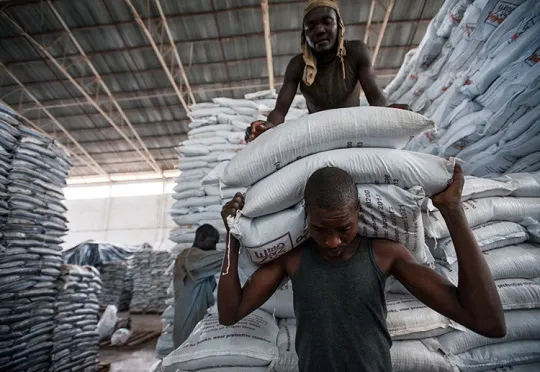
“Records further showed that as of mid-April 2026, over 323,109.24 metric tonnes, approximately 6.5 million 50kg bags, had been released to registered blending plants nationwide.
“More than 198, 264.41 metric tonnes, approximately 4 million 50kg bags, had already been offtake. This indicates active distribution across the country ahead of peak planting,” Takang said.
He said that fg’s early procurement strategy was designed to shield Nigeria from external shocks.
“We took a deliberate decision to move early, well ahead of market pressures, by securing supply, locking in pricing, and putting the necessary financial instruments in place.
“Foresight by the federal government what has ensured that Nigeria is not exposed to the disruptions currently affecting global fertiliser markets,” he said.
Takang further stated that the financial data reviewed alongside the procurement records indicate that the fg’s early purchasing strategy generated total savings of 43.99 million dollars, equivalent to approximately ₦61.58 billion, when compared with prevailing spot market prices.
“A breakdown of the figures shows that GAS was secured at 228 dollars per metric tonne against a current market price of 343 dollars. DAP was locked in at 775 dollars per tonne compared to 950 dollars, and MOP at 400 dollars per tonne against 430 dollars.
“These price differentials reflect the impact of the fg’s securing supply ahead of global price escalations.
He emphasised that fertiliser availability and pricing remain central to Nigeria’s agricultural productivity and overall food supply.