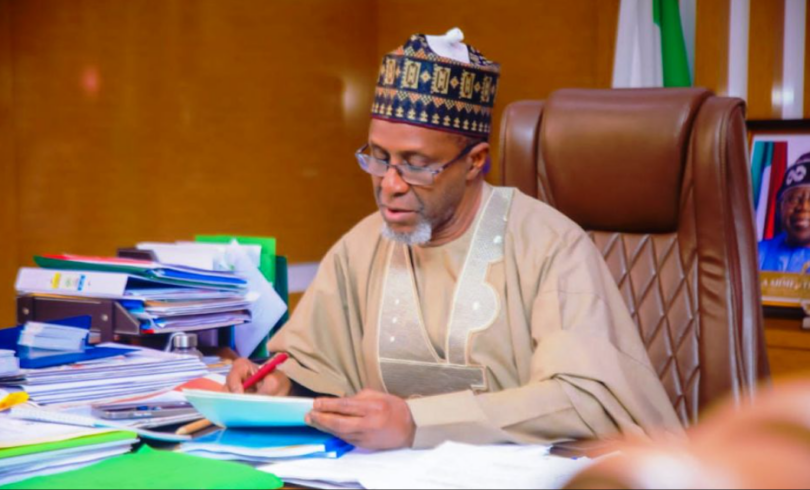
Nigeria’s 650,000-square-kilometre rangelands are facing increasing degradation, driven by desertification, agricultural and livestock expansion and overgrazing, the Minister of Environment, Balarabe Lawal, has said.
Nigeria’s 650,000-square-kilometre rangelands are facing increasing degradation, driven by desertification, agricultural and livestock expansion and overgrazing, the Minister of Environment, Balarabe Lawal, has said.
The minister called for urgent action to restore degraded landscapes and strengthen Nigeria’s resilience to drought and climate change.
He said the degradation of rangelands, particularly in northern Nigeria, was undermining food security, increasing the vulnerability of rural communities and threatening the social and economic fabric of affected regions.
“Rangelands cover 650,000 square kilometres, largely in the northern states. They support most of Nigeria’s livestock sector; they are central to pastoral livelihoods, food security and rural economies,” Mr Lawal said.
He said a significant portion of the country’s rangelands had been degraded despite their importance to the economy and livelihoods of millions of Nigerians.
The United Nations marks World Desertification and Drought Day annually on 17 June. The 2026 global observance was hosted by Kenya under the theme, “Rangelands: Recognise, Respect, Restore,” in line with the International Year of Rangelands and Pastoralists.
Nigeria held its national commemoration in Abuja on Monday as part of activities ahead of the 17th Conference of the Parties (COP17) to the United Nations Convention to Combat Desertification (UNCCD), scheduled to take place in Ulaanbaatar, Mongolia, from 17 to 28 August.
The Abuja event brought together representatives of government agencies, civil society organisations and environmental advocacy groups.
The minister said the degradation of rangelands had become particularly significant as Nigeria seeks sustainable solutions to persistent farmer-herder conflicts.
He linked the conflicts partly to shrinking grazing areas, climate change and drought, saying the United Nations’ designation of 2026 as the International Year of Rangelands and Pastoralists provides an opportunity to draw greater attention to the challenges facing the ecosystems and the communities that depend on them.
Mr Lawal said rangelands should not be regarded as “empty or unused lands” but as productive ecosystems that support communities, economies and cultures.
He called for greater recognition of pastoral communities and the incorporation of indigenous knowledge into efforts to manage and restore rangelands.
“The government is committed to reversing land degradation, restoring degraded rangelands and strengthening resilience against drought,” he said.
According to him, the government is scaling up programmes focused on ecosystem restoration, afforestation and reforestation, sustainable rangeland management, watershed restoration and community-based natural resource management.
He listed the Great Green Wall Initiative, the Agro-Climatic Resilience in Semi-Arid Landscapes (ACReSAL) project and the African Forest Landscape Restoration Initiative (AFR100) among the programmes being implemented.
Mr Lawal said desertification, land degradation and drought were imposing high costs on communities and economies, including threats to food security, soil productivity and biodiversity.
He warned that competition over dwindling productive land and access to clean water could further heighten tensions and conflicts among communities.
“Reversing desertification and mitigating the effects of drought cannot be overemphasised,” he said, adding that restoring degraded land could help sequester carbon, improve resilience to drought and climate change and create new green economic opportunities.
The minister said the 2026 World Desertification and Drought Day theme, “Rangelands: Recognise, Respect, Restore,” was particularly relevant to Nigeria because of the importance of rangelands to livestock production and rural livelihoods.
He urged governments at all levels to mainstream sustainable land management into their development plans and budgets.
He also called on traditional and community leaders to promote sustainable grazing, rotational pasture use and conflict-sensitive management of natural resources.
Farmers and pastoralists, he said, should adopt climate-smart practices that restore soil health and conserve water. At the same time, civil society organisations and the private sector should invest in land restoration, green jobs and sustainable value chains.
Mr Lawal identified scaling up land restoration, expanding afforestation and reforestation, rehabilitating rangelands, strengthening drought preparedness and improving early-warning systems as immediate government priorities.
Other priorities, he said, include water harvesting, community contingency planning, supporting pastoral mobility and tenure security, recognising customary grazing routes and strengthening conflict-resolution mechanisms.
He also advocated sustainable livelihoods through agroforestry, sustainable livestock value chains and ecotourism, while urging the mobilisation of private-sector and international climate finance for long-term restoration and resilience.
The minister said Nigeria must invest in scientific research, innovation and capacity development to ensure that land-use practices improve soil fertility, conserve water, protect biodiversity and increase productivity.
He described the ceremonial tree planting held as part of the commemoration as more than a symbolic gesture, saying it represented a public commitment to translate environmental pledges into action.
“Let us recognise the value of our rangelands, restore degraded landscapes, and respect the natural systems that sustain us,” Mr Lawal said.
He said stronger collaboration among governments, communities, the private sector and development partners would help Nigeria build resilient landscapes capable of supporting sustainable livelihoods and inclusive national development.