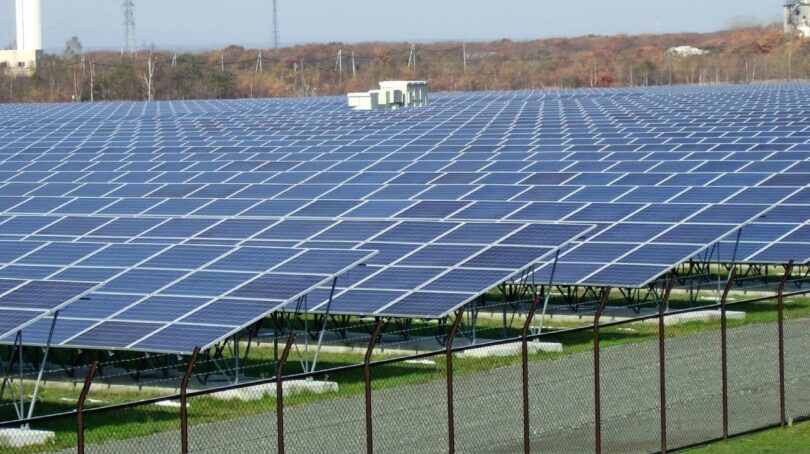
The report noted that Africa’s solar expansion is happening faster than official statistics indicate, largely because the rapid growth of distributed solar is difficult to measure and record.
A new report by Ember, a global energy think tank focused on accelerating the transition to clean electricity, estimates that Nigeria will install 1.7 gigawatts (GW) of solar power in 2026, as the use of solar energy continues to expand across the country.
However, much of the expansion is not reflected in official statistics, according to the report, largely because most of the new capacity is coming from small-scale solar systems installed by households and businesses for their own electricity needs.
These systems, known as distributed solar, are often installed on the customer side of the electricity network and are more difficult for governments and utilities to track than large solar farms.
The findings are contained in the report titled “The take-off in African solar that official statistics can’t yet see,” produced by Ember in partnership with African Tech Futures Lab (ATFL).
The report estimates solar installations across African countries between 2023 and 2026 using Chinese customs data and a new calibrated methodology, before comparing the estimates with official national and international statistics.
It follows Ember’s August 2025 report, which provided what the organisation described as the first evidence of a solar take-off in Africa.
Distributed solar refers to small-scale systems installed on the customer side of the electricity network, mostly rooftop solar systems used by households and businesses to generate power for their own consumption.
Ember estimates that Africa added 26GW of total solar capacity between 2023 and 2025, of which about 20GW was distributed solar.
The organisation said utility-scale and off-grid solar could account for only about a quarter of the new capacity during the period, meaning distributed solar accounts for most of the remaining growth.
The report attributed the expansion to falling solar technology costs, the need for reliable electricity and the increasingly attractive economics of generating power independently.
Commercial and industrial customers have been among the early adopters, accounting for at least 80 per cent of distributed solar capacity in most African markets where data is available.
Ember said payback periods for such systems can be as short as two to five years.
The findings come amid a growing small-scale solar market in Nigeria, where households and businesses have increasingly turned to alternative sources of electricity.
A PREMIUM TIMES report based on BloombergNEF research found that Nigeria had emerged as sub-Saharan Africa’s largest small-scale solar market, with about 6GW of cumulative capacity by 2025.
The research estimated that Nigeria added about 3.1GW of small-scale solar in 2024 and 2025, as households and businesses increasingly adopted solar and battery systems amid persistent electricity supply challenges and rising energy costs.
Ember’s latest report estimates that Nigeria will add another 1.7GW of solar capacity in 2026.
The expansion of the sector is also reflected in the number of businesses entering the market.
Ember said 370 new solar companies were registered in Nigeria in 2025, compared with 56 in 2019.
Despite the rapid expansion, Ember said official statistics are not adequately capturing the scale of Africa’s solar growth.
The organisation estimates that Africa installed 12GW of solar in 2025, compared with 6.2GW estimated by the International Energy Agency (IEA) and 4.6GW reported by the International Renewable Energy Agency (IRENA).
Ember said it could find official national reporting on solar capacity for only 36 of Africa’s 54 countries, while only 14 of those countries had data for 2025.
The organisation said that even among countries with 2025 data, its estimates of solar installations between 2023 and 2025 were higher than reported cumulative capacity in some cases, suggesting that official figures are failing to capture the full scale of new installations.
Only South Africa, Tunisia and Tanzania publish some solar capacity data monthly or quarterly, according to the report.
The problem is particularly significant for distributed solar because many installations are carried out informally and are not registered with government agencies or electricity utilities.
Only 12 African countries currently have an official or semi-official figure for distributed solar, Ember said.
Ember warned that poor data could affect how African countries plan and invest in their electricity systems.
Accurate information on distributed solar is needed to forecast electricity demand, determine future generation requirements and plan grid infrastructure.
Without such data, governments could overestimate demand, procure unnecessary generation capacity or make unsuitable decisions about the electricity generation mix, grid investments and battery storage, the report said.
The data gap could also affect electricity tariffs, utility revenues and efforts to monitor renewable energy targets and emissions reductions.