Iwo residents say they want the progress made sustained while other issues affecting the town and its residents receive attention.
Ahead of the 15 August Osun State governorship election, locals in Iwo, one of the most populous towns in the state, have spoken about the achievements, milestones, and shortfalls of the incumbent governor, Ademola Adeleke, during his about four-year tenure.
However, interviews with a cross-section of Iwo residents, including drivers, traders, retired civil servants and health workers, have provided insights into how the Governor Adeleke’s administration has shaped the town over the years and what electoral promises have remained unkept.
The responses of those interviewed also revealed issues that matter to residents as well as their expectations from whoever wins the coming election.
Residents say the development recorded in Iwo in recent years has largely centred on infrastructural development, particularly road construction and rehabilitation.
In a statement he published on the Osun State Government website on 5 July 2026, Olawale Rasheed, the spokesperson to Governor Ademola Adeleke, listed several road projects carried out across Iwoland.
According to Mr Rasheed, the projects include the Araromi-Panada-Kuti Road, the Osogbo Junction-Ajigbaagun Road, the Feesu-Agbowo Road, the Ile-Amin-Jagun Ode Road, and .. Office-Muniare-Oke Bode/Okefa Road. Among the projects also highlighted were the dualisation of the Odo Ori-Adeke Road and the reconstruction of the Adeke Bridge.
Mr Rasheed’s statement also mentioned plans to upgrade the old Samosta Farms for agricultural investment, with community participation in its ownership.
Although the major road dualisation project in the town is still ongoing, the completed section of the road has changed the face and rhythm of that part of Iwo, making it look well-developed.
However, beyond the government claims, the question remains: how do Iwo residents view the administration and what do they still expect from the next administration as they prepare to go to the polls?
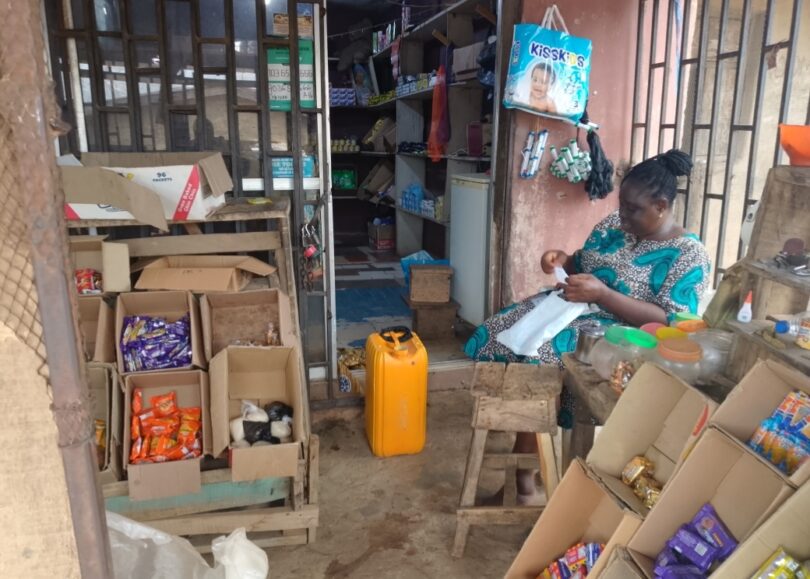
Adijat Ali, a trader and retired civil servant with 33 years of public service, shared her assessment of the current administration. Having worked under different administrations, including those of Rauf Aregbesola and Adegboyega Oyetola, and the current one, she spoke about the payment of full salaries by the current government, contrasting it with the half-salary situation she experienced under former Governors Aregbesola and Oyetola.
She also commended the administration for what she called “cooperative benefits”, as it helped her to establish her business as a trader.
However, Mrs Ali, who retired this year, expressed concern over her unpaid pension and hopes the next administration will ensure that retired workers receive their gratuities and pensions. While describing herself as non-partisan, she expressed a wish for the best candidate, with the interests of the people in mind, to win the election. She did not say who the best candidate is.
Similarly, a university student and indigene of Iwo, Adesanjo Idowu, acknowledged the government road projects in Iwo, describing them as developmental progress. “He has tried his best so far, especially with the road project in Iwo,” Mr Idowu said of Governor Adeleke. “I give him kudos for that. However, when it comes to students’ welfare and benefits, he failed woefully. Student-focused policies should be visible, accessible, and impactful, not something that only a few people know about or can access.”
He also wants the government to provide bursaries and other benefits to all eligible students rather than favouring only a few.
Abayomi Idowu, another resident, also acknowledged the impact of the government’s development efforts, particularly the improvement of roads in the town. He said better roads could boost business activities and give Iwo greater visibility. He, however, urged the government to complete the ongoing dualisation project.
He also described the town’s peaceful atmosphere as one of the benefits residents have experienced, saying it allows people to carry out their activities smoothly. “When the town is peaceful, everybody will be able to carry out their activities without fear,” he said.
Mr Idowu called for a free and fair process, urging security agencies and electoral officials to carry out their duties without fear or favour.
Alayande Rasheed, a teacher at United Methodist Government School, spoke positively about the current government’s handling of teachers’ welfare. He cited the regular payment of salaries and promotion of teachers when due as some of the changes he has experienced.
However, he said challenges remain in schools, particularly inadequate staffing and facilities, as well as poor security. He said, for instance, his school’s fence was pulled down during the ongoing road dualisation project in the town and has not been rebuilt, leaving the school with inadequate security.
According to him, the absence of security has exposed the school to vandalism.
For Mr Musa Ajidawura, a bus driver, the improvement in the town’s roads has made transportation easier. He said the road projects, especially the dualisation, have made it easier for drivers to move around without the difficulties they used to face on bad roads.
He also mentioned the reorganisation of the drivers’ association, saying the government brought the different groups together under one association. However, he appealed for more support for drivers and other transport workers, suggesting that the government could help those who need vehicles by allowing them to pay in instalments.
In the health sector, an official at Mosinola Primary Healthcare Centre, who asked not to be named due to her civil servant status, acknowledged improvements at the facility, including its renovation and the provision of a gate and a waiting area for pregnant women attending antenatal care. She also mentioned the regular funding from the state government and the Osun Health Insurance Scheme (OHIS).
However, she identified a shortage of drugs, inadequate laboratory space and insufficient staff as some of the challenges still facing the health centre.
As the election draws closer, Iwo residents’ views show that their expectations go beyond political promises. While some acknowledged improvements in roads, workers’ welfare, education and healthcare, they also pointed to areas that require attention, including pensions, student welfare, school facilities, healthcare staffing and support for transport workers.
They want the progress made to be sustained while the issues affecting the town and its residents receive more attention.