The IGP attributed much of the violence in the state to pre-existing cult-related rivalries that had become intertwined with political competition.
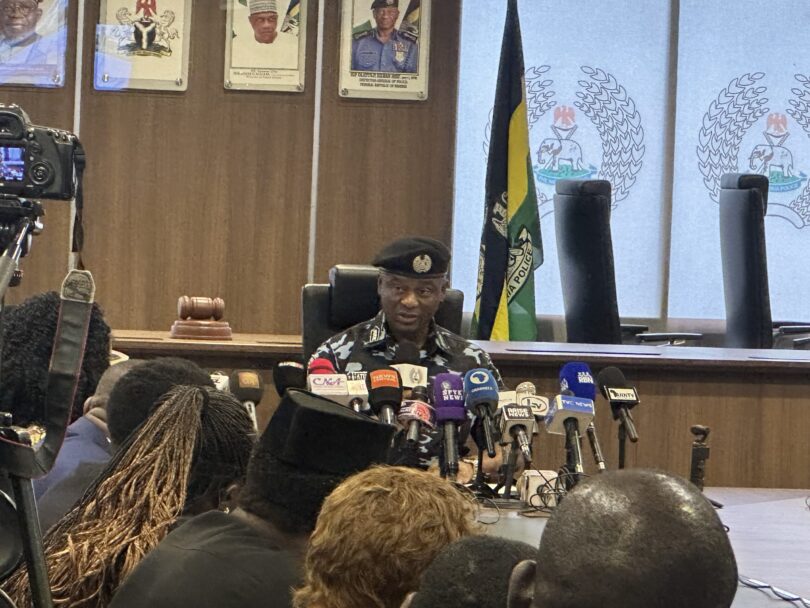
The Inspector-General of Police (IGP), Olatunji Disu, has assured residents of Osun State of adequate security ahead of the forthcoming governorship election, saying the force has put in place extensive measures to protect voters, electoral officials and other stakeholders throughout the electoral process.
Also, a civil society organisation, Yiaga Africa, identified 13 of the state’s 30 local government areas as high-risk locations, citing persistent attacks, political tension and at least 34 deaths linked to election-related violence recorded over the past year.
During the meeting, the IGP urged eligible voters not to be intimidated by security concerns but to come out in large numbers to exercise their constitutional right to vote.
He said the police would provide security before, during and after the election to ensure a peaceful and credible process.
“We want the people of Osun State to come out and vote without fear. The Nigeria Police Force is fully prepared to secure the election and ensure that every eligible voter can exercise their democratic rights safely,” he said.
The police chief disclosed that security personnel would be deployed across more than 3,000 polling units in the state, with at least four officers assigned to each.
He added that additional security arrangements had been put in place to respond swiftly to any security threats that might arise during the election.
Mr Disu also revealed that an Assistant Inspector-General of Police would soon relocate to Osun to coordinate election security, strengthening the existing command structure ahead of the poll.
He explained that the police had already made strategic changes in the state’s security leadership after violence escalated.
According to him, the former Commissioner of Police in Osun was directed to step aside to allow another officer to oversee election security operations.
The IGP attributed much of the violence in the state to pre-existing cult-related rivalries that had become intertwined with political competition.
“We have issues of cultism in Osun already. It became easier for different parties to attack each other using the existing animosity in the state,” he said.
Mr Disu stressed that no political ambition was worth the loss of lives.
“No election is worthy of losing anyone because elections will come and go,” he said, while appealing to political parties, candidates and their supporters to conduct their campaigns peacefully and respect the rule of law.
Earlier, the Executive Director of Yiaga Africa, Samson Itodo, described the Osun governorship election as one of the most significant off-cycle elections in recent years because it would be the last major governorship election before the 2027 general elections.
He said the poll presents an opportunity to rebuild public confidence not only in Nigeria’s electoral management system but also in election security.
“The Osun election is strategically important because it is the last major election before the 2027 general elections. It is a unique opportunity to inspire public trust, not just in the management of elections, but also in election security,” he said.
Mr Itodo warned that insecurity and any perception of bias by security agencies could undermine the credibility of the election and weaken public confidence in democratic institutions.
According to him, Yiaga Africa’s election risk assessment identified 13 local government areas as high-risk due to recurring killings, violent attacks and heightened political tension.
He said the pattern of violence had evolved from coordinated shootings across several communities to politically motivated abductions and attacks on public institutions, including local government secretariats.
The organisation’s monitoring, he said, recorded about 44 violent incidents between June 2025 and June 2026, resulting in approximately 34 deaths.
Among the identified hotspots, Osogbo and Irewole LGAs were categorised as critical-risk areas, while Iwo, Boripe, Ife Central and Ife East LGAs were listed as high-risk local government areas requiring an enhanced security presence.
Mr Itodo said one of the greatest concerns expressed by citizens was the perceived neutrality of security agencies during elections.
He urged the police and other security agencies to remain professional and resist any attempt by political actors to influence their operations.
“The public wants to see institutions demonstrate neutrality so they can have confidence in the electoral process. An election marred by insecurity or perceived security bias could undermine public trust and the legitimacy of the outcome,” he said.
Also speaking, the Executive Director of the Civil Society Legislative Advocacy Centre (CISLAC) and Head of Transparency International Nigeria, Auwal Rafsanjani, pledged the support of civil society organisations for security agencies in ensuring peaceful elections.
He said civil society groups were not opponents of government, but partners committed to strengthening Nigeria’s democracy.
According to him, political tension ahead of the 2027 general elections makes it imperative for security agencies to act professionally and impartially.
“The safety and security of Nigerians during elections is extremely important. Our role as civil society is to support the security agencies so they can perform their responsibilities without bias or actions capable of eroding public confidence,” he said.