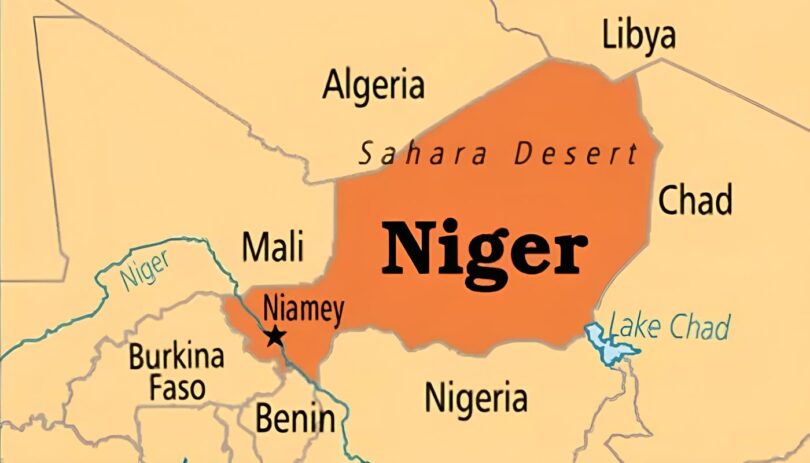
In a viral video interview, Viktor Voropaïev, Russian ambassador to Niger, said the Nigerien government requested its assistance in quelling the mutiny which lasted for hours between 28 and 29 August.
Russia says it helped the military regime in Niger Republic repel a coup.
“The rebels who organised these demonstrations have been neutralised, particularly thanks to the intervention of Africa Corps military personnel from the Ministry of Defense of the Russian Federation,” Sahel Alert quoted Mr Voropaïev as saying.
PREMIUM TIMES reported that mutinous soldiers abandoned their frontline positions to stage a fight with presidential elite forces in what analysts described as an attempt to oust the military junta in the francophone country.
The fighting disrupted state broadcast services in Niger.
The mutineers besieged Diori Hamani International Airport, Air Base 101 and attempted to breach the perimeter of the presidential palace including key positions around the airport.
The rebellious soldiers, according to analysts, were frustrated by worsening insecurity and the regime’s unfair treatment of frontline troops.
After hours of fighting and gaining ground, the mutineers were suppressed by a joint air-ground offensive launched by Nigerien elite forces and the Russian-backed Africa Corp.
Subsequently, the regime announced that it remained in control, although the head of the junta, Abdourahamane Tchiani, was yet to make any public appearance or comment.
By Sunday morning, footage of captured mutineers started showing on the internet with reports that some of them were killed.
Since it cut ties with France, its former colonial power, Niger has shifted its focus to Moscow as a strategic partner. According to reports, about 300 Russian troops are on the ground in Niger.
The Eurasian country is gaining influence in Sahelian states where military authorities have seized power.
In April, it helped the Malian government repel what could have been a more devastating jihadi attack in Bamako. Its recent intervention in Niger, analysts argue, will further boost its popularity in Africa.
The Sahel region continues to witness terror attacks by Islamic State and al-Qaeda affiliates.
The recent uprising in Niger could open a window of terror, some analysts warned, arguing that those positions abandoned by the mutineers are prone to be infiltrated by jihadists.
Many countries including junta-led Mali and Burkina Faso, with which the Alliance of Sahel States (AES) was formed, have stood in solidarity with the Niger.