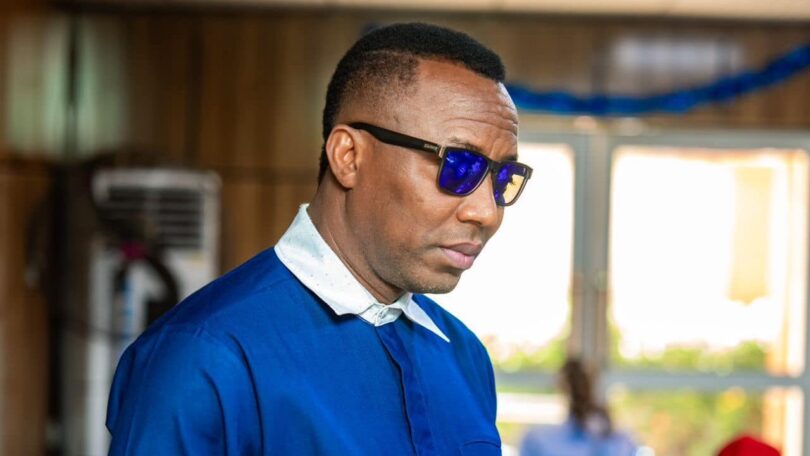
Mr Sowore said Nigerians should continue to examine Mr Babangida’s record, including the annulment of the 12 June 1993 presidential election.
Omoyele Sowore, the African Action Congress presidential candidate in the upcoming 2027 general election, has responded to Yusuf Datti Baba-Ahmed’s criticism of his comments about former military ruler Ibrahim Badamasi Babangida.
Mr Sowore said he learnt about the 2023 vice-presidential candidate’s article, published by Daily Trust, through through Mr Baba-Ahmed’s elder brother, Hakeem Baba-Ahmed, whom the activist said he met at a National Peace Committee event on Wednesday.
He accused Mr Baba-Ahmed, the Labour Party vice-presidential candidate during the 2023 general election of attempting to “whitewash Babangida’s legacy” while attacking him personally.
He said Mr Baba-Ahmed devoted much of his response to references to drugs, alcohol, prison and intensive care, while also preaching about compassion and human decency.
Mr Sowore rejected the argument that his criticism of Mr Babangida was inappropriate because of the former military ruler’s age.
“I did not attack Ibrahim Babangida because he is 85 years old. My criticism was about his record in power and what his decisions did to Nigeria.”
He argued that age should not erase a person’s political record and that “Growing old is a privilege. It is not immunity from history,” he said.
Mr Sowore said Nigerians should continue to examine Mr Babangida’s record, including the annulment of the 12 June 1993 presidential election.
He recalled that Mr Babangida acknowledged in his 2025 autobiography, A Journey in Service, that Moshood Abiola won the election.
Mr Sowore noted that the annulment amounted to a betrayal of Nigerians’ democratic choice.
The publisher of Sahara Reporters also referred to the killing of journalist Dele Giwa and the execution of Mamman Vatsa, a close friend of Babangida who was convicted of plotting a coup.
“A man whose regime executed his close friend, Mamman Vatsa, after a coup trial cannot simply have that history erased by the passage of time.”
Mr Sowore also rejected the practice of addressing former leaders with familial titles such as “Uncle”, “Daddy”, “Baba” and “Leader”.
He argued that such practices could weaken public accountability.
“A president should be viewed as a public servant, not a family figure.”
“Former military rulers should be examined critically, not revered,” he added, and said that “Respect is earned; accountability is mandatory.”
Mr Sowore also criticised Mr Baba-Ahmed’s description of Babangida as a “revered former Nigerian leader”. “Revered by whom?” he asked.
Mr Sowore’s latest criticism echoes his reaction to Babangida’s autobiography after its launch in February 2025.
Mr Babangida launched “A Journey in Service” in Abuja on 20 February 2025. The memoir covered his military career, the Nigerian Civil War, his eight-year military rule and the controversies surrounding his administration.
Before the launch, Mr Sowore had demanded answers over several unresolved issues linked to Babangida’s years in power.
They included the killing of Dele Giwa, the execution of Vatsa, the annulment of the 12 June election, the C-130 military plane crash and the alleged disappearance of billions of dollars from Nigeria’s Gulf War oil windfall.
After the launch, Mr Sowore described the memoir as “A Journey in Criminality” and criticised Babangida’s account of his years in power.
He also challenged Babangida’s attempt to attribute responsibility for the annulment of the June 12 election to other actors.
Babangida in the book had acknowledged that Abiola won the election but also attributed the annulment to pressure from senior military officers, including Sani Abacha.
The former military ruler also addressed why he did not retire Abacha, saying he feared his removal could trigger bloodshed within the military.
But Mr Sowore has continued to reject what he considers attempts to soften Babangida’s legacy.
In his latest response, he said Nigerians must remember the political detentions, killings, military executions, economic hardship and other consequences of military rule.
“Historical amnesia is dangerous. Accountability is necessary,” he said.
He also rejected the suggestion that criticism of Babangida amounted to hatred.