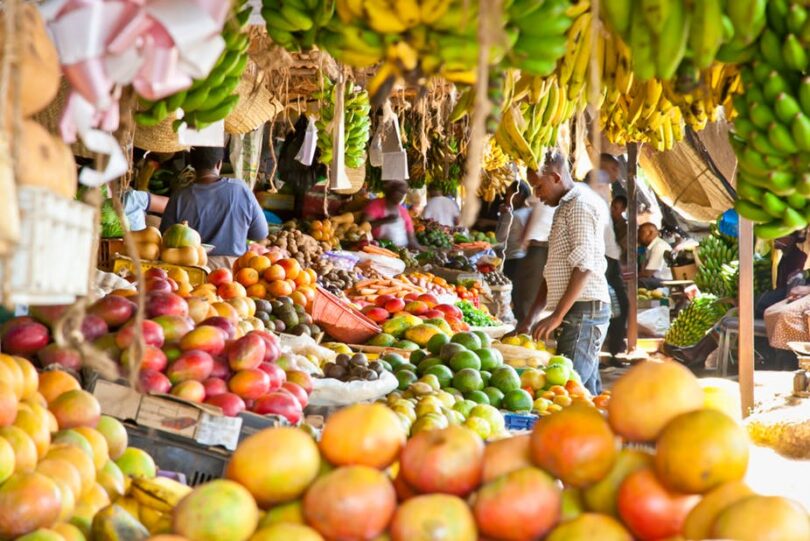
S&P Global said food prices could soar more sharply in the months ahead as higher fertiliser and transportation costs pile pressure on global supply chains.
Rising food prices may soon top energy costs as the chief driver of inflation across emerging markets, with African economies likely to be worst hit, according to a new report by S&P Global Ratings.
The warning comes amid growing concerns over disruptions to global energy and commodity supply chains, following escalating tensions in the Middle East, particularly around the Strait of Hormuz, a critical route for global oil and fertiliser shipments.
S&P Global said food prices could soar more sharply in the months ahead as higher fertiliser and transportation costs pile pressure on global supply chains.
S&P Global’s analysis of median inflation across emerging markets shows that headline inflation has started picking up again after easing from post-pandemic highs.
The agency noted that many governments have attempted to shield consumers from galloping fuel costs via tax cuts and subsidies, but warned that the fiscal costs of such interventions are mounting.
According to the report, the transmission mechanism is already evident. Higher fuel prices drive up transportation costs, while increasing fertiliser prices often accelerate production expenses for farmers. These factors typically translate into higher food prices after several months.
S&P Global pinpointed African economies as particularly vulnerable, given that households on the continent spend a larger share of their income on food and beverages than their peers in other parts of the world do.
Graphical data compiled by the agency shows food and beverage expenditures contribute more than 40 per cent of household spending in many African countries.
Madagascar ranks highest, with food accounting for over 60 per cent of consumer spending, followed by Ethiopia, Guinea, Senegal and Mozambique. Nigeria features among the countries where food contributes above 40 per cent of household expenditure.
The agency noted that most countries on the continent are net food importers and, on that score, highly prone to global price shocks.
According to the report, food inflation was the biggest single contributor to headline inflation across most African and frontier-market economies during the 2022–2023 global energy crisis.
Among key emerging-market economies in Europe, the Middle East and Africa (EMEA), S&P Global observed that energy inflation has quickened significantly in recent months.
Nigeria recorded one of the sharpest increases, with energy inflation estimated at about 20 per cent between March and April, far outpacing food inflation in the same period.
The agency described the development as notable, considering Nigeria’s status as a major crude oil producer, despite the commencement of operations at the Dangote Petroleum Refinery.
The higher-than-expected energy inflation reflects the continued dependence of domestic refining on imported crude inputs as well as the lingering effects of fuel subsidy removal, it noted.
Nigeria and Turkey recorded the steepest increases in energy prices among the countries analysed, while South Africa experienced comparatively modest increases.
Despite energy prices currently rising faster than food prices, S&P Global warned that food inflation could gain momentum in the second half of 2025.
The agency said higher transportation costs, combined with rising fertiliser prices, are likely to feed through agricultural production and distribution expenses, eventually pushing up consumer food prices.
For African countries already grappling with elevated cost of living, currency pressures and weak household purchasing power, another wave of food inflation could complicate efforts to restore price stability.
Since the outbreak of the US-Israel war against Iran on 28 February, petrol prices in Nigeria have risen by over 25 per cent across major cities, mirroring global crude price trends, and worsening the cost-of-living crisis many Nigerians have been grappling with since the removal of fuel subsidies in 2023.
Consumers are already taking a hit from the supply shocks triggered by the conflict, with transportation costs and the prices of major staples fast trending upwards.
Data from the Global Petrol Prices shows Nigeria’s petrol price averaged N1,248 per litre ($0.92) as of 8 June, compared to the global average of N2,058 per litre in the same period.
Analysts are upbeat that the surge in oil prices could significantly boost Nigeria’s revenue as a major crude oil exporter. Higher prices could also bolster the country’s foreign exchange reserves and support fiscal consolidation.
Prolonged disruption to oil and fertiliser supplies may worsen inflationary pressures worldwide, notably in developing economies that rely heavily on imports, analysts said.
According to economists, the ultimate impact on Nigeria and other African economies will depend on the duration of the supply disruptions and the extent to which higher global commodity prices are transmitted into local markets