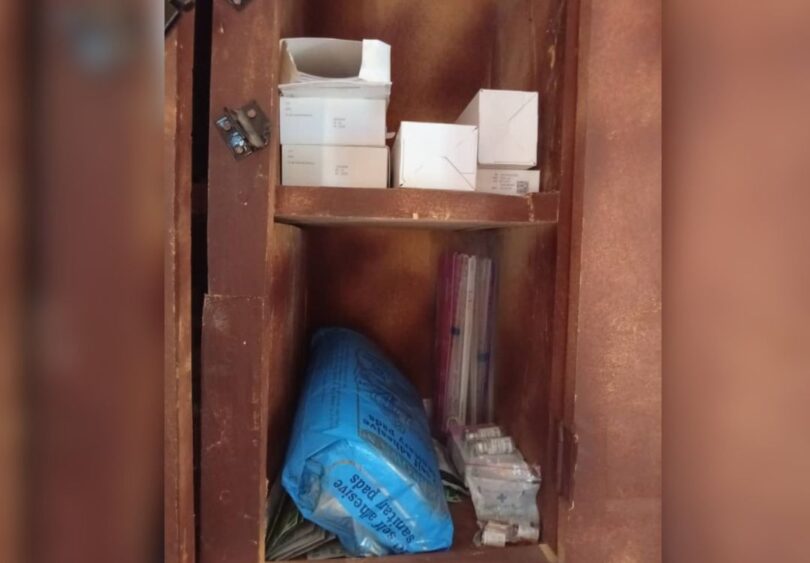
This investigation found that adolescent girls who seek family planning in South-west Nigeria often encounter a health system that is inconsistent or inaccessible.
On a Thursday morning in March, in the Agbowo area of Ibadan, Oyo State, Bisola* sat outside her home with her child strapped to her back. She continuously bent over to adjust the baby as she read her book for the West African Senior School Certificate Examination.
At 15, she was in a relationship with a boy of her age. Afraid of becoming pregnant before finishing school, she decided to seek contraception from the nearby Agbowo Primary Health Centre.
Contraception refers to methods used to prevent pregnancy, including condoms, birth control pills, injectable contraceptives, implants and intrauterine devices (IUDs).
It took her days to summon the courage, but when she finally walked into the clinic alone, hoping for confidential advice, the questions came before any counselling.
“Who brought you here? Are your parents aware?” she recalled the health worker asking within earshot of other patients.
She was told to return with her mother or another adult. “I felt embarrassed,” she said. “After that day, I didn’t go back.”
At home, conversations about sex or contraception were considered shameful for an unmarried girl. She feared telling her parents would earn her punishment, so she abandoned the idea altogether.
Months later, she became pregnant.
The boy denied responsibility, and while many of her classmates continued preparing for life after secondary school, Bisola was learning how to care for a newborn.
On the day of this interview, she was studying for the same examination she should have completed two years earlier, this time with a baby on her back.
Her story could easily be dismissed as another case of teenage pregnancy. But this investigation found something more troubling.
Bisola did not become a mother because she ignored the risks. She became one after the system failed her despite trying to prevent pregnancy.
Across Southwest Nigeria, this investigation found that adolescent girls who seek family planning often encounter a health system that is inconsistent or inaccessible. Some facilities lack contraceptives, others experience prolonged supply delays, while some ask adolescents to return with parents despite national guidelines guaranteeing confidential reproductive healthcare.
The investigation found that these gaps persist despite billions of naira transferred to states for primary healthcare over the past six years.
Data obtained from the National Primary Health Care Development Agency (NPHCDA) show that between 2019 and the second quarter of 2025, the federal government transferred N17.45 billion to Ogun, Ondo, Osun and Oyo states to strengthen primary healthcare services.
Yet family planning services remain unavailable in more than half of the PHCs across the South-west.
According to NPHCDA data reviewed for this investigation, only 1,491 of the region’s 3,446 PHCs provide family planning services.
The consequences extend beyond healthcare.
Nigeria’s 2024 Demographic and Health Survey found that 77 girls per 1,000 aged 15 to 19 have begun childbearing, while only 39.7 per cent of women whose need for modern contraceptives should be met are able to access them.
For many adolescent girls, the problem is not a lack of awareness about the consequences of early pregnancy; it is finding a health system willing and able to help them prevent it.
More than 220 kilometres from Ibadan, another teenager was confronting the same reality.
Janet* was 16 and sitting her WASSCE examinations when she discovered she was pregnant. Unlike Bisola, Janet never sought contraception.
She did not know the services existed.
A friend had introduced her to an older man she believed was unmarried.
“I trusted my friend,” she recalled. “I didn’t know he already had a wife.”
When she informed him about the pregnancy, he accepted no responsibility.
Her parents invited him to their home, hoping he would explain himself or support the pregnancy.
Instead, he sat in silence.
“My parents sent me to school,” Janet said. “But all I brought back was pregnancy.”