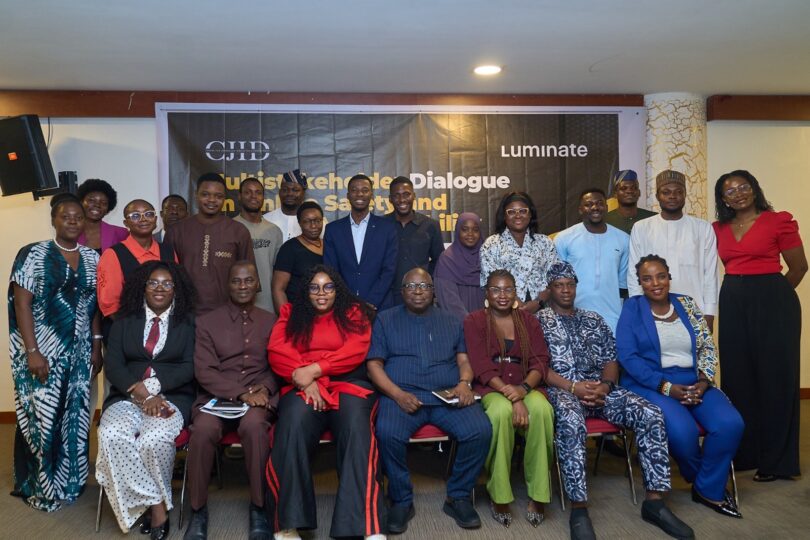
The dialogue brought together journalists, regulators, civil society groups, and academia to demand stronger accountability from platforms
The growing influence of technology platforms over what Nigerians see, share and believe is creating an accountability gap that requires stronger scrutiny from both digital platforms and regulators, participants at a multistakeholder dialogue in Abuja have said.
From scams encountered on social media to artificial intelligence systems capable of generating convincing misinformation and impersonating people, discussions at the event focused on how the digital environment is increasingly shaping everyday life faster than traditional accountability systems can respond.
Dapo Olorunyomi, Chief Executive Officer of CJID, said the concentration of consequential power has increasingly shifted beyond governments to private technology companies whose platforms now influence communication, commerce, politics and access to information.
These platforms, he said, determine what becomes visible, what disappears and what spreads widely, while making important decisions through algorithms that are often difficult for citizens and regulators to scrutinise.
“They write rules for participation, enforce those rules, adjudicate our nations, and increasingly make consequential decisions through algorithms that most citizens cannot see,” Mr Olorunyomi said.
He added that the growing influence of technology companies requires a rethink of the traditional understanding of accountability, which has largely focused on governments and public institutions.
He expressed that a digital environment without meaningful accountability could expose citizens to fraud, exploitation, manipulation and privacy violations, while poorly designed online safety regulations could become tools for surveillance, censorship and restrictions on civic freedoms.
Mr Olorunyomi said the push for stronger platform accountability must be balanced against the risk of regulations being used to enable surveillance, censorship and restrictions on civic freedoms.
“Our task cannot simply be between one or the other. The more difficult question is how societies create institutions capable of constraining power without unnecessarily restraining freedom,” Mr Olorunyomi said.
The Executive Director of CJID, Akintunde Babatunde, said at the event that the growing influence of technology platforms had created a new form of digital citizenship, with Nigerians increasingly subject to decisions made by companies they have no role in electing or governing.
He stated that the growing power of these platforms now affects people’s livelihoods, relationships and access to information, making stronger accountability mechanisms necessary.
“People have effectively become citizens of a digital world governed by platforms whose owners they never elected,” Mr Babatunde said.
To set the tone for the discussion with evidence, the dialogue also presented findings from investigations supported by the CJID under its Platform Accountability Fellowship, providing evidence of some of the ways digital platforms can create or amplify harm.
Four fellows presented their investigative stories and highlighted the impact their investigations had generated among platforms, regulators, civil society organisations and the public.
One of the investigations, by PREMIUM TIMES reporter Abubakar Abdulrasheed, examined how fraudsters use deepfakes and AI-generated scam advertisements to exploit TikTok’s advertising system to defraud Nigerians.
Other investigations presented at the event included Sikiru Obarayese’s report on how a convicted murderer in Nigeria hosts TikTok live sessions and runs businesses from inside Ibara Prison in Abeokuta, Ogun State.
Another fellow, Toheeb Babalola presented his story on how a fraudulent US-based website impersonated the Independent National Electoral Commission (INEC) to harvest Africans’ personal data without consent. While investigation by Simbiat Bakare examined how Telegram’s regulatory failures and misinformation are fuelling prostitution in Nigeria.
The investigations illustrated the central concern of the dialogue: that online harms are not merely virtual problems but can produce real-world consequences for individuals and communities.
Participants at the multistakeholder dialogue on online safety
The discussion later shifted to the responsibilities of journalists, regulators and civil society in investigating or responding to digital harms.
During a panel moderated by Tracy Keshi, a Project Manager for CJID’s Tech Justice and Digital Governance, PREMIUM TIMES Managing Editor, Idris Akinbajo, expressed that journalists investigating technology companies often encounter difficulties obtaining information from both platforms and regulators.
He noted that technology companies often fail to respond to journalists’ inquiries even when reporters approach them with evidence and seek clarification before publication.
“Access to information, both by the platforms themselves and also by Nigerian regulators, and improving the knowledge of journalists who report on tech issues, AI issues, are the key issues that need to be attended to,” Mr Akinbajo said.
He also urged journalists to think beyond publication when reporting digital harms and to continue engaging regulators, civil society organisations and other relevant institutions until identified problems are addressed.
“Until the issue is resolved, the story cycle around that issue must not stop,” he said. Mr Akinbajo said sustained follow-up reporting could help turn investigative findings into regulatory or institutional action.
He argued that regulators should also be more proactive in publishing information about complaints and investigations rather than waiting for citizens to formally report every violation.
Another panelist, Miriam Kadiri, a representative of the National Human Rights Commission (NHRC) stated that online violations should increasingly be treated as human rights issues with prompt and proactive action.
He said the commission’s legal services and enforcement department has a unit that monitors digital rights violations and can take up cases even without a formal complaint. She noted that the commission often collaborates with CSOs and other regulatory institutions on emerging digital rights concerns.
However, Ms Kadiri acknowledged that digital rights remain an evolving area in which regulators, lawyers and citizens are still developing deeper understanding.