Secrets Reporters
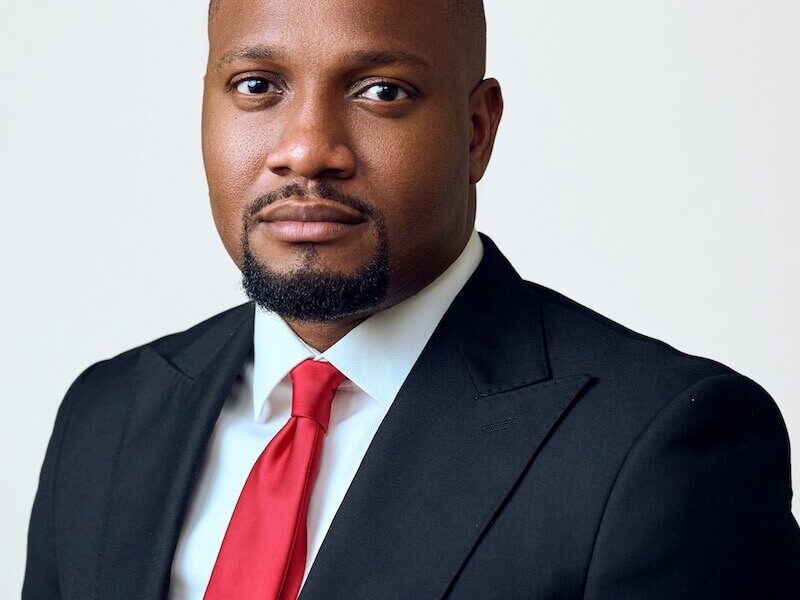
Charles Odii was 35 years old when President Bola Tinubu approved his appointment as Director General of the Small and Medium Enterprises Development Agency of Nigeria (SMEDAN) on 13 October 2023, a fact Odii himself has repeated with evident pride at party events since, most recently thanking the President “for appointing him at the age of 35” at an APC convention this March.
He is 38 years now, three years into running an agency that disburses billions of Naira a year meant to support Nigeria’s smallest businesses, and a payment details obtained and deeply scrutinized by SecretsReporters shows that in the ten weeks between his swearing-in and the end of that same year, SMEDAN paid out ₦9.75 billion of the ₦14.67 billion the agency disbursed in the whole of 2023, two-thirds of the year’s spending, compressed into the final quarter he oversaw.
Odii did not arrive at SMEDAN through the ordinary civil-service pipeline. Sources close to this medium disclosed that it was Seyi Tinubu, the President’s son, who holds no formal government office who nominated Odii, who was quite close to him, for the position.
The payments show that money moving fast, in patterns that raise the same procurement law questions SecretsReporters has documented at other federal agencies. On 23 November 2023, six weeks into his tenure, SMEDAN paid Mubel Integrated Services Nigeria Limited ₦198,837,209.30 for a police station and police quarters in Na Banje community, Kafur Local Government, a policing facility, built with an MSME agency’s capital budget, that has nothing to do with small business development.
Within the following five weeks, the same pattern repeated across the country: ₦119,302,325.58 to Maigizo Multi-Business Ventures Nig Ltd for solar street lighting in Gombe North, on 28 December; ₦79,534,883.72 to Johato Nig Ltd for classroom blocks in three Kogi communities, on 27 December; ₦79,534,883.72 to Skycrest Energy Nigeria Ltd for boreholes across four Yobe federal constituencies, on 22 December. Skycrest Energy Nigeria Ltd was barely two years old when it got awarded the contract.
Police stations, classrooms and boreholes are the responsibility of the police force, state education boards and rural water agencies, not a small-business development agency and if these sums came out of SMEDAN’s own appropriated capital vote rather than a distinct intervention fund merely passed through the agency, spending them this way is a misapplication of public funds against the statutory purpose Nigeria’s Fiscal Responsibility Act 2007 requires an agency’s budget to be used for.
The same ten-week window also produced the clearest sign of a much larger structural problem: national programmes broken into scores of small, community-level contracts, each kept conveniently under the threshold that would otherwise force competitive bidding.
On 30 December 2023, SMEDAN paid ₦22,498,432.00 to Ryanbel Nigeria Ltd and ₦27,328,156.00 to Kunchesky Nigeria Ltd both for the same National Business Skills Development Initiative, in different locations, priced within a few million naira of each other, part of a cluster of near-identical contracts running under sequential codes that same week. Our investigation reveals that Ryanbel did not meet the procurement qualification as it is an inactive company without all documents to secure a federal contract given it by Charles Odii.
None of these individual payments comes close to the ₦1 billion threshold that would trigger mandatory competitive bidding under the Bureau of Public Procurement’s rules, or even the ₦500 million prequalification threshold.
It was in this same stretch, on 22 December 2023, that SMEDAN paid ₦25,116,279.07 to a named individual, Aminu Garba Waziri, rather than to a registered company, for upgrading the agency’s own asset and inventory database, the only payment to a private individual, rather than a corporate contractor. Public procurement law does not contemplate handing a capital contract of that size to a person rather than an incorporated, tax-registered contractor, and nothing in the document explains why this particular contract was the exception.
Running alongside the infrastructure spending and the sub-threshold contracts was a third pattern: money paid not to contractors delivering anything, but to banks. Across 2023, ₦1.76 billion moved from SMEDAN into the accounts of microfinance institutions, ₦393,125,000.00 to Nsukka Micro Finance Bank Limited, ₦253,750,000.00 to Hasal Microfinance Bank Ltd, and smaller sums to half a dozen others recorded as grants and revolving facilities for farmers, market women and youth in named states and constituencies.
Not one of those 92 payments carries a beneficiary list, a disbursement schedule, or any retirement record on the payment showing the money reached the people the programmes were designed for, a gap the Financial Regulations of the Federal Government of Nigeria exist specificaly to close by requiring every such advance to be accounted for.