The World Bank has said Nigeria’s financial system is failing to channel sufficient credit to businesses with the greatest potential to create jobs, urging banks and development finance institutions to redirect capital towards productive sectors of the economy.
The World Bank has said credit is bypassing the businesses that have the greatest potential to create jobs in Nigeria, urging the financial sector to redirect capital towards productive enterprises and infrastructure.
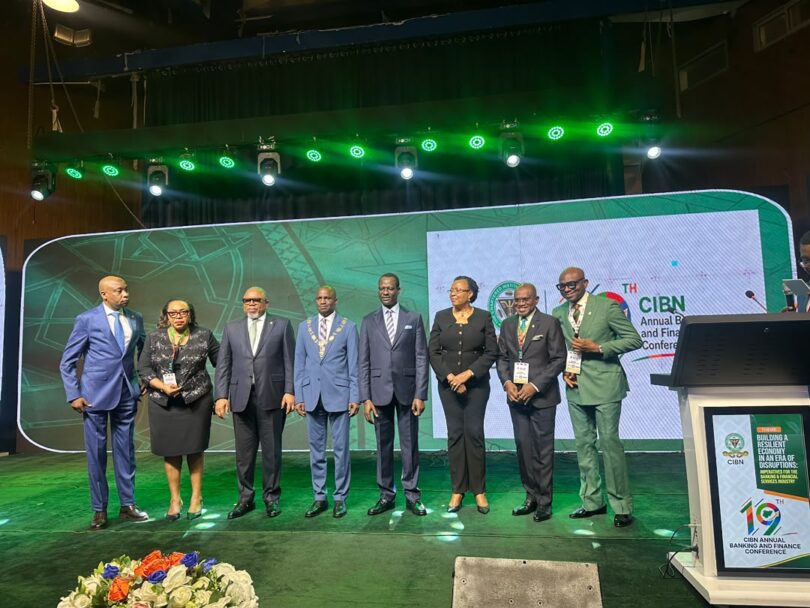
The conference came under the theme “Building a Resilient Economy in an Era of Disruptions: Imperatives for the Banking and Financial Services Industry” and is scheduled to hold between 8 and 9 September at the Transcorp Hilton in Abuja.
During her presentation, she said the country’s challenge was not necessarily a shortage of capital but how available capital was being allocated.
According to the specialist, domestic credit to the private sector stood at about 13 per cent of Nigeria’s Gross Domestic Product (GDP), among the lowest levels compared with similar economies.
“Credit is thinnest where job intensity is highest,” the World Bank representative said, noting that micro, small and medium enterprises (MSMEs) received only about one per cent of credit, while agriculture received about six per cent.
“This is where the jobs are. The core observation, to me and to the World Bank, is credit is bypassing the job creators,” the official said.
The World Bank said the issue was particularly important because between 3 million and 4 million young Nigerians enter the labour force every year, making it difficult for the government alone to meet the demand for jobs.
She argued that the private sector must therefore become the engine of job creation, supported by a financial system capable of providing businesses with the capital needed to invest, expand and hire workers.
The World Bank official dismissed concerns that Nigeria’s primary challenge was a shortage of capital, pointing to the size of domestic and global pools of funds available for investment.
According to the official, Nigeria’s banking system has about $160 billion in assets, while the recent recapitalisation exercise generated about $3.4 billion in fresh capital.
The pension industry, the official added, has about $23 billion in assets, while the insurance industry has approximately $35 billion.
Beyond Nigeria, the global pool of pension, insurance and sovereign wealth funds is estimated at about $110 trillion, creating significant opportunities for investment in emerging markets.
“The balance sheets are strong, and the question is not the availability of capital. The question is the allocation,” the official said.
The World Bank said the challenge was to ensure that available capital reached businesses and productive assets capable of generating sustainable economic activity and employment.
The World Bank identified a major financing gap among MSMEs, describing the segment as a “missing middle” because many businesses are too large for microfinance but too small to meet the risk appetite and lending requirements of commercial banks.
“Fewer than one in 20 MSMEs can access bank credit, and about nine in 10 operate informally,” the official said.
The World Bank said this was particularly concerning because the businesses in the missing middle include potentially fast-growing firms capable of creating significant numbers of jobs.
It also identified infrastructure as another major area of unmet financing demand.
According to the World Bank, Nigeria requires about $100 billion annually, based on government analysis, to close its infrastructure gap, with energy and transport alone accounting for almost 60 per cent of the estimated need.
It said improving access to finance for infrastructure, agriculture, manufacturing and trade would be critical to unlocking private-sector growth and job creation.
The World Bank called for greater use of development finance instruments to encourage commercial lenders and institutional investors to finance businesses and projects that may initially be considered too risky.
It advocated blended finance, guarantees, credit enhancement and risk-sharing facilities to reduce risks and mobilise pension and insurance funds.
“Every public dollar should be structured to crowd in multiples of commercial and institutional capital,” the official said.
The World Bank also urged Nigeria’s development finance institutions and sovereign wealth funds to take on risks that the market was not yet ready to price, arguing that such interventions should catalyse private investment rather than replace it.
The World Bank also warned Nigerian banks against relying heavily on government securities for returns, saying a decline in interest rates could put pressure on banks’ profitability and test the quality of financial intermediation.
The official said banks should begin redirecting more capital towards job-creating businesses as the monetary environment changes.
“Banks can no longer rely solely on government securities for yield. You have to start redirecting that capital towards job-creating growth,” the official said.
The World Bank said Nigeria’s recent macroeconomic reforms had provided a stronger foundation for growth, but stressed that the next phase should focus on translating macroeconomic stability into inclusive growth and employment.
“Stability was the platform that we had to aspire for. But in the end, jobs are the destination,” the official said.