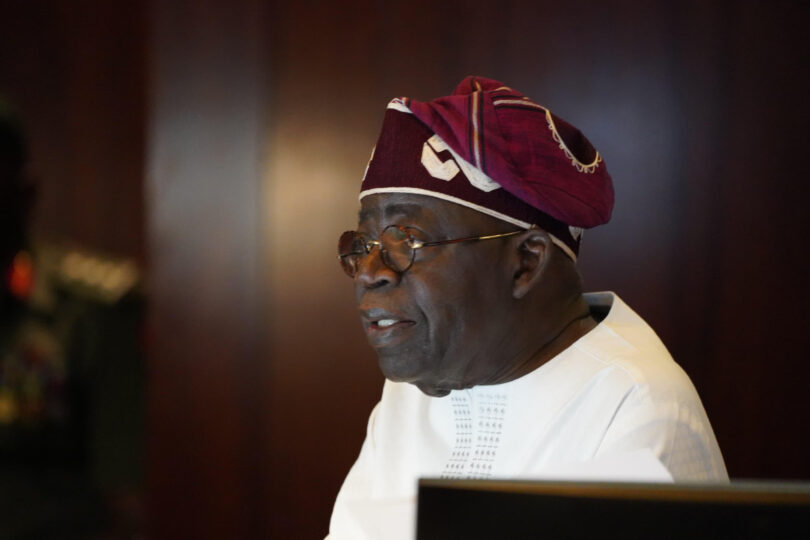
President Bola Ahmed Tinubu promised reform at the start of his administration. Those reforms were necessary, but they have placed real pressure on many Nigerians.
Families have had to make harder choices around food, transport, rent, school fees and energy costs, while traders and small businesses have had to rework their margins under the combined pressure of exchange-rate changes, credit costs and rising inputs.
Any account of the administration’s early returns must begin with that reality, because reform loses public trust when government speaks above the experience of the people it serves.
The fair question is whether the difficult decisions taken since May 2023 have begun to correct the distortions that weakened Nigeria’s economy, and whether those corrections are now strong enough to reach citizens more directly. On that question, the evidence points to an important but unfinished story.
The Tinubu administration has not solved every problem in three years, but measurable early returns have begun to show across various national facets including reserves, revenue, oil production, capital inflows, growth, education financing and Nigeria’s standing before investors and development partners.
President Tinubu came into office at a time when Nigeria’s public finances were under severe strain. Fuel subsidy was draining public money that could have funded basic services, the Central Bank had large foreign exchange backlogs, multiple exchange rates created room for arbitrage, oil production was below national needs, and public revenue was too low for the scale of Nigeria’s development demands. These were deep structural constraints that limited the ability of government to fund services, protect the currency, and support businesses and households. Avoiding them would have bought short-term comfort at the cost of deeper national damage.
One early return is already clear in Nigeria’s external position. The Central Bank cleared around $7 billion in outstanding foreign exchange obligations which helped restore confidence in a system many airlines, manufacturers, investors and businesses had struggled to trust. Since then, Nigeria’s net foreign-exchange reserves have risen from $3.99 billion at the end of 2023 to $34.8 billion by the end of 2025, while gross reserves of reached $50.45 billion by mid-February 2026. The balance-of-payments position also turned around, moving from deficits of $3.34 billion in 2023 and $3.32 billion in 2022 to a $6.83 billion surplus in 2024. These are not abstract figures. They show a country rebuilding the buffers it needs to meet external obligations, support currency stability and regain credibility in the foreign-exchange market.
That repair is also showing in investor behaviour. Capital inflows rose by almost 90 per cent in 2025, from $12.32 billion to $23.22 billion, with foreign portfolio investment carrying much of the increase. This should not be confused with a full factory-investment boom, but it shows that investors are returning to Nigerian financial assets. The stock market gives the clearest expression of that renewed confidence. In 2023, the All-Share Index stood around 53,000 and market capitalisation around ₦30 trillion. By 2026, the index had reached 250,000, with market capitalisation rising to ₦160 trillion, recording a near fivefold rise to a record 250,000 points. That kind of movement does not happen in a market where investors see only drift and uncertainty. It reflects a major revaluation of Nigerian assets and a growing belief that the reforms are positively changing the direction of the economy.
Inflation is the most sensitive indicator because Nigerians judge policy by what they pay every day. When President Tinubu assumed office, inflation was already at 22.41 per cent in May 2023, before the difficult but necessary reforms around subsidy and the exchange rate pushed price pressures higher, reaching 34.80 per cent in December 2024. The more recent figure of 15.69 per cent in April 2026 points to easing, but it must be interpreted cautiously because the National Bureau of Statistics rebased the Consumer Price Index. The point is, inflation has moved down from the severe stress of the adjustment period, but food prices and household costs must fall further before many Nigerians can feel the full benefit.
The growth and revenue figures show an economy drawing strength from outside oil. In the first quarter of 2023, before President Tinubu assumed office, the NBS put real GDP growth at 2.31 per cent, with the economy slowed by the cash crunch. By the first quarter of 2026, real GDP growth had risen to 3.89 per cent and is projected to rise above 4 per cent within a year according to international financial institutions. Manufacturing had grown by 3.29 per cent, and the non-oil sector accounted for 96.08 per cent of real GDP. Between January and August 2025, total government collections also rose to ₦20.59 trillion, from ₦14.6 trillion in the same period of 2024, with non-oil sources bringing in ₦15.69 trillion, about three out of every four naira collected. This shows the economy has continued to expand, and much of that activity is coming from where most Nigerians work and do business, and government now has more fiscal room to fund roads, schools, health care, security and social support. The more Nigeria can fund public obligations from a broader revenue base, the less it has to govern from a position of fiscal anxiety.
Oil output strengthens the recovery case because it sits at the centre of Nigeria’s foreign-exchange and revenue position.
In April 2023, before President Tinubu assumed office, Nigeria’s average crude oil and condensate output stood at about 1.25 million barrels per day. By April 2026, it had risen to 1.663 million barrels per. That is an increase of about 32.8 per cent in total crude oil and condensates from April 2023. For an economy that depends heavily on oil for foreign exchange and public revenue, that recovery gives the country more room to defend the naira, fund the budget, meet external obligations and rebuild investor confidence in the upstream sector.
NELFUND is one of the clearest ways the reform agenda is reaching households. For many families, the hardest part of higher education is the pressure of paying fees and upkeep at the same time. By creating a public financing route for students, the administration is reducing one of the barriers that keeps capable young Nigerians out of school or pushes them to drop out. As of March 9, 2026, the fund had disbursed ₦206.29 billion to 1,164,222 beneficiaries, with ₦128.84 billion paid to institutions for fees and ₦77.45 billion paid to students as upkeep allowances. The figures show a policy meeting a real need across the federation: education financing is providing practical support for families. We are seeing continuous stability and growth in the education sector.
The new minimum wage also belongs in this assessment, although wage policy alone cannot defeat inflation. President Tinubu signed the new national minimum wage into law in July 2024, raising it from ₦30,000 to ₦70,000 and the review period from five years to three years. The increase responded to a real problem: wages had fallen too far behind prices. Wage policy alone cannot defeat inflation, but it helps protect the lowest-paid workers during a difficult adjustment period. The larger goal remains an economy where incomes rise because production, productivity and business activity are rising with government adjusting the wage floor from time to time.
Nigeria’s reform credibility is also changing how the country is read abroad. For foreign affairs, this has practical value. It affects how investors price the country, how lenders assess risk, how development partners engage, and how much confidence Nigeria carries into economic negotiations. Multilateral bodies like the IMF and the World Bank have linked Nigeria’s current stronger macroeconomic stability to reforms. Also significant, in May 2026, S&P positively upgraded Nigeria’s long-term sovereign rating, citing a stronger macroeconomic profile, higher oil production, domestic refining capacity and exchange-rate liberalisation. These are signals that Nigeria is beginning to recover credibility in the places where capital, credit and economic influence are negotiated.
For those of us who work on foreign affairs, these domestic indicators are directly connected to Nigeria’s standing abroad. A country negotiates better when businesses trust its currency market, airlines and investors believe legitimate obligations will be honoured, partners see better fiscal management, and citizens abroad experience better service from the Nigerian state. Stronger reserves, a balance-of-payments surplus, renewed capital inflows, better revenue performance, oil output recovery and education financing shape how Nigeria is read by investors, development partners, diaspora communities and other governments.
The strongest criticism of the administration may be that Nigerians still experience reform as pressure before relief. That criticism cannot be dismissed. But, three years after President Tinubu took office, the honest conclusion is that the early returns are real, and historically significant. Nigeria has rebuilt net foreign-exchange reserves from a very weak position. It has moved from balance-of-payments deficits to surplus. Capital is returning to Nigerian financial assets. The stock market has reached record levels. Public revenue has improved. Growth has continued under difficult conditions. Oil output has recovered from the low levels recorded before the administration. NELFUND has opened a new route for education financing. The minimum wage has been raised. These are serious developments.
The responsibility now is to protect the gains, reduce inflation further, improve food supply, lower business costs, deepen infrastructure and energy reforms, strengthen security and demand better spending from every tier of government. The early returns are beginning to show. The next task is to make them more visible in the markets, classrooms, farms, workplaces, airports, hospitals and homes.
Like Rome, Nigeria will not be built in one season. Development requires patient building, disciplined choices and steady execution. President Bola Ahmed Tinubu is laying that foundation. That is the TinuBOOM effect: the early signs of a country beginning to recover its footing, rebuild confidence and prepare the ground for wider relief.
-Oshodi is the Senior Special Assistant to President Tinubu on Foreign Affairs and Protocol