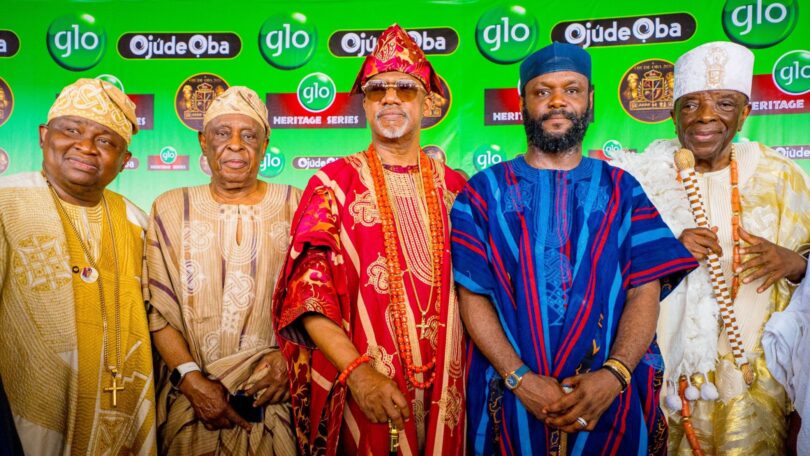
Beyond its famed display of culture, fashion and horse parades, this year’s edition honoured the late traditional ruler’s role in transforming the festival into an internationally recognised cultural event.
Thousands of people from across Nigeria and the diaspora converged in Ijebu-Ode, Ogun State, on Friday in a colourful display of culture, tradition and communal pride, as the renowned celebration paid tribute to the late Awujale of Ijebuland, Oba Sikiru Kayode Adetona.
Dignitaries at the festival included Ogun State Governor Dapo Abiodun, Minister of Arts and Culture, Tourism and the Creative Economy, Hannatu Musawa, business leaders, traditional rulers, and tourists from Germany, the USA, the UK, and other parts of the world.
This year’s gathering carried added significance, as participants celebrated not only Ijebu traditions but also the enduring legacy of a king widely credited with elevating Ojude Oba into an internationally recognised cultural event.
Oba Adetona, who was the paramount ruler of Ijebuland, died on 13 July 2025 at the age of 91. Nigeria’s longest-serving first-class monarch was laid to rest at his Igbeba residence in Ijebu-Ode, Ogun State, after passing away at a private hospital in Lagos.
The Awujale ascended the throne in 1960 at the age of 25 and was widely respected for his courage, independence, speaking truth to power and championing the role of traditional institutions in national development.
To pay tribute to his legacy, this year’s celebration was themed “Ojude Oba 2026: Celebrating the Legacy of Oba Sikiru Adetona.”
Representing the Awujale, the Ogbeni Oja of Ijebuland, Sonny Kuku, speaking at the event, described the festival as a unifying force that continues to bring together Christians, Muslims and traditional worshippers in homage to the royal institution.
“It is very gratifying for me that what we started is getting bigger and bigger,” Chief Kuku said, adding that the festival has helped strengthen social cohesion.
According to him, the festival has become more than a ceremonial gathering, serving as a platform that promotes unity, development and cultural pride among Ijebu people.
“Ojude Oba has opened the eyes of the Ijebu people to the fact that we need to develop more. It has also opened our eyes to social welfare. The essence of the festival is to pay homage to the Kabiyesi on the third day of the Ileya celebration. It is a uniting factor. Christians, Muslims and traditional worshippers come together and pay homage to one person,” he said.
That spirit of unity was evident throughout the celebration as thousands of attendees, regardless of religious or social background, participated in the festivities.
The country hosts numerous festivals annually, but the Ojude Oba culture has attracted widespread attention from Nigerians and diasporans.
The arts and culture minister, Musawa, described Ojude Oba as one of Nigeria’s most successful cultural exports, noting that it has become a reference point for how cultural festivals can promote national identity and tourism.
Ms Musawa added that the federal government hopes to have “handshakes”, and she hopes that this will become a template for how we continue to grow other cultures and festivals, building partnerships with different states so that each state can showcase its unique festivals.
Governor Abiodun also highlighted the economic impact of the celebration, saying the festival has become an important component of Ogun State’s tourism strategy.
“We are building a state that honours its heritage because culture is not only our identity but also a source of social cohesion and economic opportunity,” he said.
According to the governor, the festival’s impact is visible across Ijebu-Ode and neighbouring communities, with hotels recording high occupancy rates and local businesses experiencing increased patronage.
Beyond the speeches, the festival delivered the pageantry for which it has become famous.
The arrival of the Regberegbe age-grade groups transformed the arena into a vibrant showcase of colour and tradition.
Dressed in coordinated attire reflecting family histories and cultural affiliations, the groups paid homage to the royal institution while entertaining spectators with elaborate displays.
Another major highlight was the Balogun Koku and the Eleshi Oreagba family horse parade, where descendants of ancient warrior families rode majestically into the arena on horses adorned with colourful fabrics and traditional ornaments.
Accompanied by drumming, chants and intermittent ceremonial gunfire, the display remains one of the festival’s most enduring attractions and a pointer to Ijebuland’s rich history.
Fashion also took centre stage as participants appeared in elegant agbadas, aso-oke fabrics, caps, stylish sunglasses, gold accessories, lace ensembles and tied gele headpieces.
Several celebrities and social media personalities were among the crowd, including actors Rotimi Salami and Jide Awobona, actress Eniola Badmus, media personality Beauty Goddess, fashion influencer Akin Faminu and socialite Farooq Oreagba.
Mr Oreagba, who gained widespread attention following previous editions of the festival, once again drew loud cheers as he rode into the arena on horseback, maintaining the image that has become closely associated with modern Ojude Oba celebrations.
The celebration has increasingly become a homecoming event, bringing together Ijebu sons and daughters from across Nigeria, Europe, North America, and other regions of the world.
Organisers believe the festival’s influence will continue to grow. Adetokunboh Fassy, the Bagbimo of Ijebu and a long-time coordinator of the festival, disclosed that efforts are ongoing to secure UNESCO recognition for Ojude Oba.