President Bola Ahmed Tinubu’s directive ordering the withdrawal of police personnel attached to unauthorised Very Important Persons is recording mixed compliance across several states, with politicians, businessmen and other prominent individuals still being seen with police escorts despite the presidential order.
The directive was issued on November 23, 2025, during a high-level security meeting in Abuja, where the President ordered police officers deployed to guard unauthorised VIPs to be returned to routine community policing duties.
Tinubu also directed VIPs who genuinely require security escorts to seek armed personnel from the Nigeria Security and Civil Defence Corps rather than continue relying on police officers.
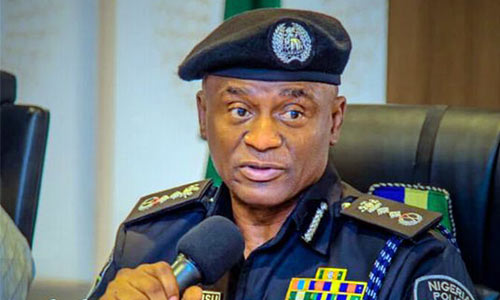
Following the presidential directive, the Nigeria Police Force issued operational orders directing the immediate withdrawal of officers attached to unauthorised individuals and warning that personnel found providing illegal escort services could be arrested.
The Inspector-General of Police also directed airport security commanders in Abuja and Lagos to arrest any police officer found escorting an unauthorised VIP.
Force Headquarters subsequently issued wireless operational signals warning commanders that supervisors who failed to enforce the directive could face disciplinary action, while monitoring responsibilities were assigned to the Compol X-Squad and the IGP Monitoring Unit.
However, investigations across several states showed that although the policy is being implemented in principle, enforcement remains uneven, with security concerns, alleged discreet deployments and exemptions cited for the continued presence of police escorts around some prominent individuals.
In Osun State, where political tension has heightened ahead of the August 15 governorship election, the directive has reportedly not been fully implemented, as several VIPs, particularly political figures, continue to travel with police officers and other security operatives.
A retired police officer and security expert, Nureni Olapade, attributed the situation to security concerns surrounding the election.
At least 15 people have reportedly been killed in election-related violence ahead of the governorship poll, while several political figures have raised concerns about threats to their lives.
In Imo State, the Police Command said it had complied with the directive by withdrawing police orderlies from individuals who were not entitled to statutory protection.
The Police Public Relations Officer, Henry Okoye, said more than 60 per cent of orderlies attached to politicians, businessmen and traditional rulers who did not qualify for protection had been withdrawn.
“We have withdrawn over 60% of orderlies assigned to politicians, businessmen and traditional rulers who don’t qualify. Only the governor, deputy governor, speaker, chief justice, and first-class traditional rulers facing security threats retain statutory protection,” Okoye said.
Despite the police position, several traditional rulers and VIPs in Owerri were reportedly still seen moving with police escorts, a situation residents linked to the prevailing security challenges in the state.
In Delta State, the directive was said to have caused anxiety among many VIPs, but investigations showed that police escorts were still accompanying some prominent individuals, although in a more discreet manner.
Some officers were reportedly travelling in plain clothes inside the same vehicles as the VIPs or following them in separate vehicles.
Others were alleged to have disguised themselves as drivers or used NSCDC and vigilante uniforms to avoid attracting attention at checkpoints.
Police authorities in Abia State maintained that the directive was implemented immediately, although checks reportedly showed that some VIPs continued to retain police personnel.
The Enugu State Police Command similarly maintained that the withdrawal order remained in force, but some political office-holders and influential individuals were still reportedly travelling with police escorts.
Security expert Ndukuba Elias attributed the continued use of police escorts partly to fears of kidnapping when officials travel outside Enugu State.
“Although Enugu is one of the safest states in the country, the elected officials are still afraid that if they travel to neighbouring states, they may be kidnapped by hoodlums,” he said.
Elias argued that while the number of police officers attached to VIPs should be reduced, the Federal Government should also recruit more police personnel to strengthen public security.
Investigations in Cross River, Akwa Ibom and Niger states also indicated partial compliance.
Politicians, commissioners, lawmakers, contractors and other prominent individuals were reportedly still moving with reduced numbers of police escorts, some of whom operated in plain clothes.
A senior police officer in Akwa Ibom, who spoke anonymously, said some officers continued to provide protection discreetly.
“Some policemen are still being released to guard politicians, but they are doing so discreetly, dressed in mufti,” the officer said.
“Sometimes, we are hired to provide security cover for big men in their compounds or on trips when we are not on official duty.”
In Taraba State, however, the Police Command insisted that the withdrawal directive remained in force.
The command’s spokesperson, ASP Victor Mshelizah, said the policy affected politicians, traditional rulers and other individuals who previously enjoyed police escort services, except those specifically exempted because of the nature of their official duties.
According to him, judicial officers, holders of certain strategic public offices and other persons specifically approved by the Inspector-General of Police remain eligible for police protection, while individuals seeking additional security were advised to approach the NSCDC.
In Kaduna State, some residents said they had noticed little difference since the directive was issued, claiming that politicians and senior government officials continued to attend public functions accompanied by armed police escorts.
A resident, Ibrahim Adamu, said prominent individuals were still moving with armed police officers, while another resident, Grace John, described the policy as commendable but said its implementation had not been noticeable.
The Kaduna State Police Command had not responded to enquiries on the level of compliance at the time the report was filed.
In Benue State, police escorts were also reportedly seen accompanying some politicians, businessmen and public officials, particularly individuals travelling to areas considered volatile.
The Police Public Relations Officer, DSP Orchia Peter Aondongu, said security personnel could be temporarily attached to individuals who needed to visit insecure areas.