Special Reports
Under Buhari, Tinubu, Cash Transfer Office failed to identify beneficiaries of N33.75 billion – Audit Report


The office reported making electronic transfers totalling N33.75 billion to 3.2 million households and beneficiaries across 35 states in 2023. However, the payment vouchers did not contain complete details of the beneficiaries.
The National Cash Transfer Office (NCTO) reported paying N33.75 billion to 3.29 million households and beneficiaries across 35 states in 2023 but failed to provide complete records identifying the recipients.
The finding is one of eight audit queries against the NCTO in the auditor general’s 2024 Annual Report on Non-compliance and Internal Control Weaknesses in MDAs, covering the period from 1 January to 31 December 2023.
The eight queries total N76.24 billion.
NCTO did not respond to some of the audit queries, and in the cases they responded to, the auditor found their response to be unsatisfactory.
The auditor general consequently said the findings remained valid until the commission implemented the recommendations.
The NCTO runs the conditional cash transfer component of the National Social Safety Nets Project, a World Bank-financed programme that provides payments to poor households identified on the National Social Register.
The office operates under the National Social Investment Programme Agency, which reports to the Federal Ministry of Humanitarian Affairs and Poverty Reduction. The transfers happened under former Ministers Sadiya Farouk (under the Muhammadu Buhari presidency) and Betta Edu (under the Bola Tinubu presidency), who headed the ministry at different times in 2023.
The programme’s operations came under scrutiny in January 2024 when President Bola Tinubu suspended the agency’s chief executive, Halima Shehu, over alleged financial misappropriation. Ms Shehu had previously served as national coordinator of the conditional cash transfer programme.
Ten days later, Mr Tinubu suspended all four programmes run by the agency for an initial six weeks, citing “operational lapses and improprieties surrounding payments to the programme beneficiaries”.
Paragraph 613 of the Financial Regulations 2009 requires payments to be made only to the persons named in payment vouchers or their properly authorised representatives. Paragraph 603(i) also requires vouchers to contain full particulars of the services provided so they can be checked without reference to other documents.
The NCTO reported making electronic transfers totalling N33.75 billion to 3.2 million households and beneficiaries across 35 states in 2023. However, the payment vouchers did not contain complete details of the beneficiaries, the audit report said.
The office also failed to present the Remita statement that would have enabled auditors to compare the payments with the beneficiaries listed on the National Social Register and establish who actually received the funds.
The auditors said the missing statement prevented them from authenticating the payments and determining whether the recipients were genuine beneficiaries.
“All efforts to obtain access to the REMITA statement were obstructed and denied by NCTO accounts staff, thereby frustrating the audit process,” the auditor general said.
He warned that the failure to verify the payments exposed public funds to the risk of loss and raised the possibility that ineligible or fictitious persons had received the money.
The auditor general recommended that the National Programme Manager, Abdullahi Imam, be required to account for the N33.75 billion and recover and remit the amount to the Treasury. He also directed that evidence showing that the beneficiaries received the funds be submitted to the Public Accounts Committees of the National Assembly.
Failure to comply could attract sanctions under paragraph 3106 of the Financial Regulations, the report said.
In another query, the report identified 215 payment vouchers totalling N36.74 billion for “SS, IDA & output base” transactions in December 2023 that were paid without internal audit checks or prepayment audits.
Paragraph 1705 of the Financial Regulations requires the head of internal audit in every ministry and agency to “ensure that a 100 per cent prepayment audit of all checked and passed vouchers is carried out.”
None of the 215 vouchers underwent the required checks before payment. Instead, the Internal Audit Unit examined them after the payments had been made, contrary to the regulations, the auditors found.
The report noted that the World Bank’s November 2021 Project Appraisal Document for the programme’s scale-up provided for the Internal Audit Unit to conduct compliance and operational audits without adopting a prepayment audit system.
The auditor general nevertheless said the practice contravened Nigeria’s Financial Regulations. He recommended that the N36.74 billion be fully accounted for and recovered, with those responsible sanctioned for gross misconduct under paragraph 3129 of the regulations.
The auditors also found that the NCTO made 101 payments totalling ₦4.62 billion from the “S&S/IDA Cash Book,” without presenting the corresponding payment vouchers for examination.
The absence of the vouchers prevented the auditors from verifying the payments and the expenditures they were intended to cover.
The report said this breached Section 85(2) of the Constitution, which provides for the auditor general’s access to public account records. It also contravened paragraph 601 of the Financial Regulations, which states that “under no circumstances shall a cheque be raised or cash paid for services for which a voucher has not been raised.”
The auditors warned that the missing records exposed public funds to misapplication and diversion. They recommended that the entire N4.62 billion be recovered from the NCTO.
The auditors further identified 32 payments totalling N3.09 billion from the “NASSP SCALE-UP Cash Book” to states for the enrolment of unbanked, poor and vulnerable households.
Although the NCTO presented documents covering N2.74 billion disbursed to 34 states, N350.18 million remained unaccounted for, according to the report.
The auditors also faulted the supporting vouchers, describing them as vague and inadequate to establish how the funds were used or which activities they financed.

GDP Growth, Lower Inflation Can’t Tackle Cost Of Living Crisis – NESG
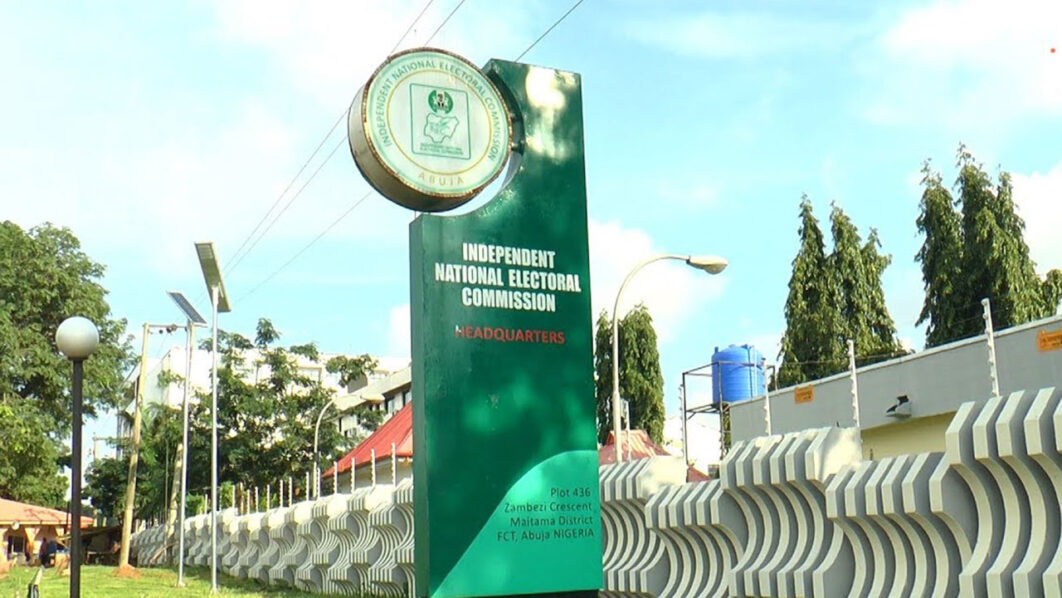
INEC publishes preliminary voter register online after missing legal deadline

ADC denies owing workers salaries, challenges APC to provide evidence

Abia Targets Diaspora Investments, Skills Transfer At December Homecoming

President Tinubu Congratulates Brazilian President Lula On Electoral Victory

Alleged Certificate Forgery: UNN, NYSC disowned Nnaji’s certificates, witness tells court

APC attacks Atiku, ADC over alleged unpaid staff salaries

Tinubu’s Camp Accuses ADC, Atiku Of Owing Workers’ Salaries

INVESTIGATION: How Anthony Kila falsified all his academic qualifications – from Bachelor’s to Doctorate

Google opens AI-content detector to enable verification

Customer Service Week: Inside How Jumia Is Using Technology To Go The Extra Mile For Shoppers

Kayefi headlines Tales & Tunes as ID Cabasa leads music direction in Sheffield

How Houthi military aggression in Red Sea threatens Africa

How Lagos Families Are Allegedly Buying Contaminated Meat In Dirty Conditions At Mushin, Oshodi, Mile 12, Surulere Markets

Ogaga Ifowodo wins $100,000 Nigeria Prize for Literature

UK migrant workers wear chains, sing Asa’s ‘Jailer’ to protest proposed visa reforms

 Investigations6 days ago
Emirates explores a range of new innovations for customers with accessible travel requirements at AccessAbilities Expo, Dubai 2026
- Special Reports7 days ago
Orie Uga Market Traders To Hold Mega Rally For APGA, Set To Endorse Dr. Chibueze Ofobuike For House Of Reps
- News6 days ago
Lagos Alone Cannot Afford Fourth Mainland Bridge — Hamzat
- Special Reports7 days ago
Igbo Speaking Community Lagos Suspends Crowning Of Ezendigbo As New Executives Vow To Restore Past Glory
- Politics7 days ago
Moses Can’t Return To Egypt – Tinubu Rules Out Fuel Subsidy
- Special Reports6 days ago
NIMASA DG Dayo Mobereola Squanders N6.77 Billion On Cleaning, Hospital Bills And Imprest Including N1 Billion To Maintain Its London Office In Just One Year

 Special Reports6 days ago
Abandoned newborn rescued at Plateau mining site
- Special Reports7 days ago
FRSC orders probe into Otedola bridge tanker inferno