“Among the architects of modern democratic Nigeria, we honour General Shehu Musa Yar’Adua for his vision of national partnership.”
President Bola Tinubu has renamed the Institute of Petroleum Studies in Kaduna as the “General Shehu Musa Yar’Adua University of Geological Sciences and Engineering.”
“Among the architects of modern democratic Nigeria, we honour General Shehu Musa Yar’Adua for his vision of national partnership. In recognition of his contributions, the Federal Government has approved the revitalisation and renaming of the completed Institute of Petroleum Studies, Kaduna, as the General Shehu Musa Yar’Adua University of Geological Sciences and Engineering Technology,” Mr Tinubu said.
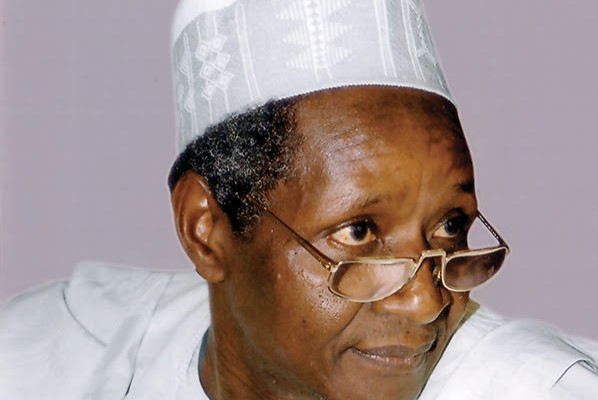
Mr Yar’Adua, a brother of Nigeria’s late former president, Umaru Yar’Adua, died in December 1997 in incarceration after he was accused of coup plotting by then military dictator Sani Abacha.
Mr Yar’Adua was a soldier and politician who served as the de facto vice president of Nigeria (as Chief of Staff, Supreme Headquarters) during the Olusegun Obasanjo military regime from 1976 to 1979. He later became a prominent political figure during the transition from military to civilian rule in the late 1980s and 1990s.
Mr Yar’Adua and his allies formed the People’s Front of Nigeria (PFN). Its foundational members included prominent figures such as Babagana Kingibe, Atiku Abubakar, Bola Tinubu, Magaji Abdullahi, Ango Abdullahi, Ahmadu Rufa’i, Yahaya Kwande, Abdullahi Sumaila, Wada Abubakar, Babalola Borishade, Timothy Oguntuase Akinbode, Sabo Bakin-Zuwo, Sunday Afolabi, Rabiu Kwankwaso, Tony Anenih, Chuba Okadigbo, and Abubakar Koko.
Members of the People’s Front later joined the Social Democratic Party (SDP), one of the two parties registered by the Ibrahim Babangida junta for politics in the transition to the short-lived Third Republic.
While the PFN and the People’s Solidarity Party (PSP) became the two dominant factions within the SDP, Mr Yar’Adua’s group ultimately secured the majority of the party’s elective positions.
During the subsequent governorship and House of Assembly elections, the SDP gained a slight numerical edge over the opposition National Republican Convention (NRC).
In January 1992, Mr Yar’Adua served a brief stint in detention after being jailed for contravening a law that banned certain individuals from active politics.
Following the repeal of the law, he officially announced his presidential bid. His sophisticated campaign machinery spanned the entire country, featuring a national campaign directorate alongside dedicated state coordinators and ward mobilisers.
Key members of his campaign organisation included former PDP chairman Tony Anenih, former Vice President Atiku Abubakar, former minister Dapo Sarumi, current President Tinubu, Abdullahi Sumaila, and Sunday Afolabi.
Mr Yar’Adua was leading the SDP presidential primary field before the results were abruptly annulled.
A new presidential election was conducted on June 12, 1993, and was won by M.K.O. Abiola.
Following the annulment of the June 12 polls, the Yar’Adua faction negotiated an arrangement to establish an interim national government. However, in November 1993, the interim government led by Ernest Shonekan was ousted by Sani Abacha, who assumed power as the new military head of state and promptly disbanded all political parties.
In 1994, Mr Yar’Adua won a seat representing Katsina at the National Constitutional Conference organised by the Abacha junta. As an outspoken delegate, he organised a political conference in Lagos in early 1994. His pronouncements at the event drew the ire of the military leadership, resulting in a four-day detention.
In March 1995, Mr Yar’Adua—alongside Mr Obasanjo, Lawan Gwadabe, and others—was arrested on allegations of plotting to overthrow the Abacha regime. He was sentenced to death by a military tribunal.
After the sentence was commuted to life imprisonment, he died in Abakaliki prisons on 8 December, 1997.
Mr Yar’Adua’s demise sparked widespread outrage among human rights organizations and his political loyalists, who viewed the regime’s handling of his detention with deep suspicion.
The government’s failure to issue an official announcement fueled allegations of complicity and severe negligence; reports indicated that Mr Yar’Adua had fallen into a coma at the Abakaliki prison before being transferred to Enugu, where he ultimately passed away.
On 14 December, 1997, thousands of supporters took to the streets of Katsina to demand Abacha’s resignation. Mr Yar’Adua’s death also intensified grievances across northern Nigeria, as many northern elites and traditional rulers had already grown disillusioned with Abacha’s concentration of power and exclusionary political tactics.
Following Mr Abacha’s death in 1998 and Nigeria’s subsequent return to democracy, Mr Yar’Adua’s political network, the People’s Democratic Movement (PDM), formed the core of the Peoples Democratic Party (PDP). The party went on to win the presidency, 21 gubernatorial seats, 59 Senate seats, and 206 seats in the House of Representatives during the 1999 general elections.
To this day, Mr Yar’Adua’s associates continue to play definitive roles in Nigerian politics: Mr Obasanjo, his former military superior became civilian president in 1999,
Umaru Yar’Adua, his younger brother, succeeded Mr Obasanjo as president.
Muhammadu Buhari, his longtime contemporary, served as president from 2015 to 2023. Atiku Abubakar his political protégé served as Vice President. Mr Tinubu his former SDP associate currently serves as the President of Nigeria.
On June 12, 2025, during Democracy Day celebrations, President Tinubu posthumously conferred Nigeria’s highest national honour, the Grand Commander of the Order of the Federal Republic (GCFR), upon Mr Yar’Adua, cementing his legacy as a foundational pillar of the nation’s democratic journey.