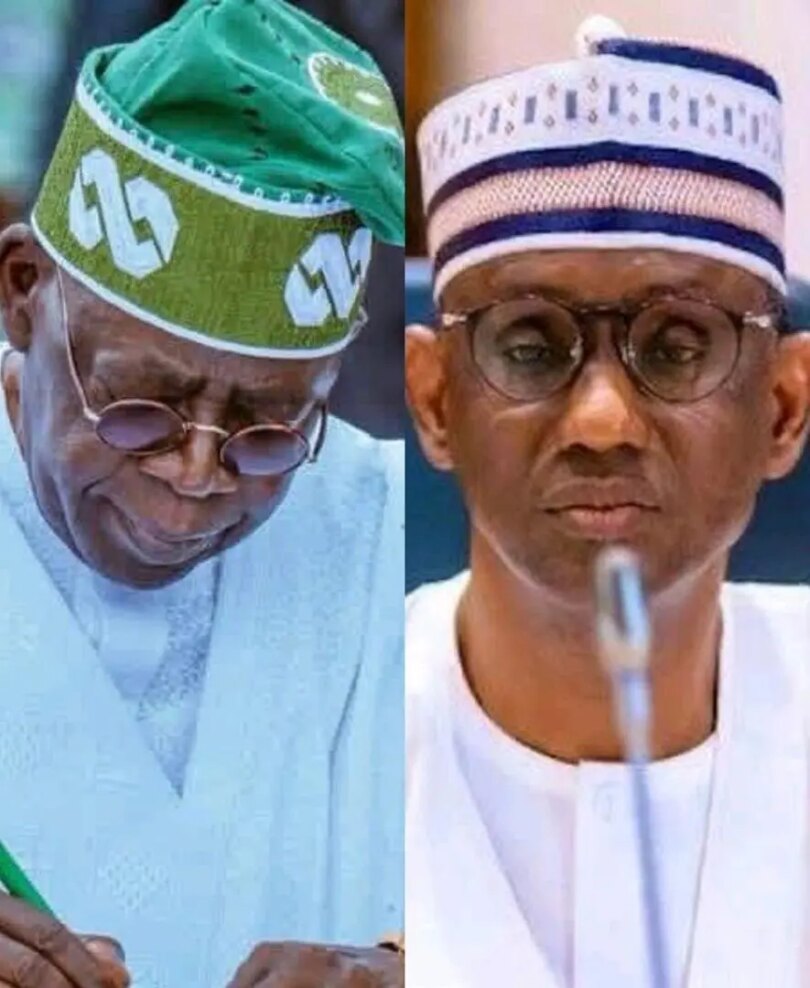
The Community Safety Vanguard has commended President Bola Tinubu and the National Security Adviser, NSA, Nuhu Ribadu, for brokering a power-sharing agreement between the Ijaw and Itsekiri ethnic nationalities over the proposed Warri Federal Constituency II in Delta State.
The group said the intervention helped to avert a potential ethnic crisis arising from the Independent National Electoral Commission’s, INEC, ward delineation exercise in Warri.
In a statement issued on Thursday by its National Coordinator, Comrade Abbas Johnson, the organisation described the President’s intervention as timely and praised Ribadu for what it called his pragmatic and result-oriented approach to conflict resolution.
According to the group, the peace initiative, undertaken on the directive of President Tinubu, prevented what could have degenerated into widespread violence and a breakdown of law and order in the Niger Delta.
“The timely intervention, carried out under the direct directive of President Tinubu, has successfully averted what could have escalated into a devastating ethnic conflagration and a total breakdown of law and order in the Niger Delta,” the statement said.
The agreement was reached during a high-level meeting chaired by Ribadu in Abuja, with representatives of the Ijaw and Itsekiri ethnic groups in attendance.
Also present at the meeting were senior government officials, including the Director-General of the State Security Service, SSS, Oluwatosin Adeola Ajayi.
Under the agreement, the House of Representatives seat for the proposed Warri Federal Constituency II will rotate between the two ethnic groups.
The Ijaw nationality will occupy the seat for the first two consecutive terms before it rotates to the Itsekiri for the following two terms.
The Community Safety Vanguard described the arrangement as a balanced framework capable of promoting equity, fairness and lasting peace among the affected communities.
The group noted that the agreement followed a meeting convened by President Tinubu with stakeholders from Delta State at the Presidential Villa on June 11, 2026.
According to the statement, the President directed that two representatives each from the three ethnic nationalities involved in the dispute should meet under the supervision of the National Security Adviser to develop a mutually acceptable political framework.
The group said the successful outcome reflected the President’s commitment to resolving conflicts through dialogue and consultation while demonstrating confidence in Ribadu’s leadership.
It further praised the National Security Adviser for what it described as his calm disposition, honesty and consensus-building skills, saying those qualities helped secure the agreement.
The statement added that Ribadu’s approach inspired confidence among the parties and enabled them to reach common ground on a highly sensitive issue.
Signatories to the agreement included former Deputy Governor of Delta State, Kingsley Otuaro, and Dr. Eric Omare, who signed on behalf of the Ijaw nationality, while Sir A.S. Mene and Chief Robinson Ariyo signed for the Itsekiri.
Ribadu endorsed the agreement on behalf of the Federal Government, while Olorogun Victor Okumagba and Chief Westham Adehor signed as witnesses.
The Community Safety Vanguard maintained that the mediation achieved more than preventing a possible conflict, noting that it had strengthened peace and political stability in the Niger Delta.
According to the group, the intervention has reinforced public confidence in the Federal Government’s ability to resolve complex ethnic and political disputes through dialogue rather than coercion.
The organisation urged stakeholders across the Niger Delta and other parts of the country to emulate the model by embracing peaceful engagement, inclusive governance and national unity.