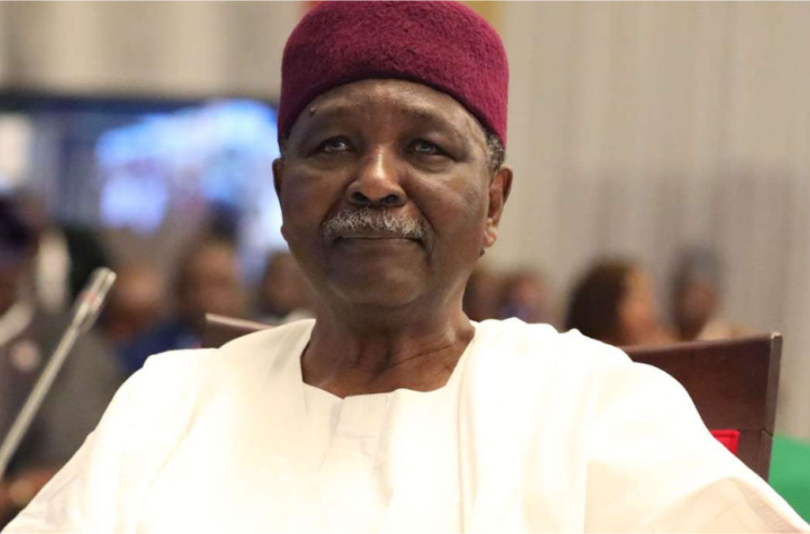
Mr Gowon said the publication of the memoir was not intended to settle scores or pass judgment on historical actors, but rather to document his experiences truthfully amid what he described as growing distortions in public discourse.
Former Nigerian Head of State, Yakubu Gowon, has said his decision to publish his autobiography six decades after assuming office was driven by the need to correct misinformation, preserve institutional memory and tell his side of Nigeria’s turbulent history.
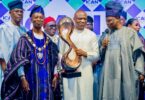
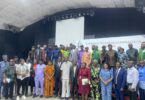
The event drew prominent political leaders, military veterans, diplomats, senior government officials and traditional rulers from across the country.
Among those present were former President Goodluck Jonathan; Vice President Kashim Shettima, who represented President Bola Tinubu; Secretary to the Government of the Federation, George Akume; and Ireti Kingibe, the FCT senator, who represented Senate President Godswill Akpabio.
Former Minister of Defence and ex-Chief of Army Staff, Theophilus Danjuma, was represented by former Chief of Defence Staff, Martin Agwai, who officially unveiled the book published by Havilah Group.
Reflecting on the significance of the timing, the former military leader said 2026 would mark 60 years since Nigeria’s first military coup and his emergence as Head of State during one of the country’s most difficult periods.
“As far as anniversaries go, 2026 is a landmark year in the evolving history of our dear nation, Nigeria,” he said. “Sixty years ago, our country stood on the brink of disintegration and the circumstances of the time led me to renew my commitment to serve Nigeria with all my strength.”
Mr Gowon, who assumed office on 1 August 1966 at the age of 31, led Nigeria through the 30-month civil war and later introduced ..-war policy of “No Victor, No Vanquished,” aimed at promoting reconciliation, reintegration and national unity after the conflict.
Born in 1934 in Lur, present-day Plateau State, Mr Gowon became one of Nigeria’s youngest leaders and remained in office for nine years before he was overthrown in a bloodless military coup, led by Murtala Muhammed in July 1975 while attending an Organisation of African Unity (OAU) summit in Uganda.
Mr Gowon said the publication of the memoir was not intended to settle scores or pass judgment on historical actors, but rather to document his experiences truthfully amid what he described as growing distortions in public discourse.
“Several individuals tried their best to persuade me to write to end the growing spate of misinformation and disinformation on me in national conversations,” he said.
The former head of state also referenced repeated false reports about his death, saying the rumours added to the pressure on him to tell his story publicly.
“More pressure was mounted when rumours of my death gained ground, not once, but many times. I think about four times so far,” he said jokingly, drawing laughter from the audience.
“When I eventually decided to write, I was clear that I only needed to tell my truth, not join issues with anyone or sit in judgement over what might be considered right or wrong.”
According to him, he chose for many years to remain silent on contentious national issues to avoid reopening old wounds linked to the civil war and military rule.
Mr Gowon, however, said he abandoned his long-held silence because his personal story could not be separated from Nigeria’s political evolution, especially during and after the civil war.
“Speaking out became necessary because my story and that of Nigeria were too intertwined,” he said. “I needed to mind the gap and avoid fuelling negative narratives that could reopen old wounds.”
He described the book as a collaborative effort involving researchers, aides and publishers, noting that it was not written to celebrate his personality but to express gratitude for the opportunity to serve the country.
Mr Gowon also reaffirmed his belief in Nigeria’s unity and long-term survival despite the country’s recurring political and security challenges.
The former leader commended members of the armed forces, traditional rulers and public servants who contributed to preserving Nigeria’s unity during periods of crisis.
He added that many of the people who worked with him during critical periods of Nigeria’s history were no longer alive, making it important for him to acknowledge their sacrifices and contributions.
The former head of state also reaffirmed his belief in Nigeria’s unity and long-term survival despite the country’s current political, economic and security challenges.
“I cannot say loudly enough that my belief in the long-term survival of Nigeria is total because my love for the country and its people is beyond question,” he said.
Mr Gowon said he hoped the autobiography would help younger Nigerians and current leaders better understand the burden of public office and the importance of serving with integrity.