For Martínez, the victory over Nigeria may not have been flawless, but it offered exactly what he wanted…
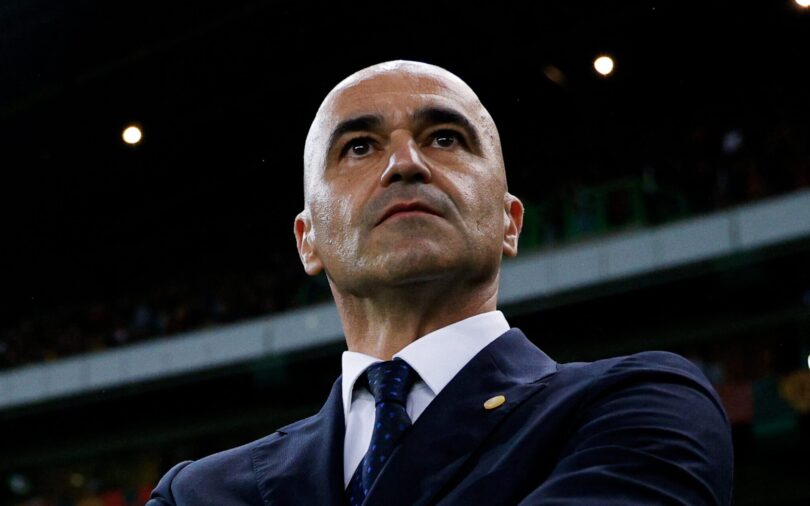
Portugal manager Roberto Martínez has revealed that superstar, Cristiano Ronaldo’s early withdrawal against the Super Eagles of Nigeria was part of a carefully planned strategy rather than a reaction to the veteran forward’s wasteful finishing in Tuesday night’s 2-1 victory.
Pedro Neto handed Portugal an early advantage before Akor Adams punished a defensive lapse to level for Nigeria. Francisco Conceição eventually restored Portugal’s lead after the break, ensuring Martínez’s side entered the 2026 FIFA World Cup on a winning note.
Yet one of the biggest talking points of the evening centred on Ronaldo. The five-time Ballon d’Or winner, making his first-ever appearance against Nigeria at senior level, endured a frustrating outing despite finding himself in several promising positions.
The 41-year-old came close to scoring on multiple occasions but failed to convert any of his chances before being replaced shortly after the hour mark.
Given the nature of his misses, many observers assumed the substitution was a tactical response from the Portugal bench.
Martínez, however, dismissed that notion. According to the former Belgium coach, Ronaldo’s withdrawal had been scheduled long before kick-off as part of Portugal’s World Cup preparation plan.
“Diogo Costa had the 90-minute plan, Cristiano of 60 minutes,” Martínez explained after the game, according to Portuguese news outlet O Jogo.
“Nuno Mendes was going to have 30 and 45 for Vitinha and João Neves. I am very pleased with the attitude and focus of all the players.
“Being able to get the idea of messing with the team and showing a synchronization is a source of pride.”
The explanation underlined Portugal’s wider objective on the night. While victory mattered, the match also served as a final opportunity to manage workloads, assess combinations and fine-tune tactical details ahead of their World Cup campaign.
For long spells in the first half, Nigeria matched Portugal’s intensity and organisation, as Eric Chelle’s men carried a threat on the counterattack, repeatedly using direct attacking movements to trouble the Portuguese defence.
Martínez acknowledged that challenge, with the Portugal coach praising the Super Eagles’ physical qualities and their ability to create danger without relying on prolonged possession sequences.
However, he felt the game changed significantly after the interval.
“I think today we had an opponent with players who had a lot of physical capacity and use the attacking movements very well, without needing much combination to get to the area,” Martínez said.
“It’s a strong aspect that Congo has, too. It was a tough game, we created opportunities, we improved in the second half, which is very important to me.
“Nigeria had a good game in the first half, but in the second did not have a shot on goal. Our game had intensity without a ball and always gain help in confidence.
“But the most important thing is to have the team ready.”
His assessment reflected the statistics and flow of the contest. Nigeria remained competitive before the break and deservedly found an equaliser through Adams, but Portugal gradually tightened their grip on proceedings in the second half, limiting the Super Eagles’ attacking opportunities while creating enough chances to secure the win.
Beyond the result, Martínez believes Portugal have reached the level of readiness required for football’s biggest stage.
The former Everton manager said the recent preparation period had allowed players to recover physically while also helping the squad absorb new tactical concepts. More importantly, he feels the team now possesses the balance and confidence needed to compete deep into the tournament.
“We worked on different ideas, and now we are more complete in all aspects of the three World Cup matches,” he said.
“On an individual level, the players had a period of rest, and with today’s game, everyone is now prepared with a high level of intensity and a lot of confidence.
“The national team is ready for the World Cup.”
That confidence will be tested immediately, as Portugal have been drawn in Group K alongside Colombia, DR Congo and Uzbekistan, with their World Cup campaign beginning against DR Congo on 17 June.
For Martínez, the victory over Nigeria may not have been flawless, but it offered exactly what he wanted: valuable minutes for key players, tactical refinement and further evidence that Portugal are heading into the World Cup with momentum.
For Nigeria, the defeat was another reminder that they can compete against elite opposition. For Portugal, it was confirmation that the countdown to the World Cup is over.