Politics
“28 State Assemblies Have Approved The Bill” — NASS Moves To Transmit State Police Amendment To Tinubu For Assent

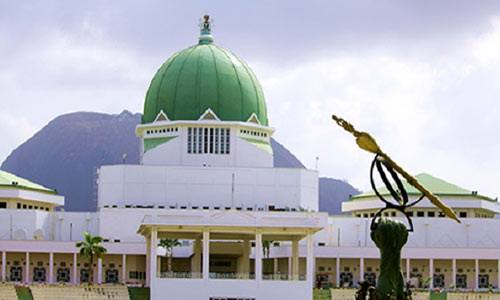
The National Assembly has commenced arrangements to transmit the proposed State Police Bill to President Bola Ahmed Tinubu for assent following its approval by 28 State Houses of Assembly, exceeding the constitutional requirement of 24 states.
The development brings Nigeria closer to establishing a decentralised policing system, as the proposed constitutional amendment has secured the concurrence of more than two-thirds of the 36 State Houses of Assembly, as required under Section 9 of the 1999 Constitution.
The Clerk to the National Assembly, Kamoru Ogunlana, disclosed this in a statement issued on Tuesday, November 3, 2026, confirming that his office had received and verified the reports and accompanying Votes and Proceedings submitted by the 28 state legislatures.
According to Ogunlana, the verification confirmed that the Constitution of the Federal Republic of Nigeria, 1999 (Sixth Alteration) Bill, 2026, which seeks to provide for the establishment of State Police Services and related matters, had secured the necessary state legislative approvals to advance to the next stage.
“Following the receipt and verification of the reports, the Office confirms that 28 State Houses of Assembly have approved the Bill,” he stated.
“This represents more than the constitutionally prescribed threshold of not less than two-thirds of the 36 State Houses of Assembly, equivalent to 24 States, as required under Section 9 of the Constitution of the Federal Republic of Nigeria, 1999.”
Ogunlana explained that his office had undertaken administrative verification of the documents submitted by the state legislatures to establish their authenticity and ensure that the records accurately reflected the decisions taken by the respective Houses of Assembly.
The Clerk recalled that the proposed constitutional amendment was passed by the Senate on June 24, 2026, and subsequently by the House of Representatives on July 23, 2026, before being forwarded to the 36 State Houses of Assembly on September 16, 2026, for their consideration and approval.
He said the state legislatures were requested to communicate their decisions to the National Assembly within 30 days.
Although the stipulated period expired on October 15, 2026, Ogunlana explained that his office would continue to receive reports from other state legislatures until the bill was formally transmitted for presidential assent.
He maintained that the approval already secured from 28 states was sufficient to satisfy the two-thirds requirement prescribed by the Constitution.
The Clerk also addressed questions concerning whether the proposed constitutional amendment required another reading by the National Assembly after receiving the concurrence of the state legislatures.
According to him, Section 9 of the 1999 Constitution does not expressly prescribe a Third Reading for a Constitution Alteration Bill in the same manner as the legislative procedures applicable to ordinary bills.
“It is pertinent to clarify that Section 9 of the Constitution does not expressly prescribe a Third Reading for a Constitution Alteration Bill, unlike the procedure applicable to ordinary Bills,” Ogunlana said.
He consequently disclosed that the National Assembly had commenced the necessary administrative arrangements to facilitate the transmission of the bill to President Tinubu.
“In view of the approvals secured from the required number of State Houses of Assembly, the necessary administrative processes are being undertaken to facilitate the transmission of the Bill to His Excellency, the President of the Federal Republic of Nigeria, for assent, in accordance with the Acts Authentication Act, CAP A2, (LFN) 2004,” he stated.
The proposed amendment seeks to alter the existing constitutional framework governing policing in Nigeria by providing a legal foundation for the establishment of state police services alongside the federal policing structure.
The proposal forms part of ongoing efforts to decentralise the country’s security architecture and strengthen responses to insecurity, particularly kidnapping, banditry, terrorism and other criminal activities affecting different parts of the federation.
Under the existing constitutional arrangement, policing is primarily centralised under the Nigeria Police Force, while state governments do not operate independent police commands established under the Constitution.
Supporters of state policing have maintained that decentralisation would strengthen local intelligence gathering, improve community policing and enable faster responses to security threats.
They argue that state-controlled police services would be better positioned to understand local security challenges and respond to criminal activities within their jurisdictions.
However, the proposal has also generated concerns about the possibility of political interference, particularly the risk that governors could use state police institutions to intimidate political opponents, critics and other citizens.
Other concerns include the financial capacity of state governments to maintain police services, operational independence, accountability, human rights protection and the need to establish clear boundaries between federal and state policing authorities.
The proposed constitutional amendment is intended to provide the legal foundation for state policing, while further legislative and institutional arrangements would be required to address its operational framework, recruitment, funding and oversight.
Although 28 state legislatures have approved the bill, the establishment of functioning state police services is not automatic, as the remaining constitutional, administrative and implementation processes must still be completed.
Ogunlana commended the State Houses of Assembly for their cooperation and timely consideration of the proposed amendment.
He described their approvals as an important step towards strengthening Nigeria’s security architecture and deepening the country’s federal system.
The Clerk also assured Nigerians that his office would continue to provide accurate and timely information concerning developments in the constitutional amendment process.
Meanwhile, the Senate has approved six other bills transmitted from the House of Representatives for concurrence, covering the recovery of proceeds of crime, prevention of money laundering, federal educational and medical institutions, and the operations of the National Sugar Development Council.
The bills were presented during plenary by the Senate Leader, Senator Opeyemi Bamidele, who explained that they had completed the necessary legislative stages in the House of Representatives and satisfied the provisions of Order 78(3) of the Senate Standing Orders, 2026.
Among the bills approved was the Proceeds of Crime (Recovery and Management) Act (Amendment) Bill, 2026, which seeks to strengthen the legal and institutional framework for the recovery, forfeiture and management of proceeds of crime and instruments used in unlawful activities.
The proposed amendment also seeks to provide greater protection for the rights and interests of victims in properties recovered through criminal investigations and related proceedings.
The Senate also considered the Money Laundering (Prevention and Prohibition) Act (Amendment) Bill, 2026, which proposes civil recovery proceedings against persons found in possession of properties or maintaining lifestyles inconsistent with their legitimate sources of income.
The proposed legislation is aimed at strengthening the legal framework for combating money laundering and addressing unexplained wealth.
On education, the Senate approved the Federal University of Medical and Health Sciences, Item, Bende (Establishment) Act (Amendment) Bill, 2026, which seeks to formally designate Bende, Abia State, as the location and host community of the university.
Similarly, the Federal College of Education, Bende (Establishment) Act (Amendment) Bill, 2026, seeks to designate Item, Bende, Abia State, as the host community of the institution.
In the health sector, the Federal Medical Centres Act (Amendment) Bill, 2026, seeks to provide a legal framework for Federal Medical Centres in Zuru, Kebbi State; Gumel, Jigawa State; and Monguno, Borno State.
The sixth bill, the National Sugar Development Council Act (Amendment) Bill, 2026, seeks to strengthen the functions and powers of the Council.
Leading the debate, Bamidele maintained that the proposed amendments were necessary to strengthen existing legal frameworks and address gaps in the administration of federal institutions and the enforcement of relevant laws.
“These Bills are straightforward and have successfully passed through all the requisite legislative stages in the House of Representatives,” he stated.
He urged his colleagues to support the Second Reading of the bills and their referral to the Committee of the Whole for clause-by-clause consideration.
Following the presentation, the Senate considered the six bills in the Committee of the Whole and approved them.
The legislative developments highlight the National Assembly’s ongoing efforts to advance constitutional and statutory reforms covering security administration, financial crime prevention, public institutions and regulatory governance.
While the six additional bills address specific institutional and legal frameworks, the proposed State Police Bill represents a major development in the long-running debate over the decentralisation of policing in Nigeria.
With 28 State Houses of Assembly having approved the constitutional amendment, the National Assembly is now proceeding with arrangements to transmit the bill to President Tinubu, as announced by the Clerk, while Nigerians await further developments concerning the proposed establishment of state police services.
.. “28 State Assemblies Have Approved The Bill” — NASS Moves To Transmit State Police Amendment To Tinubu For Assent … NewsNGR.

2027 Politics Watch – Tuesday’s Roundup: From Sokoto’s security row to Zamfara’s rival winners

2027: Opposition Parties Decry High Cost Of Campaign Billboards

“I Pledge To Serve With Independence” — Nigerian-British Professor Dapo Akande Elected ICJ Judge, Nigeria Hails Appointment

Osun APC Takes Fresh Decision on Tinubu’s Campaign Council

ASUU threatens industrial action over Wike’s allocation of UniAbuja land

Player dies, several injured in accident involving Nigerian football team

Betta Edu Joins VP, Governors, APC PCC Members At Calabar Rally

Why my party lost in US Midterms – Trump

INVESTIGATION: How Anthony Kila falsified all his academic qualifications – from Bachelor’s to Doctorate

Customer Service Week: Inside How Jumia Is Using Technology To Go The Extra Mile For Shoppers

Google opens AI-content detector to enable verification

Kayefi headlines Tales & Tunes as ID Cabasa leads music direction in Sheffield

How Houthi military aggression in Red Sea threatens Africa

How Lagos Families Are Allegedly Buying Contaminated Meat In Dirty Conditions At Mushin, Oshodi, Mile 12, Surulere Markets

UK migrant workers wear chains, sing Asa’s ‘Jailer’ to protest proposed visa reforms

Ogaga Ifowodo wins $100,000 Nigeria Prize for Literature
-

 Business5 days ago
“User Funds Are Completely Safe” — Binance Investigates Suspected $6.3 Billion Hack, Suspends Deposits And Withdrawals
-
Special Reports6 days ago
Jumia Nigeria Unveils ‘No Manage Am’ Black Friday 2026 Campaign With Up To 60% Off
-
Special Reports7 days ago
FIFA U-17 Women’s World Cup: Nigeria’s Flamingos, Ghana, Morocco, Kenya lead Africa’s Quarter-Final charge
-
 Special Reports6 days ago
“Section 65(b) Poses A Threat To Democracy” — Court Reserves Judgment In Suit Challenging INEC’s Power To Review Election Results
-
Politics6 days ago
ADC Postpones Presidential Campaign Flagoff, Fixes New Date
-
Special Reports7 days ago
How Imeh Patience Okon Took The Public Service Institute Of Nigeria From A Sitting Administrator Whose Renewed Tenure Ran To 2027 And Who Died Five Days After Her Takeover
-
Top Stories6 days ago
“We Will Meet On The Final List Of Candidates Today” — INEC To Decide Fate Of Pantami, Adebutu, Other Omitted Governorship Candidates
-
Special Reports7 days ago
Court dismisses Nollywood actor’s N10bn damages suit against Wike’s aide, INEC