News
Otti Urges Nigerian Elite To Champion Good Governance, Reforms

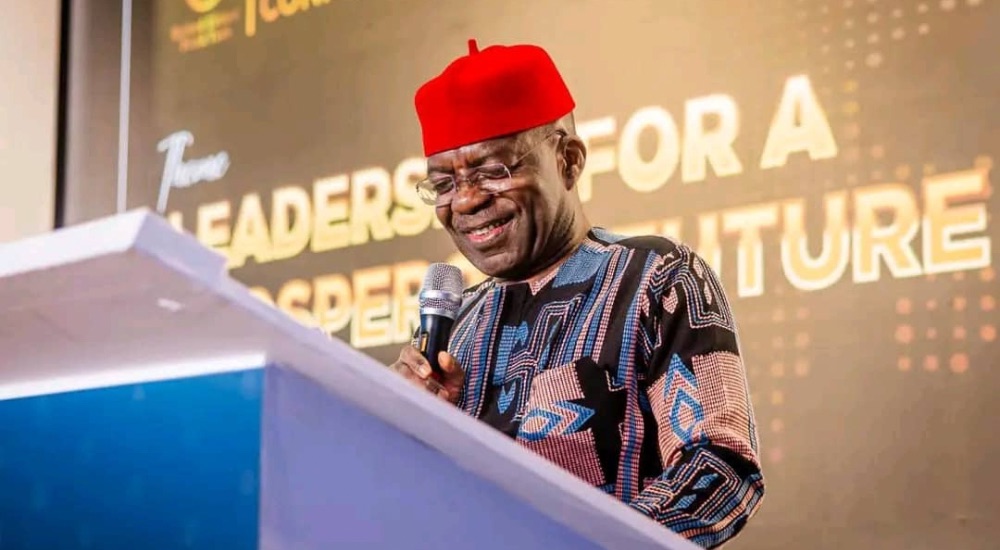
Abia State Governor Alex Otti has called on Nigeria’s political, business and intellectual elite to take greater responsibility for strengthening public sector governance, warning that indifference and poor leadership are undermining the country’s development.
Otti made the call on Tuesday while delivering the keynote address at the 2026 Leadership Conference organised by the Oxford Global Think Tank (OGTT) in Abuja.
Speaking on the theme, “Putting Our Best Foot Forward,” the governor said sustainable economic growth, social prosperity and national development depended largely on the quality of leadership, effective institutions and deliberate policy implementation.
He maintained that poverty, institutional collapse and insecurity were largely rooted in weak leadership, stressing that development required purposeful planning, effective execution and long-term partnerships.
According to him, the elite have a responsibility to shape society’s future by creating economic opportunities, encouraging enterprise and ensuring that public institutions serve the interests of the people.
The governor warned that when influential individuals prioritise personal interests over public service, the consequences include social alienation, economic hardship and widespread frustration.
He identified corruption, institutional decay, policy implementation failures, skills shortages in the civil service, resistance to reforms, insecurity and poor infrastructure as interconnected challenges arising from weaknesses in the public governance system.
Otti blamed part of the country’s development challenges on the failure of the elite to play their roles as guardians of public institutions, noting that the civil service had gradually lost its effectiveness because of political patronage and administrative inefficiency.
He also lamented the collapse of once-thriving national institutions and enterprises, including the Nigerian Airways and the national shipping line, saying their disappearance had contributed to job losses, reduced household incomes and declining national pride.
The governor called for the deployment of artificial intelligence (AI) and other emerging technologies to strengthen public institutions, track corruption, improve civil service performance, increase government revenue and enhance public confidence.
He urged participants to explore how technology could support accountability, monitor project execution and encourage greater citizen participation in democratic processes.
Otti further stressed that the private and public sectors were interdependent, warning that businesses and individuals could not remain insulated from the consequences of poor governance.
He therefore urged Nigerians, particularly educated and influential citizens, to abandon political apathy, participate actively in democratic engagements and hold public office holders accountable.
Highlighting his administration’s reform initiatives in Abia, Otti said his government was embracing innovation and technology to improve service delivery across critical sectors.
He disclosed that the state was gradually transitioning to smart schools, investing in renewable energy for health and public institutions, procuring electric vehicles for mass transportation and introducing computer-based examinations for civil service recruitment and promotion.
He also listed the deployment of digital systems for land administration and document management among the reforms being implemented by his administration.
According to him, despite resistance to some of the initiatives, the reforms are producing positive results, including improvements in public school performance, increased civil service productivity and faster processing of official documents.
Otti said his administration had issued more Certificates of Occupancy within its first three years than were issued in the preceding decade.
He added that the state’s reform efforts were driven by the conviction that public institutions must continuously evolve to meet changing expectations and improve their effectiveness.
The governor, however, warned that individual achievements could not compensate for collective national failures, citing poverty, poor public services, brain drain and growing frustration among citizens as evidence of the country’s development challenges.
He urged Nigerians with the capacity to influence policies and institutions to take active roles in addressing the country’s problems rather than retreating into indifference.
Otti commended the founder of the Oxford Global Think Tank, Prof. Arunma Oteh, for organising the conference and bringing together leaders from the public and private sectors to discuss governance, innovation and institutional development.
He said the conference provided an opportunity to reassess national priorities and identify ways of deploying emerging technologies to achieve sustainable economic and social prosperity.












2027 Politics Watch – Tuesday’s Roundup: From Sokoto’s security row to Zamfara’s rival winners

2027: Opposition Parties Decry High Cost Of Campaign Billboards

“I Pledge To Serve With Independence” — Nigerian-British Professor Dapo Akande Elected ICJ Judge, Nigeria Hails Appointment

Osun APC Takes Fresh Decision on Tinubu’s Campaign Council

ASUU threatens industrial action over Wike’s allocation of UniAbuja land

Player dies, several injured in accident involving Nigerian football team

Betta Edu Joins VP, Governors, APC PCC Members At Calabar Rally

Why my party lost in US Midterms – Trump

INVESTIGATION: How Anthony Kila falsified all his academic qualifications – from Bachelor’s to Doctorate

Customer Service Week: Inside How Jumia Is Using Technology To Go The Extra Mile For Shoppers

Google opens AI-content detector to enable verification

Kayefi headlines Tales & Tunes as ID Cabasa leads music direction in Sheffield

How Houthi military aggression in Red Sea threatens Africa

How Lagos Families Are Allegedly Buying Contaminated Meat In Dirty Conditions At Mushin, Oshodi, Mile 12, Surulere Markets

UK migrant workers wear chains, sing Asa’s ‘Jailer’ to protest proposed visa reforms

Ogaga Ifowodo wins $100,000 Nigeria Prize for Literature
-

 Business5 days ago
“User Funds Are Completely Safe” — Binance Investigates Suspected $6.3 Billion Hack, Suspends Deposits And Withdrawals
-
Special Reports6 days ago
Jumia Nigeria Unveils ‘No Manage Am’ Black Friday 2026 Campaign With Up To 60% Off
-
Special Reports7 days ago
FIFA U-17 Women’s World Cup: Nigeria’s Flamingos, Ghana, Morocco, Kenya lead Africa’s Quarter-Final charge
-
 Special Reports6 days ago
“Section 65(b) Poses A Threat To Democracy” — Court Reserves Judgment In Suit Challenging INEC’s Power To Review Election Results
-
Politics6 days ago
ADC Postpones Presidential Campaign Flagoff, Fixes New Date
-
Special Reports7 days ago
How Imeh Patience Okon Took The Public Service Institute Of Nigeria From A Sitting Administrator Whose Renewed Tenure Ran To 2027 And Who Died Five Days After Her Takeover
-
Top Stories6 days ago
“We Will Meet On The Final List Of Candidates Today” — INEC To Decide Fate Of Pantami, Adebutu, Other Omitted Governorship Candidates
-
Special Reports7 days ago
Court dismisses Nollywood actor’s N10bn damages suit against Wike’s aide, INEC