Business
“A Profitable Banking System Can Still Serve An Underperforming Economy” — Aig-Imoukhuede Urges Banks To Fund Productive Growth

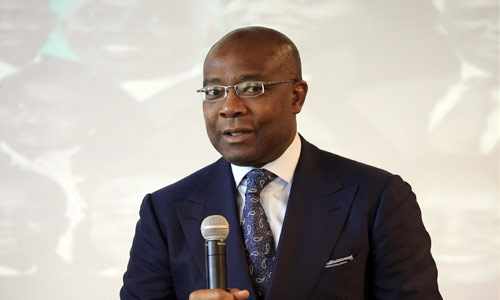
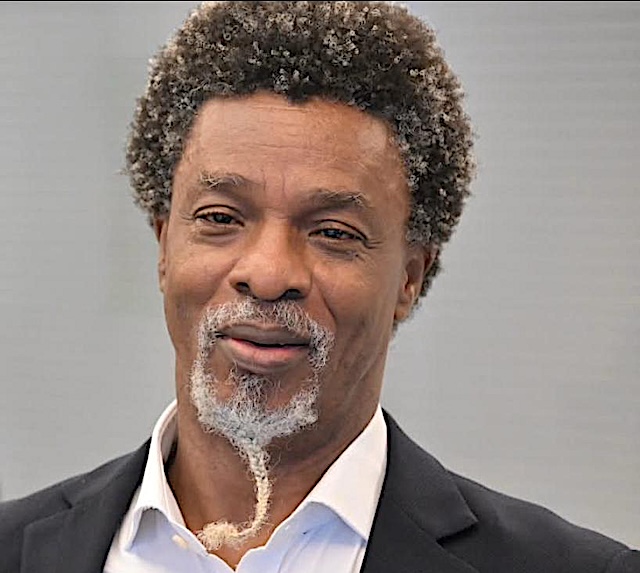
The Chairman of Access Holdings Plc, Aigboje Aig-Imoukhuede, has warned that Africa’s economic growth will remain limited unless its banking institutions move beyond profitability and financial stability to support productive investments, business expansion, infrastructure development and job creation across the continent.
Aig-Imoukhuede said Africa could no longer afford a financial system in which banks remained profitable while businesses struggled to access funding and millions of people faced limited economic opportunities.
He made the remarks at the closing session of the Africa Financial Summit (AFIS) 2026 in Luanda, Angola, where he called for globally competitive African banks, improved access to credit, stronger domestic capital mobilisation and deeper financial integration across the continent.
Speaking on the summit’s theme, “Making Capital Count: Unlocking Growth Through African Finance,” Aig-Imoukhuede urged governments, central banks and financial institutions to measure the success of Africa’s financial system by its contribution to economic development and improved living standards rather than profitability alone.
“A banking system can be well, can be as safe as you want it to be, it can be profitable, but then it can still serve an economy that is very underperforming,” he said.
The Access Holdings chairman maintained that the strength of financial institutions should be reflected in their ability to provide the capital required by businesses to grow, create employment and support economic activities.
He identified inadequate access to working capital as a major challenge confronting small and medium-sized enterprises (SMEs), particularly businesses supplying goods and services to financially strong companies.
According to him, many small businesses struggle to obtain financing even when their customers are creditworthy organisations capable of meeting their financial obligations.
“When an SME supplies goods to a creditworthy buyer, that SME should be able to attract capital and financing at the same cost of the credit rating of that buyer immediately,” he stated.
Aig-Imoukhuede argued that addressing such financing difficulties would enable more businesses to expand their operations and contribute meaningfully to economic growth.
Citing the experiences of India and Brazil, he urged African banks and financial regulators to adopt digital invoicing systems capable of improving access to business financing and facilitating economic expansion.
He also called for greater mobilisation of pension funds and domestic savings to finance infrastructure and other long-term investments.
The businessman cautioned against relying on short-term bank deposits, which could be withdrawn at any time, to finance projects requiring funding over periods of up to 20 years.
He maintained that Africa needed appropriate long-term financing arrangements to support infrastructure development and productive investments.
Aig-Imoukhuede cited the Dangote Refinery as an example of the large-scale investment opportunities available on the continent.
He also warned that excessive government borrowing could reduce the availability of financing for private-sector businesses, making it more difficult for enterprises to obtain the resources necessary for expansion.
Turning to the future of African banking, Aig-Imoukhuede observed that the withdrawal of some international banks from the continent had created opportunities for indigenous financial institutions to expand their operations.
However, he cautioned that African ownership alone would not guarantee progress unless banks developed the capacity to compete effectively with leading financial institutions globally.
“We must translate the scale we are building into globally competitive value,” he said.
Using Access Bank’s operations in Angola as an example, he explained that the group’s objective was to provide financial services capable of competing with those offered by leading international banks.
He urged African banks to strengthen their payment systems, international operations and connections with global financial markets.
Aig-Imoukhuede further identified the fragmentation of African markets and restrictions on cross-border activities as obstacles limiting the continent’s economic potential.
He argued that African countries must prioritise financial and economic integration before pursuing the establishment of a common currency.
“Integration must precede monetary union,” he stated.
According to him, African governments should first remove barriers to trade, investment and the movement of people to establish the conditions necessary for deeper economic cooperation.
Illustrating the difficulties caused by existing restrictions, Aig-Imoukhuede recalled how his chief of staff was unable to accompany him to Angola because of visa challenges.
He questioned how Africa could establish a genuinely integrated financial market while restrictions continued to prevent the free movement of people across the continent.
The Access Holdings chairman identified compatible financial infrastructure, integrated markets and closer coordination of economic policies as essential priorities for advancing regional integration.
He also called for financial systems that would enable African businesses to raise capital more easily across national borders.
Aig-Imoukhuede stressed that pension assets should increasingly support infrastructure development rather than remain concentrated in government securities.
He maintained that Africa’s financial institutions must demonstrate their relevance by directing resources towards investments capable of stimulating economic activities and improving people’s livelihoods.
The businessman concluded that the continent’s financial progress should ultimately be measured by the ability of banks to create economic opportunities, reduce poverty and improve living standards, rather than merely expanding their balance sheets.
.. “A Profitable Banking System Can Still Serve An Underperforming Economy” — Aig-Imoukhuede Urges Banks To Fund Productive Growth … NewsNGR.


NPFL Roundup: Rangers extend lead as Bendel Insurance, Barau claim victories

“A Profitable Banking System Can Still Serve An Underperforming Economy” — Aig-Imoukhuede Urges Banks To Fund Productive Growth

“Anyone Who Disobeys The Law Is Unfit To Be President” — Nafiu Bala Slams Atiku For Campaigning Despite ADC Court Judgment

President Tinubu Ramps Up Completion Of Rail Projects In Northern Nigeria

Thirteen years after privatisation: Nigeria is still paying for darkness, By Posi Olatubosun
Any lessons from America’s midterm elections?, By Uddin Ifeanyi

“Persistent Noise Pollution And Structural Damage” — Widow Sues Airtel, ATC For ₦232m Over Telecom Mast, Seeks Relocation

“African Capital Must Invest In Africa” — Elumelu Urges Banks To Deepen Cross-Border Financing, Mobilise Domestic Savings

INVESTIGATION: How Anthony Kila falsified all his academic qualifications – from Bachelor’s to Doctorate

UK migrant workers wear chains, sing Asa’s ‘Jailer’ to protest proposed visa reforms

How Lagos Families Are Allegedly Buying Contaminated Meat In Dirty Conditions At Mushin, Oshodi, Mile 12, Surulere Markets

Ogaga Ifowodo wins $100,000 Nigeria Prize for Literature

Emirates Holidays unveils Thailand Pass, unlocking exclusive perks and savings for holidaymakers

Man Loses Two Properties, N8m In N132m Money Laundering Case

NLO warns clubs, players against participation in unapproved Private Leagues

At TEDxEnugu, Gov Soludo Harps On Ndigbo Transiting From Individual Success To Building Collective Institutions

 Special Reports5 days ago
ADC warns Sokoto govt, vows to hold governor responsible for intimidation, violence against opposition

 Special Reports6 days ago
Health Review: Ebola case, child malnutrition, medicine security, other developments that shaped October
- Special Reports6 days ago
2027: PDP expels aspirants challenging Pantami’s candidacy as Gombe governorship candidate
- Investigations6 days ago
WEMA BANK SETS NOVEMBER 6 FOR HACKAHOLICS 7.0 GRAND FINALE, UNVEILS “FESTIVAL OF THE FUTURE” AS THEME
- Special Reports4 days ago
United Nigeria Airlines Boss Receives Trailblazer In Aviation Award At Daily Times Centenary Celebration
- Top Stories3 days ago
“Courts Must Guard Their Independence, Impartiality And Integrity” — NDC Warns After Atiku’s Candidacy Is Nullified
- News6 days ago
NAFDAC’s regulatory reforms offer model for Africa – Adeyeye
- Special Reports6 days ago
Failure to prosecute electoral offenders, threat to free, fair elections, says NHRC