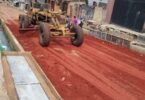
Contracts for the Gombe–Biu–Maiduguri highway had been awarded and re-awarded several times over the years, yet the strategic road remains largely neglected, forcing commuters to endure dangerous and exhausting journeys.
For many residents, motorists and traders across the North-east, the announcement sounded familiar. Contracts for the Gombe–Biu–Maiduguri highway had been awarded and re-awarded several times over the years, yet the strategic road remains largely neglected, forcing commuters to endure dangerous and exhausting journeys.
The long-awaited reconstruction of the highway was officially flagged off in Gombe on Thursday, with the federal government describing the project as a key component of President Bola Tinubu’s infrastructure renewal programme.
The highway, which links Gombe, southern Borno and Maiduguri, has suffered decades of deterioration despite multiple contract awarded by successive administrations.
PREMIUM TIMES reported that the records indicate that one of the most notable attempts to rehabilitate the road came in 2017 during the administration of former President Muhammadu Buhari, when the project was reportedly awarded at a cost of N27.23 billion.
However, the contract was abandoned, leaving large sections of the road in deplorable condition and sparking widespread frustration among road users.
Speaking during the new flag-off ceremony, Minister of Works, David Umahi, acknowledged the significance of the project and assured residents that the Tinubu administration was committed to delivering quality infrastructure that would stand the test of time.
According to him, the 125-kilometre dual carriageway forms part of a broader 420-kilometre corridor stretching from Akwanga in Nasarawa State through Plateau and Bauchi states to Borno State.
Mr Umahi said the road project was recently approved by the Federal Executive Council as part of the fourth phase of President Tinubu’s legacy road projects, joining major national infrastructure schemes aimed at transforming transportation across the country.
“This project is not just about constructing a road; it is about connecting communities, creating economic opportunities and opening up the region for greater development,” the minister said.
He explained that the federal government had adopted reinforced concrete pavement technology for the project to ensure greater durability and reduce long-term maintenance expenses.
The minister expressed confidence in the contractor handling the project, saying the company had demonstrated the technical capacity required to execute the work according to specifications.
Mr Umahi also defended the administration’s infrastructure drive, insisting that ongoing road projects across the country demonstrate President Tinubu’s commitment to addressing decades of infrastructure deficits.
“The road network is the backbone of economic growth. Our objective is to build infrastructure that will support commerce, improve mobility and enhance the lives of Nigerians,” he added.
Governor Muhammadu Yahaya of Gombe State described the commencement of work on the highway as a major breakthrough for the North-east.
He noted that the road has long been a source of concern for residents, transport operators and businesses due to its poor condition and the risks associated with travelling on it.
“The reconstruction of this highway will significantly improve transportation, facilitate trade and strengthen economic activity throughout the region,” the governor said.
Mr Yahaya commended President Tinubu for approving the project and pledged the full support of the Gombe State Government to ensure its successful completion.
He expressed optimism that the highway would boost economic growth, create employment opportunities, and improve security by enhancing community access along its route.
Many residents, who have witnessed previous promises fade without results, greeted the latest flag-off ceremony with cautious optimism.
Traders, transporters, and commuters who rely on the road every day hope the project will finally bring an end to years of hardship caused by failed contracts, abandoned construction sites, and worsening road conditions.
If completed as planned, the Gombe–Biu–Maiduguri highway is expected to become a vital transportation corridor, reducing travel time, lowering the cost of moving goods and services, and strengthening economic ties across the North-East.
For now, however, many residents say they will judge the project not by the ceremony that launched it but by the construction work that follows, a reflection of the disappointment left by previous abandoned contracts and unfulfilled promises.