Special Reports
Ballon d’Or 2026: How Nigeria went from Osimhen, Lookman to no nominees

It is a disappointing development for a country that has enjoyed a brief but significant return to the global awards conversation in recent years, driven by the rise of Osimhen, Ademola Lookman and the achievements of the Super Falcons
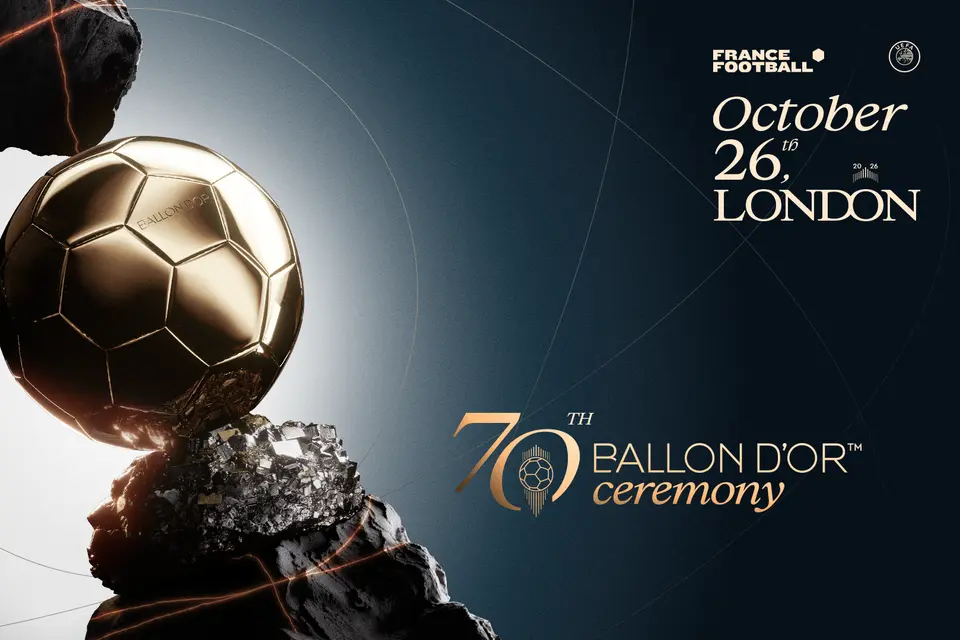
For the first time since Victor Osimhen broke into the Ballon d’Or conversation in 2023, Nigeria will have no nominee to follow at football’s most prestigious individual awards ceremony, as the 2026 edition takes centre stage in London on Monday.
For Nigerian football, however, the evening carries a different significance. There will be no Super Eagles star on the men’s shortlist, no Super Falcons representative among the women’s nominees and no Nigerian candidate in any of the other award categories.
It is a disappointing development for a country that has enjoyed a brief but significant return to the global awards conversation in recent years, driven by the rise of Osimhen, Ademola Lookman and the achievements of the Super Falcons.
The absence raises a familiar question: how can Nigerian players deliver outstanding individual performances, shine at the continental level, and draw attention across Europe, yet struggle to sustain a presence among the world’s most celebrated footballers?
The most conspicuous absentees are Osimhen and Lookman, two players who have carried much of Nigeria’s attacking ambition in recent seasons.
Osimhen became a global contender in 2023 after spearheading Napoli’s charge to the Serie A title, their first league championship in 33 years. His goals, physical presence and relentless attacking work made him one of the most feared forwards in Europe and earned him eighth place in the Ballon d’Or voting.
That finish was more than a personal milestone. It put a Nigerian player among the world’s elite as the country searched for a new generation of stars capable of matching the achievements of its celebrated footballing past.
A year later, Lookman carried that momentum forward. His hat-trick for Atalanta in the 2024 UEFA Europa League final against Bayer Leverkusen secured the Italian club’s first major European trophy. It made him one of the campaign’s defining figures.
Lookman also delivered for Nigeria at the 2025 Africa Cup of Nations, while Osimhen remained central to the Super Eagles’ attack. Their contributions helped reinforce the belief that Nigeria once again had players capable of competing for the highest individual honours.
Lookman finished 14th in the 2024 Ballon d’Or ranking, extending Nigeria’s presence among the nominees after Osimhen’s eighth-place finish the previous year.
Yet that progress didn’t translate into another nomination in 2026.
Both players continued to make important contributions for club and country, but their achievements were not enough to secure a place on this year’s shortlist. Osimhen ended the 2025/26 season with 30 goal contributions across competitions, while Lookman recorded 12 goals and six assists.
Their omission illustrates how demanding the Ballon d’Or race is. Strong statistics and impressive performances can strengthen a player’s case, but recognition depends on the season’s wider context, including individual impact, team success, and performances on the biggest stages.
One of the biggest challenges facing Nigerian players in this awards cycle was the Super Eagles’ absence from the 2026 FIFA World Cup.
The Ballon d’Or assessment period ran from 3 August 2025, to 19 July 2026, covering the European club season and the major international competitions within that window. The World Cup therefore formed a significant part of the period under consideration.
For players representing nations that reached the tournament’s decisive stages, the competition offered a global platform to prove their quality against the world’s best teams.
Nigeria had no such opportunity; the Super Eagles’ failure to qualify meant Osimhen, Lookman and their teammates could not use the World Cup to strengthen their individual cases. Their club performances remained important, but they were competing for attention against players whose seasons included achievements on football’s biggest international stage.
That distinction matters in an award that considers both individual brilliance and collective success.
Nigeria’s absence should not be treated as proof that its leading players lacked quality. Instead, it highlights how international football can shape the narrative around a player’s season, especially when the sport’s biggest tournament falls within the voting window.
For Osimhen and Lookman, the missed opportunity was especially significant because both had already shown they could influence major matches. The question is whether their next campaigns can combine that individual quality with the sort of team success that keeps them in contention for global recognition.
While the men’s game supplied Nigeria’s most prominent Ballon d’Or nominees in 2023 and 2024, the women’s game kept the country represented in 2025.
Super Falcons coach Justine Madugu and goalkeeper Chiamaka Nnadozie were nominated for individual honours following Nigeria’s triumph at the 2025 Women’s Africa Cup of Nations in Morocco.
The Super Falcons defeated the hosts 3-2 in the final to claim a record-extending 10th continental title, reinforcing their status as Africa’s most successful women’s national team.
Madugu’s work with the team earned him a nomination for the Women’s Johan Cruyff Trophy, which recognises coaches, while Nnadozie was shortlisted for the Yashin Trophy, awarded to the outstanding goalkeeper. Both finished fourth in their respective categories at the Paris ceremony.
Their recognition mattered because it showed Nigeria’s influence on the global game wasn’t limited to individual male footballers playing in Europe.
The Super Falcons’ continental success, combined with Nnadozie’s performances between the posts and Madugu’s leadership, gave Nigeria a presence in the awards conversation through the women’s game.
However, neither has been nominated in 2026.
The omission comes despite Nigeria’s established history in women’s football and the country’s continued production of players competing in major leagues abroad. It also reminds us that national-team success does not automatically guarantee individual recognition in subsequent award cycles.
For Nigerian women’s football, the challenge is to turn the Super Falcons’ history and individual players’ achievements into a sustained presence among the world’s elite.


Security Reset: NUJ Pledges Partnership As Super Cop, CSP Azees Nuhu Takes Charge In Sapele

Adetunji Adedoyin-Adeniyi: A Glorious, Dedicated and Excellent Journey from AAA Chambers to the Inner Bar -By Paul Sanusi
Ebola: Resident doctors demand urgent hospital preparedness, protection of frontline workers

OK Movement faults NDC campaign council

ADC Campaign Reveals States Atiku Will Win in 2027
Enugu to host BON Awards in November

Man Dies After Neck Stabbing During Adamawa Fight

₦433m Unaccounted Disbursements Uncovered At NIPSS Kuru

INVESTIGATION: How Anthony Kila falsified all his academic qualifications – from Bachelor’s to Doctorate

Google opens AI-content detector to enable verification

Customer Service Week: Inside How Jumia Is Using Technology To Go The Extra Mile For Shoppers

Kayefi headlines Tales & Tunes as ID Cabasa leads music direction in Sheffield

How Houthi military aggression in Red Sea threatens Africa

How Lagos Families Are Allegedly Buying Contaminated Meat In Dirty Conditions At Mushin, Oshodi, Mile 12, Surulere Markets

Ogaga Ifowodo wins $100,000 Nigeria Prize for Literature

UK migrant workers wear chains, sing Asa’s ‘Jailer’ to protest proposed visa reforms

 Investigations6 days ago
Emirates explores a range of new innovations for customers with accessible travel requirements at AccessAbilities Expo, Dubai 2026
- Special Reports7 days ago
2027: Ex-Kogi gov predicts APC landslide, defends Tinubu’s record
- Special Reports7 days ago
inDrive Launches ‘Keke Marwa’ Service In Nigeria To Expand Affordable Mobility Options
- Special Reports6 days ago
Orie Uga Market Traders To Hold Mega Rally For APGA, Set To Endorse Dr. Chibueze Ofobuike For House Of Reps
- News6 days ago
Lagos Alone Cannot Afford Fourth Mainland Bridge — Hamzat
- Politics7 days ago
Moses Can’t Return To Egypt – Tinubu Rules Out Fuel Subsidy
- Special Reports6 days ago
Igbo Speaking Community Lagos Suspends Crowning Of Ezendigbo As New Executives Vow To Restore Past Glory
- Special Reports6 days ago
NIMASA DG Dayo Mobereola Squanders N6.77 Billion On Cleaning, Hospital Bills And Imprest Including N1 Billion To Maintain Its London Office In Just One Year