Special Reports
Ebola: Resident doctors demand urgent hospital preparedness, protection of frontline workers

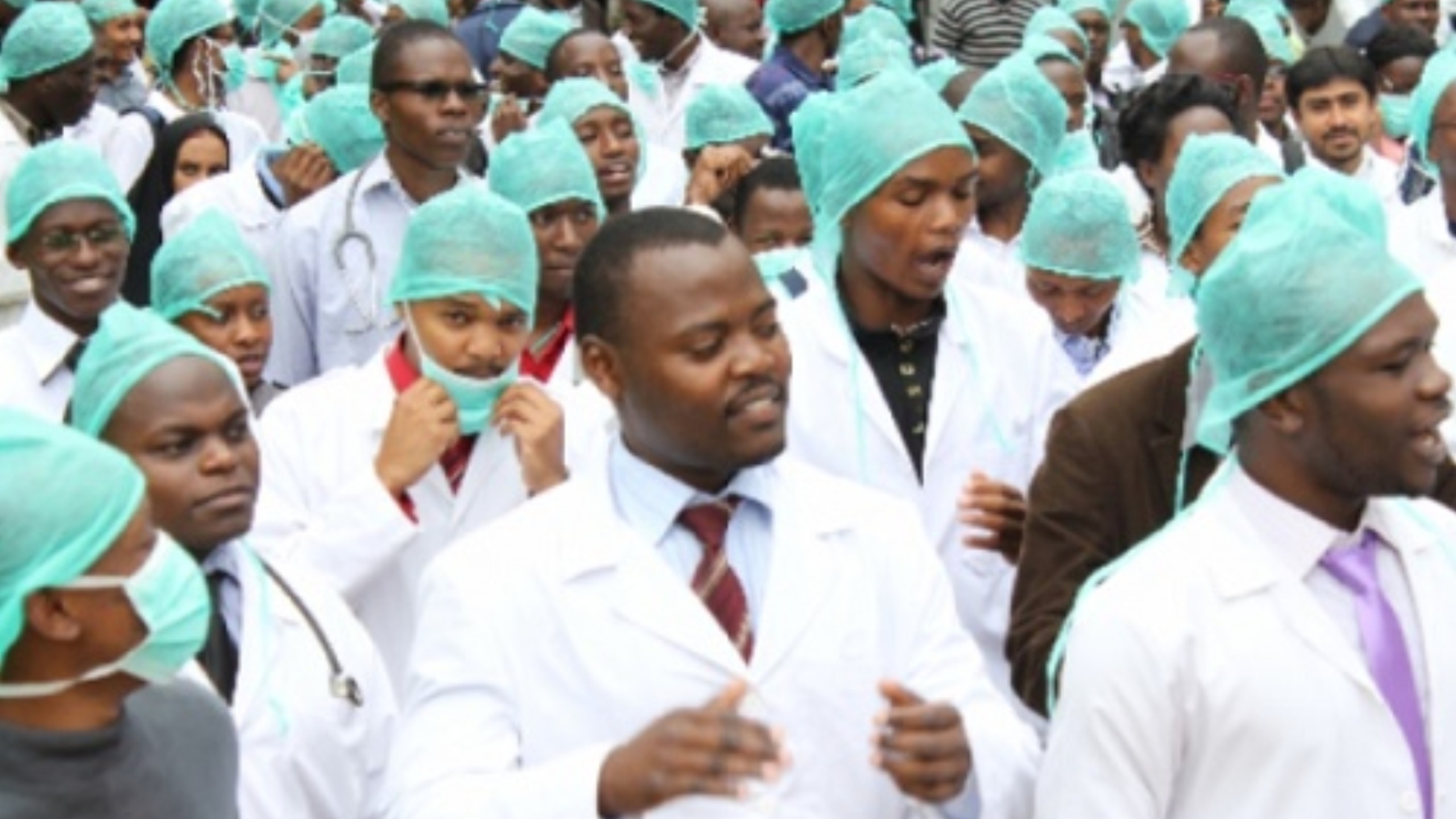
It also directed centre presidents to verify the availability and accessibility of appropriate personal protective equipment (PPE), particularly in accident and emergency units, internal medicine, paediatrics, obstetrics and gynaecology, and other high-risk clinical departments
The Nigerian Association of Resident Doctors (NARD) has directed its members nationwide to urgently assess hospitals’ Ebola preparedness and ensure frontline health workers have protective equipment.
NARD said resident doctors were particularly vulnerable to occupational exposure because they often participate in the initial assessment of patients presenting with undifferentiated febrile illnesses.
The association urged its members to engage hospital management and infection prevention and control committees to assess their institutions’ capacity to identify, isolate, and safely refer suspected Ebola cases.
It also directed centre presidents to verify the availability and accessibility of appropriate personal protective equipment (PPE), particularly in accident and emergency units, internal medicine, paediatrics, obstetrics and gynaecology, and other high-risk clinical departments.
The association asked its members to work with hospital management to organise immediate sensitisation sessions on the Nigeria Centre for Disease Control and Prevention’s (NCDC) case definitions, infection prevention measures, appropriate use of protective equipment and occupational exposure protocols.
NARD also directed hospitals to ensure that resident doctors know the established reporting channels, designated Disease Surveillance and Notification Officers, and approved isolation and referral pathways for suspected cases.
Under the directive, each centre is to nominate an Ebola preparedness focal person to coordinate with the association’s national secretariat and relevant hospital authorities.
The centre presidents are also expected to submit preliminary reports to the national secretariat within 72 hours of receiving the circular. The reports should detail their institutions’ level of preparedness, available protective equipment, existing gaps and areas requiring urgent intervention.
The association further urged its members to promptly escalate concerns about inadequate protective equipment, unsafe deployment, and occupational exposure, and to pursue corrective measures through established hospital safety structures.
NARD said its National Officers’ Committee would engage the NCDC, the Federal Ministry of Health and Social Welfare, and other relevant stakeholders to coordinate training, strengthen institutional preparedness, and advocate for comprehensive occupational protection for frontline healthcare workers.
“The commitment of resident doctors to saving lives must be matched by an equally firm commitment from government and hospital authorities to protecting those who provide care,” the association said.
It urged members to remain vigilant, avoid unnecessary panic, disseminate only verified public health information and maintain close collaboration with relevant authorities.
The directive comes amid heightened public health surveillance following Nigeria’s confirmation of its first Ebola case in more than a decade.
The 42-year-old woman, who returned to Nigeria from Uganda through Addis Ababa on 3 October, developed symptoms and sought medical attention at private health facilities in Abuja.
The NCDC was notified on 19 October, and laboratory tests confirmed the infection the following day.
On Monday, Coordinating Minister of Health and Social Welfare Muhammad Pate confirmed that the patient had been medically evacuated from Abuja to Switzerland alongside her husband, who had remained asymptomatic.
Mr Pate said the patient was clinically improved, stable, conscious and communicating before the evacuation. He, however, cautioned that her improved condition did not necessarily mean she was no longer infectious and said strict public health protocols were observed during the transfer.
Following the patient’s evacuation, the World Health Organisation’s Regional Director for Africa, Mohamed Janabi, said Nigeria had no active Ebola case. However, contact tracing and other public health measures remain important to prevent further transmission.
The NARD directive places renewed emphasis on healthcare worker safety as hospitals strengthen their readiness to identify and manage suspected cases.
The association said it would continue to engage relevant authorities to ensure resident doctors have the training, protective equipment, and institutional support needed to carry out their duties safely.


Tinubu has no fresh ideas to tackle poverty – SDP presidential candidate
Atiku’s fate will be decided by voters, not Osuntokun’s tales by moonlight, by Paul Ibe

₦312.9 Million in Procurement Failures and Unverified Payments Under Provost Degereji At FCE Yola

Mixta Africa Calls for Housing Delivery System to Unlock Scale, Says PPPs Must Go Beyond Land Deals

INEC, Meta, Google, Microsoft, Rise Networks launch AI hackathon ahead of 2027 elections

EFCC witness disputes Union Bank debt claim in Arik Air receivership trial

Brandcom Awards 2026: Indigo shines with four awards, emerges PR Agency of the Year

FG Spends N1.1bn On Seven Solar Mini-Grid Projects—Report

INVESTIGATION: How Anthony Kila falsified all his academic qualifications – from Bachelor’s to Doctorate

Google opens AI-content detector to enable verification

Customer Service Week: Inside How Jumia Is Using Technology To Go The Extra Mile For Shoppers

Kayefi headlines Tales & Tunes as ID Cabasa leads music direction in Sheffield

How Houthi military aggression in Red Sea threatens Africa

How Lagos Families Are Allegedly Buying Contaminated Meat In Dirty Conditions At Mushin, Oshodi, Mile 12, Surulere Markets

Ogaga Ifowodo wins $100,000 Nigeria Prize for Literature

UK migrant workers wear chains, sing Asa’s ‘Jailer’ to protest proposed visa reforms

 Investigations6 days ago
Emirates explores a range of new innovations for customers with accessible travel requirements at AccessAbilities Expo, Dubai 2026
- Special Reports6 days ago
Orie Uga Market Traders To Hold Mega Rally For APGA, Set To Endorse Dr. Chibueze Ofobuike For House Of Reps
- Special Reports6 days ago
Igbo Speaking Community Lagos Suspends Crowning Of Ezendigbo As New Executives Vow To Restore Past Glory
- News6 days ago
Lagos Alone Cannot Afford Fourth Mainland Bridge — Hamzat
- Politics7 days ago
Moses Can’t Return To Egypt – Tinubu Rules Out Fuel Subsidy
- Special Reports6 days ago
NIMASA DG Dayo Mobereola Squanders N6.77 Billion On Cleaning, Hospital Bills And Imprest Including N1 Billion To Maintain Its London Office In Just One Year
- Special Reports6 days ago
FRSC orders probe into Otedola bridge tanker inferno

 Special Reports6 days ago
Abandoned newborn rescued at Plateau mining site