The introduction of 50 CNG buses and 30 tricycles marks a significant shift in the university’s transport system.
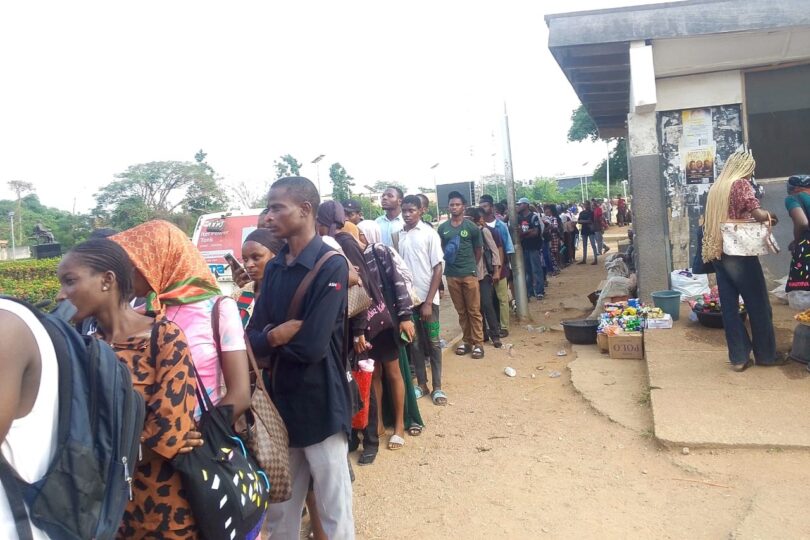
Zainab stood at the bus stop, shifting from one foot to the other as more students gathered behind her. It was only a few days of the resumption semester at Obafemi Awolowo University (OAU), but her routine had already changed.
“It’s stressful and draining, both physically and financially,” she said, rubbing her forehead in frustration. “What was meant to make things easier is already making life harder.”
Zainab’s experience reflects a growing concern among students following the rollout of the newly introduced CNG buses donated by Nigeria’s First Lady, Oluremi Tinubu. The initiative, intended to ease movement, reduce transportation costs, and align with cleaner energy goals, is instead creating delays, increased costs, and uncertainty for many students, particularly those living off-campus.
The introduction of 50 CNG buses and 30 tricycles marks a significant shift in the university’s transport system. However, unlike the previous Town-gboro buses, which provided direct routes between campus and surrounding areas such as Mayfair, Asherifa, and Damico, the new system primarily operates within campus, terminating at the campus gate.
This has effectively split what used to be a single journey into multiple stages, increasing both travel time and cost. Town-gboro buses, now restricted to off-campus routes, have also adjusted their fares upward, compounding the financial burden on students.
During the early days of implementation, the transition has been uneven. On some days, Town-gboro buses were not readily available, forcing students to walk long distances to the campus gate before securing onward transportation.
To manage the new transport structure, the University’s Transport Management Committee (TMC) has introduced a ticketing system. According to the TMC, tickets can be purchased at designated points including the Campus Gate, AngloMoz, Ojaja/New Market, Students’ Union Building (SUB), Road 7, and the Vice Chancellor’s Quarters.
The committee also confirmed that plans are also underway to extend ticket sales to halls of residence to improve accessibility. Students have been advised to purchase tickets only from approved locations and to do so early to avoid delays.
For many students, the financial implications are immediate and significant.
Oritsejolomisan Edun, a Part 3 English student, said that even before resuming, reports of long queues and multiple bus stops signaled potential challenges.
“With the old system, I spent about ₦500 daily. Now it’s around ₦800, and that’s not sustainable,” she said. “I might have to start walking to reduce costs, but that still means waiting again for another bus. It’s stressful.”
She also raised concerns about accessibility, particularly for students with disabilities, noting that the current system may not adequately cater to their needs.
Similarly, Akinwunmi Omolola, a Part 2 Broadcast Journalism student, described the new system as inconvenient.
“Taking two buses every day is not easy, especially with the increased fares. I honestly prefer the old Town-gboro system,” she said.
For some, the numbers tell a deeper story. Onaopemipo, a Part 1 student, calculated that his monthly transport expenses could rise from ₦12,500 to ₦20,000.
“How do I keep up with that?” he asked. “Transport alone is becoming a major burden, not to mention food and other expenses.”
While the CNG initiative represents a shift toward cleaner and more structured transportation, its current implementation has exposed gaps in meeting the mobility needs of a large student population.
For students living off-campus, in particular, the transition has introduced new layers of cost and inconvenience, raising questions about accessibility, affordability, and long-term sustainability.
As the system continues to evolve, students and other stakeholders alike are watching closely to see whether adjustments will be made to address these concerns.
For now, what was introduced as a solution is still finding its footing, leaving many students navigating a new reality of double rides and double fares.