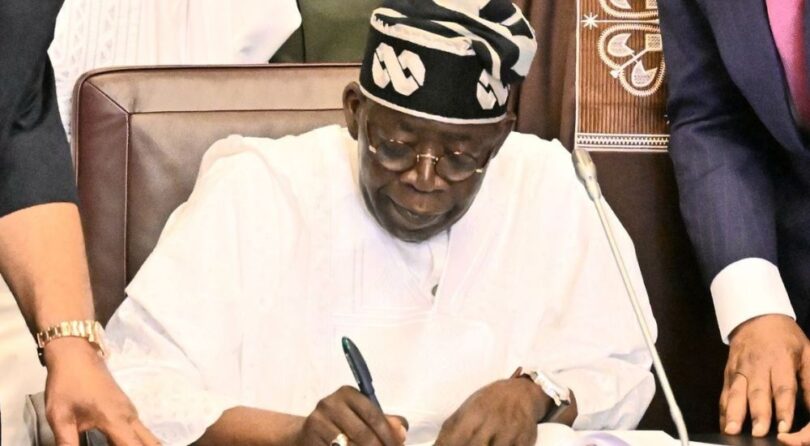
President Bola Tinubu has summoned the leadership of the National Assembly to an emergency meeting aimed at accelerating legislative action on the establishment of state police as part of efforts to tackle the worsening security situation across the country.
Presidency sources disclosed on Thursday that the meeting, expected to hold at the Presidential Villa, Abuja, will focus on strategies for fast-tracking constitutional amendments required to create state police and strengthen grassroots security architecture.
The development comes amid growing concern over the resurgence of kidnappings, particularly the abduction of schoolchildren, teachers and other vulnerable citizens in different parts of the country.
A senior presidential aide, who spoke on condition of anonymity because he was not authorised to speak publicly on the matter, said the President was deeply disturbed by the recent incidents and had resolved to push for urgent action on the long-debated state police proposal.
“The President is worried by the increasing cases of insecurity, especially the targeting of schools and innocent citizens by criminal elements. He believes the country can no longer afford delays in addressing structural gaps in policing and internal security,” the source said.
According to the official, Tinubu considers state police a critical component of broader security reforms being pursued by his administration and is seeking the cooperation of the National Assembly leadership to ensure speedy consideration of all pending legislative processes.
“The meeting is essentially to build consensus and explore ways of ensuring that the necessary constitutional amendments receive expeditious attention. The President wants all stakeholders on the same page because security has become a national emergency,” the source added.
The move follows fresh outrage across the country over the abduction of dozens of pupils, teachers and other residents in recent attacks, incidents that have renewed calls for decentralisation of policing and greater involvement of state governments in internal security management.
State police has remained one of the most contentious issues in Nigeria’s constitutional and security discourse, with proponents arguing that localised policing would improve intelligence gathering, response time and crime prevention.
Opponents of state police however, have expressed concerns that state governors could misuse state-controlled police formations for political purposes.
Despite the reservations, momentum has continued to build around the proposal, especially in the face of persistent security challenges, including banditry, kidnapping, terrorism and communal violence across several parts of the country.
Sources within the National Assembly confirmed that the leadership had received communication from the Presidency and was expected to meet with the President to deliberate on the framework for advancing the state police legislation.
The planned engagement is expected to bring together principal officers of both chambers of the National Assembly and key officials involved in the ongoing constitutional review process.
The leadership engagement is coming on the heels of growing apprehension among Nigerians over the security of lives and property in schools across the country.
Concerns are mounting over possible decline in school enrollment and projected increase in the number of out-of-school children, which currently stands at about 18 million.
Also, there are fears among critical stakeholders in the security and electoral agencies over possible threats to the peaceful conduct of the elections in many parts of the country should the trend continues unchecked.
If successful, the initiative could pave the way for one of the most significant security reforms since Nigeria’s return to democratic rule in 1999.
There has been a wave of mass abduction of school children and teachers in recent times, with the ugly trend spreading to regions otherwise considered relatively safe and peaceful.
In the latest attacks teachers and children were on May 15, abducted from three schools in the Oriire local government area
during morning assemblies.
No fewer than 39 pupils, with some as young as two years old and seven teachers were taken away by gunmen that invaded the schools.
Three of the victims were shot and a mathematics teacher, Mr Michael Oyedokun beheaded by the abductors while about 40 others are still in the captivity of the abductors.