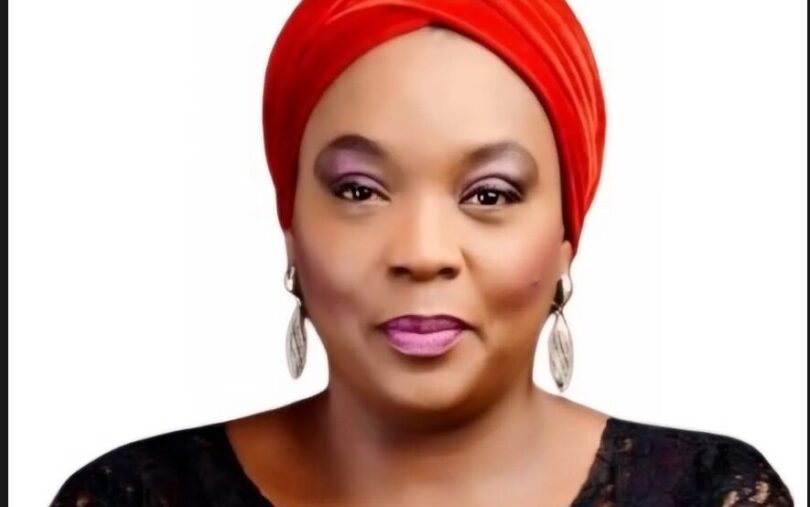
In this letter, Toun says “Women’s underrepresentation in politics remains a national democratic challenge requiring deliberate structural action, not symbolic gestures.”
Dear Governors and Party Chairmen, You hold the keys to 2027. As party primaries unfold across the political landscape, the decisions you make now will define not only electoral outcomes but the direction of Nigeria’s democratic maturity.
This letter speaks regardless of party affiliation. The appeal is simple, urgent and necessary: open the political space for women to contest and to win.
The signal from the Presidency has been clear, women and youths matter and their inclusion must be strengthened. While specific directives may currently apply within the APC structure, the broader message is one every party can and should embrace.
The challenge of women’s underrepresentation is not partisan; it is national. It demands collective responsibility. Beyond statements of intent, what is required now is decisive structural action. Make inclusion non-negotiable. Make it visible. Make it standard.
Dear Governors and Party Chairmen one bold and immediately achievable step is that: Every male governorship candidate should run with a female deputy.
This is not symbolic, it is strategic. It is practical within the current political framework and does not require constitutional amendments.
It ensures that women are not sidelined at the critical point of selection, where exclusion most often occurs.
Imagine the outcome: 36 female deputy governors by 2028. Such a milestone would not only redefine Nigeria’s global standing in gender inclusion but also embed women at the highest levels of executive decision-making across every state.
It would signal, unequivocally, that inclusion in Nigeria is not aspirational but operational.
The early signals from recent primaries, however, suggest a troubling pattern. In the APC primaries, early reports indicate that only a handful of states produced female candidates for the House of Representatives.
Women who invested time, resources and political capital were, in several instances, disqualified or pressured to step down. The cases of Ipalibo Banigo in Rivers State and Noimot Salako-Oyedele in Ogun State reflect a recurring issue, women are encouraged to participate, but excluded at the point where it matters most.
If this pattern is replicated across parties, Nigeria risks regressing in 2027, producing even fewer female representatives than in previous election cycles. That is not progress, it is reversal.
Fairness in the process must be protected. For women who have been disqualified or compelled to withdraw under questionable circumstances, there must be transparent and credible review mechanisms.
A fair hearing is not a privilege it is the foundation of democratic integrity. Where there is evidence of intimidation, procedural violations or bias, corrective action must follow. Inclusion is not just a moral imperative, it is politically advantageous.
Women represent nearly half of Nigeria’s population at 49.7 per cent. Their visibility on the ballot expands voter engagement, strengthens public trust and enhances the credibility of party structures.
Inclusive tickets resonate more broadly with voters, especially among families, young people, and communities prioritising healthcare, education and economic stability.
Evidence from governance trends shows that increased female representation correlates with stronger attention to social development priorities, areas that directly impact citizens’ quality of life. A testament to the nine deputy female governors.
The path forward is clear, and it does not require new legislation. It requires political will. Adopt a simple guiding principle: Where women are qualified and available, give them a real and fair opportunity.
More importantly, institutionalise inclusion: Make it standard practice that every male governorship candidate runs with a female deputy.
Governors and Party Chairmen, history will not remember the number of meetings you convened or the speeches you delivered. It will remember the decisions you made, the names you allowed on the ballot and the doors you chose to open or keep closed.
Let 2027 be the election that redefines Nigeria’s commitment to equity and representation. Let it be said that under your leadership, Nigeria did not just speak about inclusion it demonstrated it.
Include women. Balance the ticket. Strengthen the future because #AllNigerianWomenMatter.
May God bless the Federal Republic of Nigeria.
Toun Sonaiya, co-founder and executive director at voice of women empowerment foundation.